Your cat scratches you while reaching for a treat, or nips a little harder than usual during play. You check the vaccination card, see “rabies” ticked off, and assume that settles it. Then the question creeps in anyway: if my cat is vaccinated, can I still get rabies from them?
It is not an unreasonable concern. In 2024, New York City’s Department of Health documented a case involving a stray cat rescued in Nassau County and taken to Queens for veterinary treatment that later tested positive for rabies. Seven people who had been exposed required post-exposure treatment.
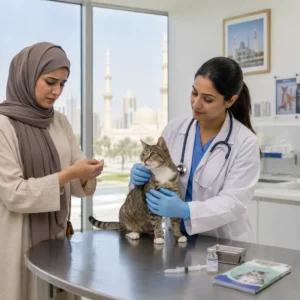
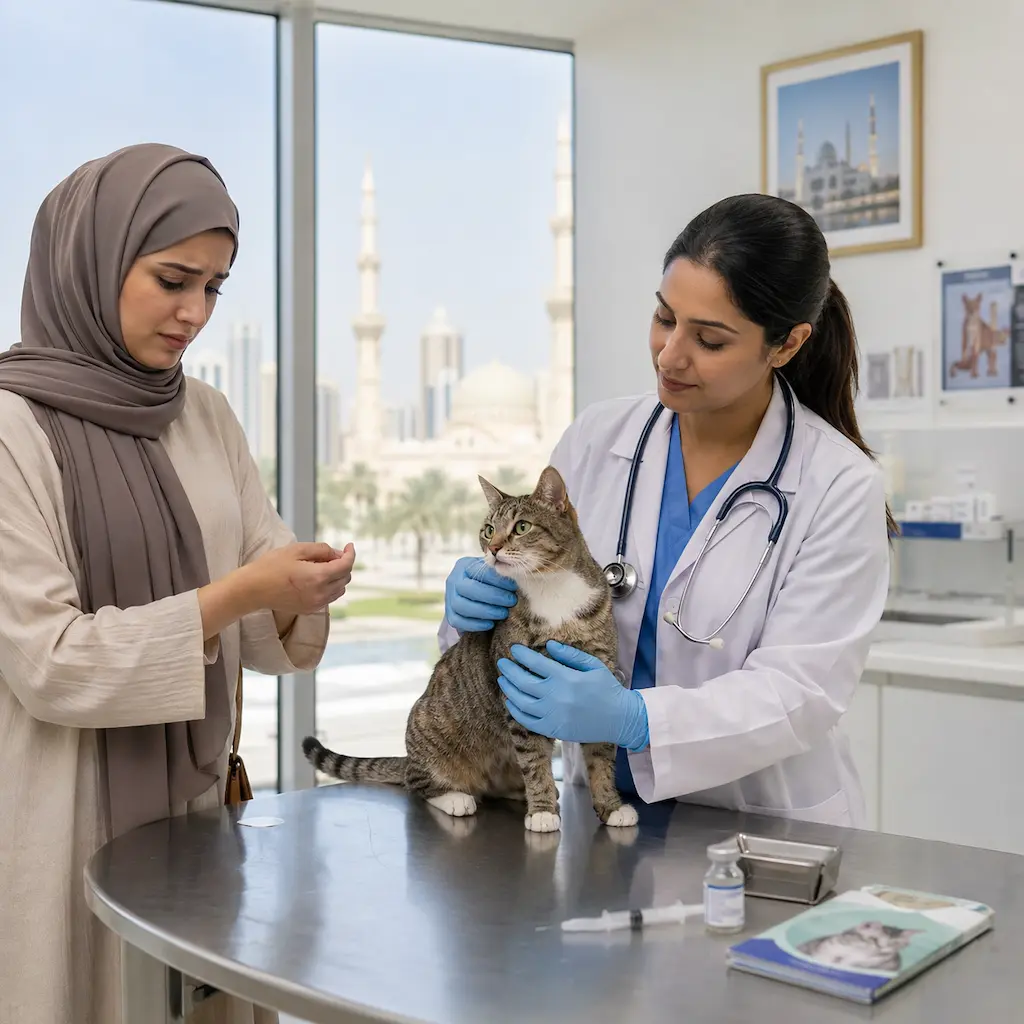
Cases like this are a useful reminder that bites and scratches should not automatically be ignored. If you are unsure about your cat’s vaccination status, notice unusual behavior, or have concerns after a bite or scratch, contacting a trusted veterinary clinic in Sharjah can help you confirm your pet’s rabies vaccination history and get appropriate veterinary guidance.
So, can a vaccinated cat still transmit rabies, and how much should you actually worry after a scratch or bite? Here is the direct answer and what pet owners need to know.
Can a Vaccinated Cat Get Rabies? The Short Answer
Yes, technically, but it’s genuinely rare. No vaccine, for any species or any disease, offers 100% guaranteed protection in every single case. Rabies vaccines are highly effective, but true vaccine failures do happen on rare occasions.
Here’s what “rare” actually looks like in the data. A CDC-linked US surveillance study tracking rabies cases in vaccinated and unvaccinated animals from 2002 to 2022 found that among 5,530 confirmed rabid cats, only 30 (0.54%) had any documented history of rabies vaccination, and of those, just 4 were confirmed to be true vaccine failures. The same study found that cats with up-to-date vaccination were 93.6 times less likely to contract rabies than unvaccinated cats.
In plain terms: a vaccinated cat getting rabies is closer to a statistical footnote than a real everyday risk. An unvaccinated cat is the one you should actually be worried about.
Why Vaccine “Failures” Happen at All
When a rabies vaccine doesn’t produce full protection, it’s rarely because the vaccine itself is defective. It’s usually one of these:
- Incomplete initial vaccination series kittens need a properly timed primary series, not just one shot.
- Lapsed boosters rabies vaccines aren’t lifelong; missing the booster window reduces protection over time.
- Very recent vaccination immunity takes roughly 2–4 weeks to build after the first dose, so a cat bitten right after vaccination may not yet be protected.
- Individual immune response a small percentage of cats simply don’t build strong enough antibody titers from a single course, similar to how some people respond weakly to any vaccine.
- Improper storage or administration vaccines that weren’t kept cold-chain compliant, or given by an unlicensed provider, may be less effective.
Research on young cats receiving their primary rabies vaccination found that over 94% reached the protective antibody threshold, and the single strongest predictor of a poor result was simply how much time had passed since the last dose. This is exactly why on-schedule boosters matter more than almost anything else in maintaining protection.
Vaccinated vs. Unvaccinated Cats: The Real Risk Difference
| Vaccinated Cat (up to date) | Unvaccinated Cat | |
|---|---|---|
| Risk of contracting rabies | Extremely low | Meaningfully higher |
| Risk if exposed to a rabid animal | Very low, with rare exceptions | High, if exposure is confirmed |
| What a scratch/bite means for you | Low risk, but still worth medical evaluation | Requires urgent medical assessment |
| Legal status in the UAE | Compliant, required for registration | Not compliant with UAE law |
If a Vaccinated Cat Scratches or Bites You, What Should You Do?
This is the part that actually matters for your safety, regardless of the vaccine card.
- Wash the wound immediately with soap and running water for several minutes, this alone meaningfully reduces transmission risk for any pathogen, including rabies.
- See a doctor, even for a minor scratch. Rabies is fatal once symptoms appear, so medical guidance always errs on the side of caution.
- Tell your doctor your cat is vaccinated and, if possible, share the vaccination date and vaccine brand, this genuinely affects the doctor’s risk assessment.
- Monitor your cat, if it’s your own pet. A cat that seems perfectly normal in the days following the incident is a reassuring sign, since rabies symptoms in the animal typically appear before or around the time they become contagious.
- Report the incident if the cat is a stray or its vaccination status is unknown, local health authorities can advise on post-exposure prophylaxis (PEP).
Being vaccinated yourself is not typically required for owning a cat, but if you were bitten by an animal with an unknown or absent vaccination history, PEP is a standard, effective medical response not something to delay out of embarrassment or inconvenience.
Rabies in Sharjah and the Wider UAE: What’s the Actual Risk?
The UAE is classified as a rabies-controlled country, with strict pet import regulations and mandatory rabies vaccination for registered pets. That said, stray and community cat populations across the emirates haven’t all been vaccinated, and stray animal sightings have been rising in recent years, which keeps rabies a genuine, if uncommon, local concern rather than a purely theoretical one.
This is exactly why we recommend rabies vaccination as non-negotiable for every cat in Sharjah, indoor or outdoor. Indoor cats aren’t fully exempt either an open window, a balcony, or a single unsupervised moment outside is sometimes all it takes for exposure.
Keeping Your Cat’s Protection Up to Date
The single biggest factor in whether your cat’s vaccine actually protects them isn’t the vaccine brand, it’s whether the schedule was followed properly. At Tree Pet Veterinary, our vaccination services in sharjah cover the full rabies vaccination series and booster schedule for kittens and adult cats, with proper documentation for UAE pet registration and travel requirements.
If it’s been a while since your cat’s last booster, or you’re not sure where they stand, a wellness check-up is a good place to start, it lets our vets review vaccination history alongside your cat’s overall health in one visit.
Conclusion
Can a vaccinated cat get rabies? In extremely rare cases, yes, but the data makes the picture clear: an up-to-date rabies vaccine reduces your cat’s risk by roughly 90-fold compared to an unvaccinated cat, and true vaccine failures are a tiny fraction of all rabies cases. The far more common cause of risk isn’t vaccine failure, it’s a missed booster or an incomplete series. If your cat scratches or bites you, wash the wound and see a doctor regardless of vaccination status, since rabies is too serious a disease to leave to assumption. And if you’re not certain your cat’s vaccinations are current, that’s worth fixing before it becomes a question you’re asking after an incident rather than before one.
Frequently Asked Questions
Can a fully vaccinated cat still get rabies?
Yes, in rare cases. Studies show true vaccine failures account for a very small fraction of rabies cases in vaccinated cats most “breakthrough” cases actually trace back to a missed booster or incomplete vaccination series rather than the vaccine failing outright.
If my cat is vaccinated, can I still get rabies from a scratch?
The risk is very low but not literally zero. Wash the wound and see a doctor regardless they can assess the specific situation and advise whether any further precaution is needed.
How long does a cat’s rabies vaccine last? This depends on the vaccine used. Many feline rabies vaccines provide one year of protection per dose, though some formulations are approved for three years after the initial series. Your vet can confirm which type your cat received.
Are vaccinated cats completely safe from rabies?
“Completely safe” isn’t accurate for any vaccine, but vaccinated cats are dramatically safer than unvaccinated ones on the order of 90 times less likely to contract rabies, based on large-scale surveillance data.
Can a vaccinated cat transmit rabies to me even without visible symptoms?
Cats are contagious only once the virus has progressed enough to reach their saliva, which typically occurs alongside or shortly before visible symptoms. A cat behaving completely normally is very unlikely to be contagious, but any bite or scratch is still worth medical evaluation.
Is there a cure for rabies once symptoms appear?
No. Rabies is essentially always fatal once symptoms develop in either animals or humans, which is exactly why prevention through vaccination and prompt post-exposure treatment is so critical.
How will I know if my cat has rabies?
Watch for sudden behavioral changes: unusual aggression or withdrawal, excessive salivation, disorientation, or paralysis. Any of these warrant an urgent vet visit, particularly if your cat has had contact with a stray or wild animal.