Having Penicillium Aspergillus mold in house is one of the most common indoor mold problems, and one of the easiest to miss. It grows behind furniture, inside cupboards, around AC vents, and on damp walls, often long before a stain appears. In the UAE, where summer humidity is high and air conditioners run for months, these conditions are everywhere.
Cats tend to be the first pets affected, which is why we wrote this guide to mold in house cats. At Tree Pet Veterinary, our vet clinic in Sharjah, we see cats whose sneezing, coughing, and itching trace back to the air in their homes. This guide covers how these molds affect cats, what to look for, how vets investigate, and how to make your home safer.
Why Cats Are More Exposed Than You Might Think
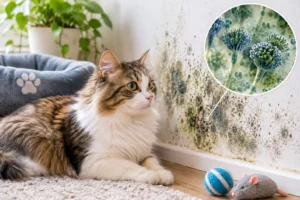
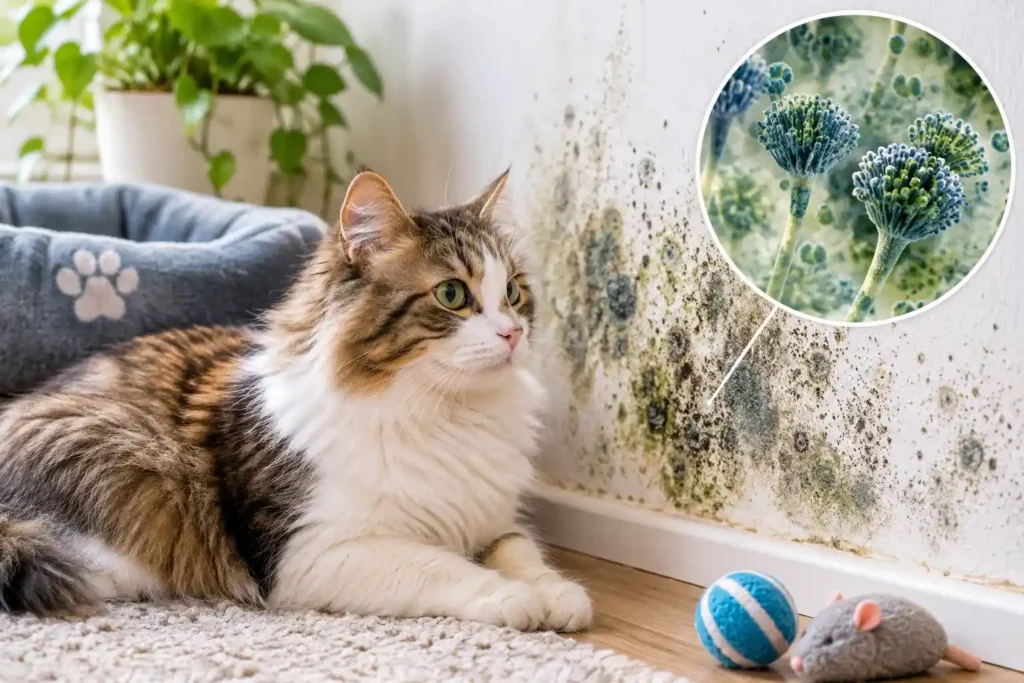
Penicillium and Aspergillus are both everyday molds found in soil, dust, food, and damp building materials. Penicillium is often blue-green and fuzzy, while Aspergillus can look yellow, green, brown, or black. You can’t tell them apart by eye, and both release spores into the air.
A healthy cat usually copes with these spores without any trouble. The risk comes from how cats live. They nap in warm, hidden spots, slip behind wardrobes, sleep on the same blanket for weeks, and groom spores off their coats and into their mouths. A cat’s lower position near the floor, where damp and dust collect, adds to the exposure.
Another species, Aspergillus penicillioides, prefers dry and dusty rooms (see our general guide to Aspergillus in pets), which is why a home can have more than one mold problem at once.
How Mold Attacks Your Pet Cat
Most cats exposed to mold never get sick. When they do, the problem usually falls into one of four types.
Airway irritation and asthma. This is the most common route. Spores inflame the nose, throat, and lungs, and in sensitive cats they can trigger or worsen feline asthma.
Skin and ear allergy. Some cats react with itching, overgrooming, and ears that keep getting inflamed.
Fungal infection. Although rare, the symptoms for this are a lot similar to those of aspergillosis in dogs. Aspergillus occasionally settles in the nose and sinuses, and flat-faced breeds like Persians are thought to be more prone.
Mold toxin poisoning. This one is not about the air at all. Cats that eat moldy food or scavenge through bins can swallow mycotoxins, which can cause tremors and seizures.
Is It the Mold? Clues Worth Noticing
Cats can’t tell you where they feel unwell, so the pattern matters as much as the symptom. These are the signs vets ask about:
- Sneezing, watery eyes, or a snuffly nose that keeps returning, with no sign of a cold
- A dry cough or wheeze, sometimes with the cat crouched low and its neck stretched forward
- Constant licking, patchy fur, or ears that need repeated treatment
- Tiredness, a smaller appetite, or slow weight loss
Then look for the home clues. Does your cat get worse in one room, after a rainy week, or after the AC has been off for a few days? Does it improve when it stays elsewhere? A pattern like that points towards the environment rather than an infection.
When Waiting Is Not an Option
Most mold-related symptoms can wait for a vet appointment within a few days. Three situations cannot.
Open-mouth breathing, repeated wheezing fits, or blue-grey gums. Cats almost never breathe through their mouths unless they are struggling. Take your cat to an emergency vet in Sharjah right away, keeping the cat calm and the car quiet.
Tremors, wobbliness, or seizures after eating something spoiled. This can mean mold toxin poisoning, and some toxins act within hours. Don’t wait for the symptoms to settle.
Eating moldy food, even without symptoms. Call your vet and describe what was eaten. Early advice is better than late treatment.
Which Cats Have Less Margin for Error
Healthy adult cats in clean, dry homes rarely have trouble. The cats that do tend to fall into a few groups:
Cats with asthma or chronic breathing disease are the most sensitive, since mold can push an already inflamed airway over the edge. Persians and other flat-faced breeds have narrow nasal passages that trap spores.
Kittens and senior cats have less robust immunity. Cats on long-term steroids, or living with FIV or FeLV, are less able to fight off fungi. And any cat living near leaking pipes, damp corners, or poorly serviced AC units simply breathes in more spores each day.
Homes with several species need extra care, because the same air reaches everyone. Birds are especially sensitive to airborne spores, and aspergillosis in birds can turn serious quickly.
What Happens at the Vet
Because many illnesses look like mold exposure, a vet visit is part detective work. Expect it to run in this order.
The visit usually starts with questions about the home: damp patches, AC servicing, how food is stored, and when symptoms began. Then comes a hands-on exam, covering the chest, nose, eyes, ears, skin, and weight. Basic bloodwork shows overall health and immune strength.
If breathing is involved, chest X-rays can reveal the airway changes typical of feline asthma, and a CT scan is used when nasal disease is suspected. For stubborn nasal cases, a small camera can look inside the nose and collect samples.
Those samples, along with fungal cultures and cytology, go to a diagnostic testing laboratory in Sharjah, where the organism can be identified, and conditions such as viral infections, dental disease, or tumours ruled out.
No single result proves mold is the cause, so your vet weighs the exam, the tests, and what is happening at home together.
How Cats Are Treated
Treatment follows the cause, and the order matters.
The mold comes first. No medicine works well while the cat is still breathing the same air. Removing or fixing the source is the most important step, whatever the diagnosis.
Breathing problems are treated with prescribed inhaled or oral medicines that calm the airways. Many cats with asthma do well on long-term control.
Skin and ear trouble is managed according to the trigger, sometimes with help from pet dermatology care when allergies keep returning.
Confirmed fungal infections need prescribed antifungals, often for weeks to months, with liver checks along the way.
Toxin cases may need decontamination, fluids and seizure control, and cats in distress may need oxygen and round-the-clock monitoring through pet hospitalisation.
Never give your cat human antifungals, painkillers or steroids. Many are toxic to cats, and steroids can make a fungal infection worse.
The Recovery Phase
The first week. Allergy and irritation cases often start to settle within days once the mold is dealt with and treatment begins. Toxin cases need close watching at the clinic.
The first month. Most mild cases are noticeably better. Cats on airway medication may need a recheck to adjust the plan.
The long term. Asthma is managed rather than cured, so some cats stay on medication and have regular checkups. Fungal infections take the longest, often several months, with repeat tests to confirm the infection has cleared. Stopping medication early is a common cause of relapse.
The outlook is generally good when the problem is caught early, and the home is fixed. Your vet will give a timeline specific to your cat.
Room-by-Room Prevention
Prevention works best when you know where mold likes to hide.
Bedroom and living room:
- Check behind wardrobes and sofas, and pull furniture a few centimetres from the wall
- Wash blankets and cat beds every week or two
Bathroom and kitchen:
- Fix dripping taps and leaks within a day or two
- Run the extractor fan, and keep bins covered so cats can’t scavenge
Air conditioners:
- Clean filters and drip trays regularly, since they harbour mold quietly
- Don’t switch off the AC completely in humid weather, as damp can build quickly
Your cat’s own spaces:
- Store food in airtight containers, and throw away anything musty
- Keep litter areas dry and scoop daily
Whole house:
- Keep humidity below about 50 to 60 percent with ventilation or a dehumidifier
- Damp-dust instead of dry-sweeping, and use a vacuum with a HEPA filter
- Keep your cat out of the room when cleaning large patches, and call a professional for widespread growth
A yearly wellness checkup also helps pick up subtle breathing or skin changes early.
Talking to Your Vet
Mold-related illness is easy to dismiss because it looks like so many other problems. A good vet asks about your home as well as your cat, explains which tests are worth doing, and tells you honestly what is and isn’t confirmed. At Tree Pet Veterinary, our team sees cats, dogs, birds, and small pets, and offers home visits for cats that find travel stressful.
Conclusion
Most cats cope with household mold, and the ones that struggle are usually those with asthma, flat faces, weak immunity, or long-term exposure. Pay attention to patterns, fix damp at home, and let a vet guide any treatment.
If your cat has had a cough, nasal discharge, or skin trouble for more than a week, contact Tree Pet Veterinary. For urgent cases, call us during clinic hours (Sat to Thu 10 AM to 10 PM, Fri 2 PM to 10 PM).
Frequently Asked Questions
Can black mold hurt my cat?
Any heavy mold growth can irritate a cat’s airways, and some molds produce toxins. The color tells you little, so treat all visible growth seriously.
Can mold in the house cause asthma in cats?
It can trigger or worsen asthma in sensitive cats, though dust, smoke, and scented products are also common triggers.
Should my cat leave the house while mold is cleaned?
Keep your cat out of the room while large patches are cleaned, because scrubbing releases spores. Let the room air out before your cat returns.
Can my cat get a fungal infection from mold at home?
It is possible but uncommon. Allergy and irritation are far more likely.
What should I do if my cat ate moldy food?
Call your vet straight away, even if your cat seems fine. Tremors, wobbliness or seizures need emergency care.