Welcome to How to Cut Cat Nails Safely: A Step-by-Step Guide for Cat Owners, written by Tree Pet Veterinary Clinic for anyone who feels nervous about picking up the clippers. Many indoor cats in Sharjah and across the UAE live in apartments with few surfaces to wear their claws down, so routine trimming matters more than most owners expect. If you would rather leave it to a professional, our Pet Grooming in Sharjah team can help, and this guide will show you how to do it calmly at home.
Why Is Regular Cat Nail Trimming Important?
Cats have 18 nails in total: five on each front paw and four on each back paw. Claws grow continuously, and overgrown ones can snag on carpets and furniture, scratch skin, or curl into the paw pad, which is painful.
It helps to understand the anatomy. Each claw contains a quick, the living part made of blood vessels and nerves. Cutting into it causes pain and bleeding, so the goal is always to remove only the sharp, dead tip.
What You Need Before Cutting Your Cat’s Nails
Gather everything first so the session stays short and calm:
- Cat nail clippers (scissor or guillotine style)
- Styptic powder or plain cornstarch, in case of bleeding
- Soft towel
- Your cat’s favourite treats
- Good lighting
Choosing the Right Cat Nail Clippers
Choose small clippers made for cats, sized to fit your hand, with sharp blades. Dull blades squeeze and splinter the claw, which your cat will notice. Replace them when they stop cutting cleanly.
Can You Cut Cat Nails With Human Clippers?
It is possible in an emergency, but human clippers are not ideal. They are flat and designed for flat nails, so they can crush or split a cat’s curved claw. Cat-specific clippers give a cleaner, safer cut.
How to Cut Cat Nails Safely: Step-by-Step Instructions
Choose a Calm Time
Pick a moment when your cat is relaxed, such as after a meal or a nap. Never start when your cat is playful, frightened, or stressed. For first-timers, practise just touching the paws for a few days with treats before any cutting.
Hold Your Cat’s Paw Gently
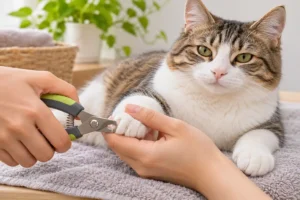
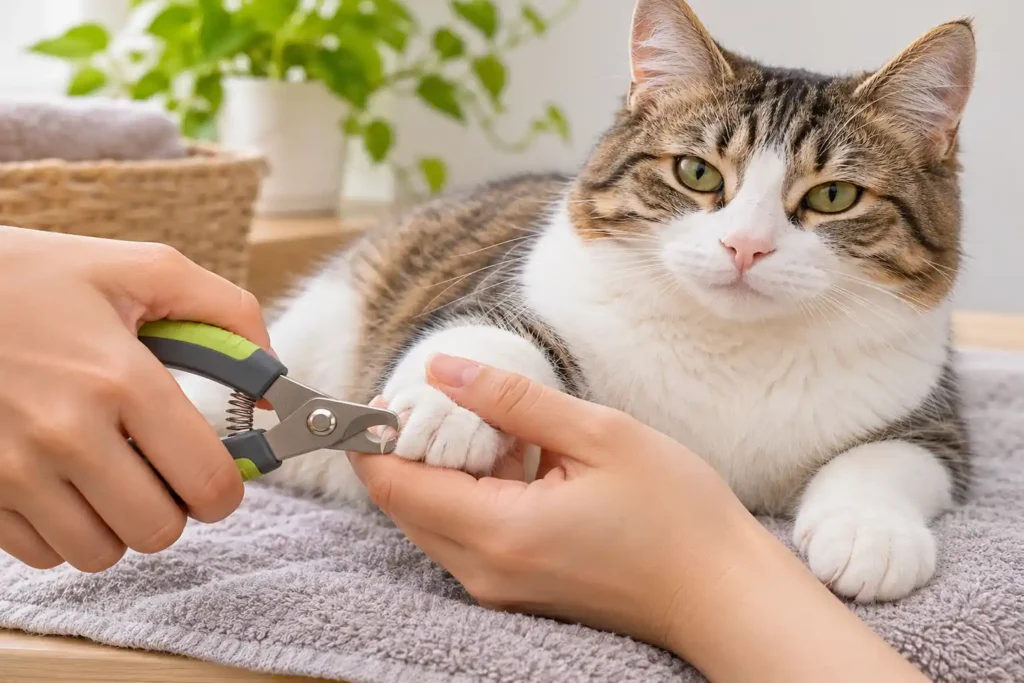
Sit with your cat on your lap or on a stable surface. Hold the paw softly, then press lightly on the toe pad so the claw extends. Avoid tight restraint, since forcing a cat often makes the next session harder. If your cat resists, wrap them loosely in a towel with one paw out at a time.
Identify the Quick Before Cutting
On light-coloured claws, the quick appears as a pink triangle inside the nail. On dark claws it is hard to see, so take off very small amounts and stop well short of where you think it begins.
Trim Only the Sharp Tip
Place the clipper across the claw and snip just the pointed tip, staying a few millimetres away from the quick. If you are unsure, cut less. You can always trim a little more next time.
Reward Your Cat After Each Paw
Give a treat and some praise after every paw, even if you only manage one or two paws per session. Short, positive sessions teach cats that nail care is nothing to fear.
How Often Should You Trim Your Cat’s Nails?
Most cats do well with a trim every two to four weeks, although the right schedule varies with age, activity, and how much your cat scratches. Check the claws regularly. If you hear clicking on tiles or the tips look long and sharp, it is time. Senior cats often need more frequent trims, as their claws can thicken and they scratch less. Dog owners can find a similar schedule in our guide on how often to cut dog nails.
Do Cats’ Nails Shed Naturally?
Yes. Cats shed the outer layer of the claw, called the sheath, as the claw grows. You may find thin, translucent, crescent-shaped husks near scratching posts or bedding. This is normal.
What is not normal is a claw that is torn, thickened, discoloured, crumbly, or surrounded by redness or discharge. These signs need a veterinary examination rather than home treatment.
Why Do Cats Bite Their Nails?
Cats often chew at their claws to remove the loose outer sheath, much like grooming. Occasional nibbling is usually harmless. Frequent biting, however, can point to irritation, a split or infected claw, skin problems, or stress. If your cat is biting persistently or favouring a paw, have it checked, because the cause cannot be determined without an examination.
Common Cat Nail-Trimming Mistakes to Avoid
- Cutting too close to the quick
- Using dull or oversized clippers
- Trimming when your cat is stressed or when you are rushed
- Forcing a cat to stay still instead of taking breaks
- Trying to do all 18 nails in one sitting
- Skipping the dewclaws, the small claws higher up on the front legs, which can overgrow
When Should You Ask a Veterinarian for Help?
General grooming is something most owners can learn, but some situations need professional care. Contact a veterinarian if you notice:
- Claws growing into the paw pad
- Swelling, redness, pus, or a bad smell around a nail
- Limping or sensitivity when the paw is touched
- Cracked, bleeding, or abnormally thick claws
- A cat who becomes aggressive or panics every time you try
If your cat is too nervous or difficult to handle, professional cat grooming in Sharjah can make nail care safer and less stressful. For painful, cracked, or abnormally thick claws, a Pet Wellness Checkup lets a vet examine your cat properly.
For more general feline care guidance, the Cornell Feline Health Center is a trusted resource.
Final Thoughts
Trimming becomes easier with patience, the right tools, and short, rewarding sessions. If your cat’s claws are painful, damaged, overgrown, or simply too difficult to trim, the team at Tree Pet Veterinary Clinic is happy to examine them and help keep your cat comfortable.
Frequently Asked Questions
1. Can you cut cat nails with human clippers?
It is better not to. Human clippers are made for flat nails and can crush or split a cat’s curved claws. Use clippers designed for cats for a cleaner cut.
2. How often should I trim my cat’s nails?
Most cats need a trim every two to four weeks. Check the claws regularly and trim when the tips look sharp or long, as older cats may need it more often.
3. Is it fine to cut my cat’s nails?
Yes, trimming the sharp tip is safe and healthy when done correctly. Avoid the quick, keep sessions short, and stop if your cat becomes distressed.
4. Do cats’ nails shed naturally?
Yes. Cats shed the outer claw sheath as new growth comes through, and you may find the translucent husks around the home. A torn, discoloured, or swollen claw is not normal shedding and should be examined by a vet.
5. What should I do if I accidentally cut the quick?
Stay calm and apply styptic powder or cornstarch with gentle pressure for a few minutes. Most minor bleeding stops quickly. If it continues, or your cat seems very painful, contact your veterinarian.