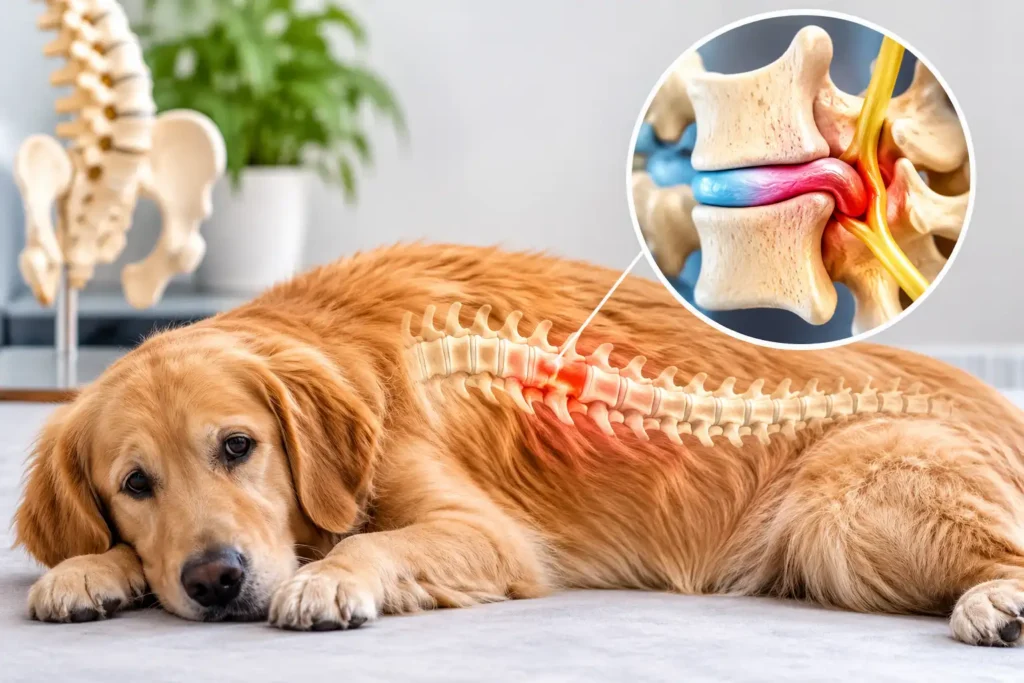
What is IVDD in dogs? Intervertebral disc disease (IVDD) is a spinal condition in which damaged discs between the bones of the spine press on the spinal cord or nearby nerves.
It can cause anything from mild back pain to sudden difficulty walking, so early recognition matters.
You’re provided with a thorough guide in following by Tree Pet Veterinary Clinic known well as a trusted vet clinic in Sharjah.
What Does IVDD Stand for in Dogs?
IVDD stands for intervertebral disc disease. Between most vertebrae sits a disc with a tough outer layer and a gel-like centre that absorbs shock.
Over time, a disc can degenerate. It may bulge into the spinal canal or rupture, which is called herniation, and squeeze the spinal cord.
You may also see the term IVD. It refers to the intervertebral disc itself, while IVDD is the disease that affects it.
How Do Dogs Get IVDD?
Owners often ask how a dog gets IVDD. There is rarely one single cause, and several factors usually work together.
• Breed and genetics: Dachshunds, French Bulldogs, Beagles, Cocker Spaniels, and Shih Tzus are more prone to early disc degeneration, sometimes from young adulthood.
• Age: Discs naturally wear with age, so older dogs of many breeds can be affected.
• Strain and injury: Jumping off furniture, rough play, or trauma can be the final trigger for a disc that is already weakened. Ordinary jumping alone does not cause every case.
IVDD follows two patterns. A disc can degenerate slowly over time, or a weakened disc can herniate suddenly and cause severe pain within hours.
What Are the Signs and Symptoms of IVDD in Dogs?
Symptoms depend on where the affected disc sits and how much it presses on the spinal cord. Watch for:
• Neck or back pain, such as yelping, trembling, or a tense posture
• Reluctance to jump, climb stairs, or move
• Stiffness, a hunched back, or a lowered head
• Weakness or wobbly, uncoordinated walking
• Dragging paws or difficulty standing
• In severe cases, paralysis and loss of bladder control
Is IVDD Painful for Dogs?
Often, yes. Pressure on the spinal cord or nerves causes pain and inflammation.
Dogs show it through behaviour changes, such as hiding, panting, trembling, refusing food, or resisting being picked up. Our guide on why a dog stops eating explains other reasons a dog may refuse food.
Can IVDD Come on Suddenly?
Yes. Some dogs are stiff for weeks, while others seem normal in the morning and cannot use their back legs by evening.
See a vet immediately if your dog suddenly cannot walk, is in severe pain, or cannot control their bladder. Keep your dog calm and still, and do not give human painkillers.
Our pet first-aid tips explain how to handle unexpected emergencies safely.
How to Treat IVDD in Dogs?
Treatment depends on severity and a veterinary examination. Home remedies, massage, and self-medication can make things worse, so every plan should come from your vet.
Veterinary professionals such as Khaled Ali Hamdy – Vet Doctor at Tree Pet Veterinary Clinic follow a well-established principle: the sooner a dog with back pain or weak legs is examined, the more treatment options usually remain open.
Examination and Diagnosis
The vet starts with a physical and neurological examination, checking reflexes, pain response, and how your dog walks.
Imaging is used when indicated. X-rays can help rule out other causes of pain, while MRI or CT is often needed to confirm which disc is involved.
For further reading, Cornell University’s veterinary college explains diseased spinal discs and treatment options in more detail.
Medication and Strict Rest
Mild to moderate cases are often managed with vet-prescribed pain relief and strict rest, usually crate or pen rest with short, supervised lead walks. Never change doses or add medication yourself.
Physiotherapy and Rehabilitation
When appropriate, and only under veterinary guidance, physiotherapy can help a dog rebuild strength and coordination. Do not start exercises at home on your own.
Surgery
Surgery may be recommended for selected severe cases, such as paralysis or pain that does not improve. Your vet will explain whether it is suitable.
Owners who want to know more can read about the clinic’s pet surgery service.
Example of a Typical Case
As a general example, a dachshund with back pain that can still walk is usually examined, given vet-prescribed pain relief, and kept on strict rest.
If weakness develops or worsens, the vet may recommend further imaging and discuss surgery.
Can Dogs Die from IVDD?
Severe IVDD is serious. A dog that cannot walk or control its bladder needs urgent care, and untreated severe compression can cause lasting nerve damage.
The outlook is often encouraging. Many dogs recover or live comfortably when treated in time, though no outcome can be guaranteed. For home recovery tips, see what happens after treatment.
IVDD cannot always be prevented, but avoiding risky jumping and keeping a healthy weight may help protect the spine. A pet nutrition consultation can help with weight management.
For urgent cases, contact emergency veterinary care straight away.
Conclusion
Now that you know what IVDD is and how it affects dogs, the most important step is acting early. Do not wait to see whether yelping, stiffness, or changes in walking pass.
A prompt veterinary assessment gives your dog the best chance of comfort and recovery.
If your dog shows any of these signs, contact us to book an appointment at Tree Pet Veterinary Clinic in Sharjah. For urgent cases, call us during clinic hours (Sat to Thu 10 AM to 10 PM, Fri 2 PM to 10 PM).
Frequently Asked Questions
Can IVDD be cured completely?
Not always. Many dogs recover well or live comfortably with the right treatment, but the outcome depends on severity and how quickly care starts.
Can a dog recover from IVDD without surgery?
Yes, many dogs with mild to moderate IVDD improve with vet-prescribed medication and strict rest. Surgery is usually reserved for severe cases.
How long does IVDD recovery take?
It varies from dog to dog. Your vet will set the timeline after examining your dog, and too much movement too early can cause a setback.
Can IVDD be prevented?
Not entirely, especially in prone breeds. A healthy weight and avoiding risky jumping may reduce strain on the spine.
Can I give my dog human painkillers for back pain?
No. Many human medicines are toxic to dogs, and pain relief can hide worsening spinal damage. Your dog needs a veterinary examination first.