Imagine a quiet evening at home when your dog yelps, limps in from the balcony, and leaves a spot of blood on the floor. Your heart races, and you wonder whether to clean the wound, wait and watch, or call someone. Knowing essential pet first aid tips to handle unexpected emergencies can make those first minutes far less frightening, and so can knowing your nearest vet clinic in Sharjah before you need it.
This scenario is only an illustration, but situations like it are familiar to many dog and cat owners. A calm, informed response protects your pet while professional help is on the way.
First aid is not a replacement for treatment. It simply keeps your pet as safe and stable as possible until a veterinarian can examine them.
Recognizing the Signs of a Pet Emergency
Pets instinctively hide pain, so subtle changes matter. Seek urgent help if you notice any of these:
• Difficulty breathing, noisy breathing, or blue, pale, or grey gums
• Collapse or sudden severe weakness
• Bleeding that does not slow down
• Suspected poisoning or swallowing of a toxic substance
• Seizures
• Repeated vomiting, a swollen or painful belly, or inability to urinate
When in doubt, treat it as urgent. A phone call costs nothing and may save valuable time.
What to Do When an Unexpected Pet Emergency Happens
Stay as calm as you can, because pets read our body language. Then follow these steps:
1. Check for danger. Move traffic, hot surfaces, broken glass, or other animals away before you touch your pet.
2. Approach gently. Injured animals may bite or scratch from fear, even if they are usually friendly.
3. Call a veterinarian. Describe the symptoms and follow the instructions you are given. Tree Pet Veterinary lists emergency vet care in Sharjah among its services.
4. Prepare for transport. Use a secure carrier for cats and small dogs. For larger dogs, a leash and a flat, firm surface such as a blanket stretcher can help keep the body supported.
Essential Pet First Aid Tips Every Owner Should Know
How to Respond to Cuts and Bleeding
Place clean gauze or a clean cloth over the wound and apply gentle, steady pressure. If blood soaks through, add more material on top instead of removing the first layer.
Do not apply creams, powders, or antiseptics unless your vet advises it. Bleeding that is heavy, spurting, or lasts more than a few minutes needs urgent care, as do deep cuts and puncture wounds.
What to Do If Your Pet Is Choking
Gagging, pawing at the mouth, distress, or blue-tinged gums mean your pet may not be getting enough air. This is an emergency, so call the clinic and head there immediately.
Avoid reaching blindly into the throat, which can push an object deeper or lead to a bite. Look inside the mouth only if you can clearly see the object and your pet is calm enough to allow it safely.
How to Respond to Suspected Poisoning
Act quickly, but do not guess at remedies.
• Remove your pet from the source and prevent further access.
• Keep the product, packaging, or plant sample so the vet can identify it.
• Note what was swallowed, roughly how much, and when.
• Call a veterinarian immediately.
Do not induce vomiting unless a veterinary professional specifically tells you to. Some substances cause more harm coming back up. Prevention helps too, and our guide to safe and dangerous human foods for pets explains which everyday items to keep out of reach.
Recognizing Heatstroke and Seizures
Heatstroke often shows as heavy panting, drooling, bright red gums, weakness, vomiting, or collapse. Move your pet to shade or air conditioning and offer small sips of water if they are alert. Cool them with lukewarm or cool water, not ice-cold water, which can be harmful. Then go to a vet right away, even if your pet seems to improve.
Seizures can look like shaking, stiffness, drooling, or loss of awareness. Clear nearby objects, dim the lights, and keep your hands away from the mouth. Do not restrain your pet. Note how long the seizure lasts and contact a veterinarian urgently.
How Dr. Khaled Ali Hamdy Guides Pet Owners Through Emergency Situations
The principles in this article reflect the kind of practical guidance veterinary professionals such as Dr. Khaled Ali Hamdy, Vet Doctor at Tree Pet Veterinary, encourage pet owners to follow. The aim is to help you respond safely, not to turn you into a substitute for a veterinarian.
In practice, that means four habits:
• Know the warning signs so you act before things worsen.
• Avoid unsafe home treatments, including human medicines and improvised remedies.
• Describe symptoms clearly: what happened, when it started, and any changes since.
• Seek timely professional care, because some problems look mild at first.
A vet can examine your pet and, where needed, use tools such as X-rays and diagnostic imaging to understand what is happening inside the body.
Preparing a Pet First Aid Kit at Home
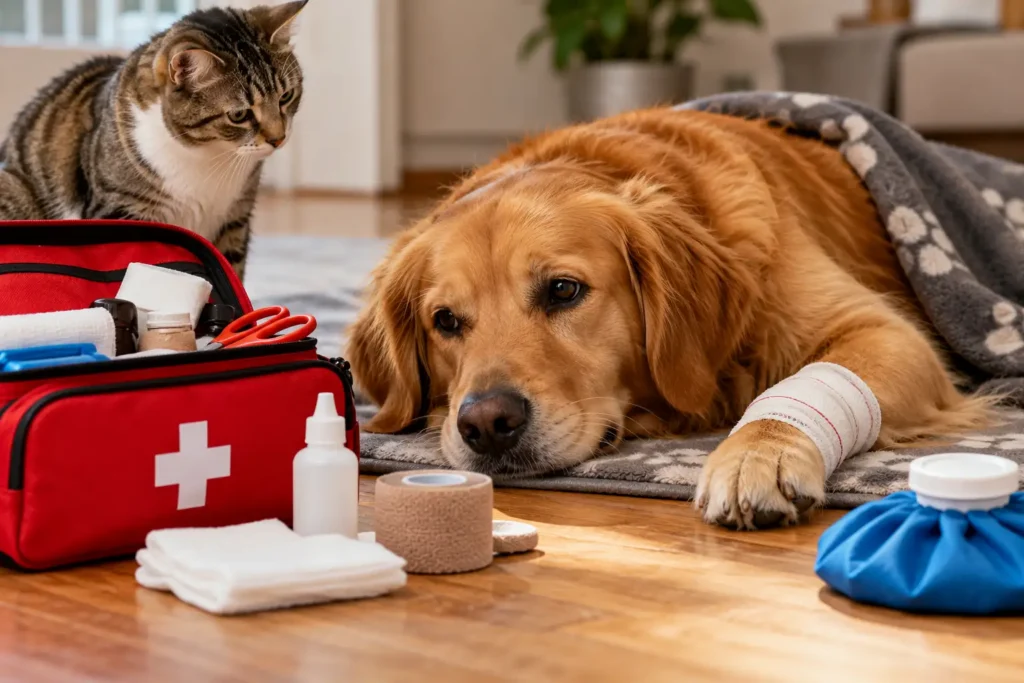
A simple kit kept in an easy-to-reach place saves time when every minute counts:
• Sterile gauze pads and non-stick dressings
• Self-adhesive bandage wrap
• Saline wound wash
• Disposable gloves
• Blunt-tipped scissors
• A secure carrier and a spare leash
• A towel or blanket
• Your vet’s phone number, the clinic address, and an emergency contact
Check the kit every few months and replace anything that has expired.
When Should You Visit a Veterinary Clinic Immediately?
Go straight to a clinic, calling ahead if possible, if your pet has:
• Severe or persistent bleeding
• Breathing difficulties or choking
• Collapse, seizures, or sudden severe weakness
• Suspected poisoning
• Signs of heatstroke
• Major trauma, such as a fall from height or a road accident, even if they look fine
Pets who need close monitoring may be admitted for pet hospitalisation in Sharjah, where the team can watch their progress and provide ongoing care.
Final Thoughts
Emergencies rarely announce themselves, but your response can still be steady. A prepared kit, a saved phone number, and a few clear principles turn panic into a plan.
First aid buys time; the veterinarian provides the treatment. Make the call early, and let the professionals take it from there.
Frequently Asked Questions
What should I do first if my pet suddenly becomes ill or injured?
Stay calm, make sure the area is safe, and call a veterinarian straight away. Describe the symptoms and follow the instructions you are given while you arrange safe transport.
Can I give my dog or cat human medication during an emergency?
No. Many common human medicines, including some pain relievers, are toxic to dogs and cats. Only give a medication if a veterinarian specifically prescribes or directs it.
How can I stop bleeding from a pet’s wound?
Press clean gauze or a clean cloth firmly but gently over the wound, and add more layers if blood soaks through. If bleeding is heavy or does not slow within a few minutes, go to a veterinary clinic immediately.
What should I do if I suspect my pet has swallowed something poisonous?
Remove your pet from the source, keep the packaging, and call a veterinarian immediately. Do not induce vomiting unless a veterinary professional tells you to.
When should I take my pet to an emergency veterinary clinic?
Go immediately for breathing trouble, collapse, seizures, severe bleeding, suspected poisoning, heatstroke, or major trauma. If you are unsure whether it is serious, call the clinic and ask for guidance.