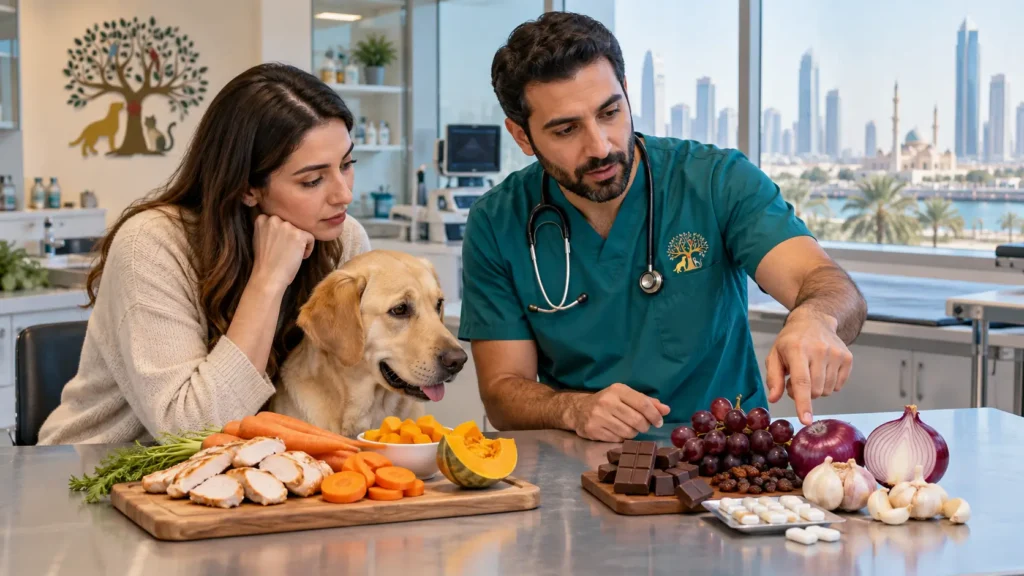
I remember a Labrador named Bruno whose owner brought him in after noticing that he had vomited several times during the evening. When I asked what he had eaten, she initially said, “Nothing unusual, just a little of our dinner.” A few more questions revealed that Bruno had been given leftovers containing onion and garlic, along with some sauce.
This is a situation I see more often than many pet owners expect. Sharing a small piece of food can feel harmless, especially when a dog is sitting beside the table looking at you. But our digestive systems are not the same as theirs, and some ingredients that are ordinary parts of human meals can be harmful to pets. At a veterinary clinic in Sharjah, understanding exactly what a pet has eaten can be an important part of deciding what needs to happen next.
Can Pets Eat Human Food at All?
Yes, some human foods can be appropriate for pets when they are plain, properly prepared and offered in suitable amounts. The important point is that “human food” is not one single category.
A plain piece of cooked chicken is very different from chicken covered in spicy seasoning, onion, garlic and a rich sauce. Similarly, a small piece of an appropriate fruit is different from a dessert containing chocolate or a sugar-free sweetener.
Human food should therefore be considered an occasional addition rather than a replacement for a complete and balanced pet diet. What matters most is the specific food, its ingredients, how it was prepared, and how much your pet consumed.
Key takeaway: A food being safe for people does not automatically make it safe for dogs or cats.
Safe Human Foods for Pets: What Can Be Offered?
Some simple foods can be suitable as occasional treats for certain pets. Preparation matters just as much as the ingredient itself.
| Food | General consideration |
| Plain cooked chicken | Can be offered in small amounts if unseasoned and boneless |
| Plain cooked turkey | Suitable as an occasional treat when free from seasoning and bones |
| Carrots | Can be offered in appropriate bite-sized pieces |
| Green beans | Plain, cooked or appropriately prepared |
| Certain fruits | Small portions may be suitable, depending on the fruit |
| Plain cooked pumpkin | Can be appropriate in small amounts |
| Cooked egg | Can be offered when properly cooked and unseasoned |
These foods should not automatically be treated as suitable for every pet. A pet with allergies, obesity, diabetes, digestive disease or another medical condition may need different dietary restrictions.
This is also why portion matters. Even a food that is generally considered safe can contribute unnecessary calories if given repeatedly or in large quantities.
For a broader understanding of how food choices fit into your pet’s nutritional needs, see our guide to Pet Nutrition and Feeding.
Which Human Foods Are Unsafe for Dogs and Cats?
Some foods are better left completely off your pet’s plate. Others become particularly concerning because they are common ingredients in everyday meals, snacks and drinks.
Foods to keep away from pets include:
- Chocolate and cocoa-containing foods
- Grapes and raisins
- Onions, garlic and related allium vegetables
- Products containing xylitol
- Alcohol
- Raw yeast dough
- Excessively salty foods
- Certain nuts, particularly macadamia nuts for dogs
- Foods containing cooked or raw bones
- Very fatty or heavily seasoned foods
The risk can vary according to the food, amount consumed, species, body size and individual health. For example, grapes and raisins have been associated with kidney injury in dogs, while onions and garlic can damage red blood cells and cause anemia.
That means you should not rely on the idea that a particular food is only dangerous when eaten in a large quantity. If your pet has consumed something known to be toxic, it is safer to seek veterinary advice rather than trying to estimate the risk yourself.
The Dangerous Foods Every Pet Owner Should Recognize
A few foods deserve special attention because they can cause serious poisoning or other complications.
Chocolate: Chocolate contains substances that can be harmful to pets, and darker or baking chocolate can contain higher concentrations. Severe exposure can lead to serious complications, including neurological and cardiovascular problems.
Grapes and raisins: These can cause potentially serious kidney injury in dogs. Because the response can be unpredictable, suspected ingestion should be taken seriously.
Onions and garlic: These ingredients can damage red blood cells and may cause anemia. They can appear in foods where owners do not immediately realize they are present, including sauces, gravies and prepared meals.
Xylitol: This sweetener is particularly important for dog owners. It can be found in sugar-free gum, sweets, baked products, some nut butters and other human products. In dogs, xylitol can cause a rapid and potentially life-threatening drop in blood sugar and may also cause liver injury.
Alcohol: Alcohol can cause vomiting, weakness, coordination problems, breathing difficulties and, in severe cases, coma or death.
Raw yeast dough: Raw dough can expand inside the digestive tract and can also produce alcohol as it ferments, creating potentially serious complications.
Why Preparation and Portion Matter
One of the biggest mistakes I see is judging food only by its main ingredient.
A piece of plain cooked meat and a piece of heavily seasoned meat may look similar, but they are not nutritionally or medically equivalent for a pet.
Before giving your pet something from your plate, consider:
- Is it seasoned? Onion, garlic, excessive salt and sauces can create problems.
- Does it contain bones? Bones can cause choking, injury or gastrointestinal obstruction.
- Is it very fatty? Rich foods can cause digestive upset and may contribute to pancreatitis in susceptible pets.
- Does it contain artificial sweeteners? Check labels for xylitol, particularly in sugar-free products.
- How much is your pet receiving? Even appropriate treats should fit within the pet’s overall dietary needs.
A Vet in Sharjah may also consider your pet’s age, weight, existing health conditions and medications before recommending whether a particular food should be included.
What Should You Do If Your Pet Eats Something Dangerous?
If you discover that your pet has eaten a potentially toxic food, do not wait for symptoms before seeking advice.
First, identify exactly what was eaten. If possible, keep the packaging or ingredient list. Note approximately what your pet ate, how much was consumed, and when it happened.
Then contact your veterinarian or an emergency veterinary service promptly. Do not give your pet home remedies or attempt to induce vomiting unless a veterinary professional specifically tells you to do so.
This is particularly important with substances such as xylitol and chocolate, where prompt veterinary assessment can matter. The FDA specifically advises contacting a veterinarian or emergency animal clinic immediately when a dog may have consumed xylitol.
A quick emergency checklist
Your veterinarian will find these details useful:
- What food or product was eaten?
- What ingredients does it contain?
- Approximately how much was consumed?
- When did your pet eat it?
- What is your pet’s approximate weight?
- Has your pet developed any symptoms?
The more accurately you can answer these questions, the easier it is for the veterinary team to assess the situation.
FAQs About Human Food for Pets
Can dogs eat human food?
Some human foods can be given to dogs in small amounts when they are appropriate, plain and properly prepared. However, many common foods and ingredients are unsafe, so leftovers should not automatically be considered suitable treats.
What human foods are safe for dogs?
Plain cooked chicken or turkey, some vegetables, certain fruits and plain cooked egg may be appropriate for some dogs. Individual health conditions and allergies should always be considered.
Can cats eat human food?
Some cats can tolerate small amounts of suitable plain foods, but cats have specific nutritional requirements. Human food should not replace a complete feline diet.
What foods are toxic to dogs and cats?
Important examples include chocolate, grapes and raisins, onions, garlic, alcohol and certain products containing xylitol. The level of risk can depend on the specific food and exposure.
What should I do if my pet ate something toxic?
Contact a veterinarian or emergency veterinary service promptly, particularly if the food is known to be toxic. Keep the packaging or ingredient information available and tell the veterinary team what was eaten, approximately how much, and when.
The Safest Treat Is an Informed Choice
There is nothing unusual about wanting to share a little of your meal with a pet. The problem begins when “just one bite” becomes automatic or when an ingredient hidden inside a human food goes unnoticed.
Before offering anything from your plate, look beyond the food’s name. Check the ingredients, preparation, portion and your pet’s individual health needs. And when there is any possibility that your pet has eaten something toxic, treat the situation as a veterinary question rather than waiting to see what happens.
A few seconds of checking can prevent a meal from becoming an emergency.