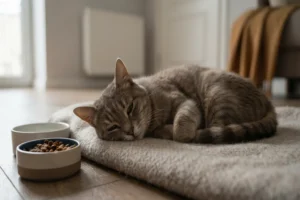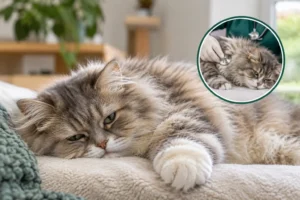
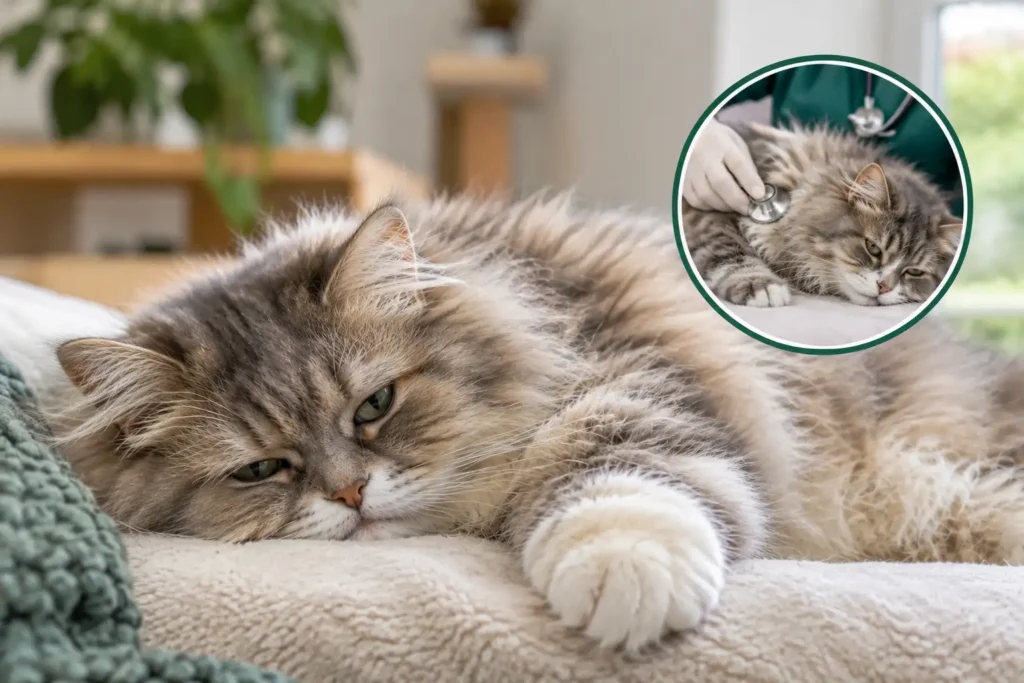
Some of the most important calls we take at Tree Pet Veterinary Clinic begin the same way: “She’s just not herself.” The cat is sleeping longer than usual, walking past her favourite toy, picking at a meal she normally finishes. Nothing dramatic. Just a quiet change that the person living with her notices straight away. If that sounds familiar and you have been searching what is lethargy in cats, it is worth sitting down with a pet vet in Sharjah to work out what is behind the tiredness. Sometimes it really is one sleepy day. Sometimes it is the first thing a cat shows us before anything else does.
What Does Lethargy in Cats Mean?
Lethargy simply means your cat has less energy and less interest than is normal for them. A lethargic cat switches off from the world around them. They don’t come when their name is called, they skip the small routines they never used to skip, and they don’t bother getting up for visitors. Any drop in alertness or enthusiasm that is unusual for that cat counts.
Here is the part owners often find surprising: lethargy is not a diagnosis. It is a symptom, and it sits underneath a long list of possible conditions. That doesn’t mean you should assume the worst, but it does mean it deserves attention. It can also be caused by something short-lived and minor. The only reliable way to judge it is to know your cat at their healthiest, because that is your baseline.
Normal Tiredness vs. True Lethargy
Cats sleep. A lot. Most of their day is spent asleep or dozing somewhere warm, and that on its own is never a reason to worry.
True lethargy looks different, and the difference is responsiveness. A cat who is merely resting will still lift their head for the food bowl, still come alive when the water runs, and still react when someone wants to play. A lethargic cat stays flat. The stimulus is there and the response isn’t. For it to count as genuine lethargy, the change should be clear enough that you noticed it without looking for it.
What Does a Lethargic Cat Look Like?
What are the signs of lethargy in cats? In practice, these are the ones we hear about most:
- excessive sleeping or sleeping in strange places
- no interest in favorite toys and games
- slowed movement or reluctance to jump, climb, or go up and down stairs
- increased hiding or avoidance of interaction with humans and other pets
- dull, unkempt hair
- decreased interest in food and water
- lackluster appearance or seeming unalert to their surroundings
No cat shows all of them, and this list isn’t the whole picture. Every cat has their own normal, which is why the change has to be obvious to you before it means anything.
Possible Causes of Lethargy in Cats
Because lethargy travels with so many different conditions, nobody can name the cause without examining the cat. These are the possibilities we work through most often:
- Infections or fevers
- Pain, such as arthritis or an injury
- Dehydration, especially in warmer weather
- Dental discomfort that makes eating and moving less appealing
- Internal issues affecting organs such as the kidneys, liver, or thyroid
- Anaemia or other blood-related conditions
- Parasites
- Stress from changes at home, such as a new pet, a move, or loud renovations
- Recovery after a procedure, vaccination, or medication reaction
That list isn’t exhaustive, and it isn’t a tool for diagnosing your cat at home. What it does tell you is where to pay attention. A change in appetite alongside tiredness is usually a useful clue, including whether your cat is getting the right diet for their needs. Beyond that, it takes a hands-on examination, and diagnostics where the case calls for it, to find the actual cause.
When Should You Worry? Warning Signs That Need a Vet
A few hours of low energy is rarely an emergency. Lethargy combined with any of the following is a different matter, and should be seen promptly:
- Not eating or drinking for more than 24 hours
- Vomiting or diarrhoea
- Laboured, rapid, or noisy breathing
- Pale, bluish, or grey gums
- Collapse, unresponsiveness, or seizures
- Obvious pain, swelling, or injury
- Lethargy that lasts more than a day or two, or keeps getting worse
If any of these show up, particularly if they come on suddenly, please don’t wait it out to see whether your cat picks up on their own. With these signs, prompt emergency veterinary care genuinely changes how quickly a cat recovers.
What You Can Do While You Arrange a Vet Visit
- Keep your cat somewhere quiet, warm, and comfortable
- Make sure clean water is easily accessible
- Avoid forcing food, water, or any medication without veterinary guidance
- Note down anything unusual: appetite, litter box habits, breathing, or behaviour, so you can share it with your vet
- Skip home remedies or human medications, which can be unsafe for cats
That fourth point matters more than owners expect. The details you noticed at home often point us in the right direction faster than anything else does.
How Tree Pet Veterinary Clinic Can Help
If your cat is showing signs of lethargy, a routine wellness check-up can help assess their health and tell us whether anything is brewing underneath. Sudden or severe lethargy usually calls for a thorough examination along with diagnostic testing to identify the underlying cause. And if the car journey itself is what stresses your cat, a mobile vet in Sharjah lets us examine them at home, where they are calmer and we see them behaving normally.
Final Thoughts
A lethargic cat is, above everything else, a cat who has changed. Plenty of the visits we see end with good news and a relieved owner, and that peace of mind is worth the appointment on its own. But lethargy that lingers or deepens should never be left to run its course. When you are unsure, err towards having them looked at. You can always book a vet appointment with us and talk it through.
Frequently Asked Questions
What are the signs of lethargy in cats?
Common signs include low energy, excessive sleeping, reduced appetite, hiding, and less interest in play.
Why is my cat lethargic and not eating?
Possible causes include infection, pain, dehydration, or other health problems. Consult a vet promptly.
How can you tell if a cat is tired or lethargic?
A tired cat responds normally when awake, while a lethargic cat remains unusually inactive or unresponsive.
When should I take my lethargic cat to the vet?
Seek urgent care for breathing difficulties, collapse, seizures, or pale gums. Contact a vet if lethargy persists or worsens.
Can stress cause lethargy in cats?
Yes, stress can reduce activity, but persistent lethargy needs veterinary assessment.