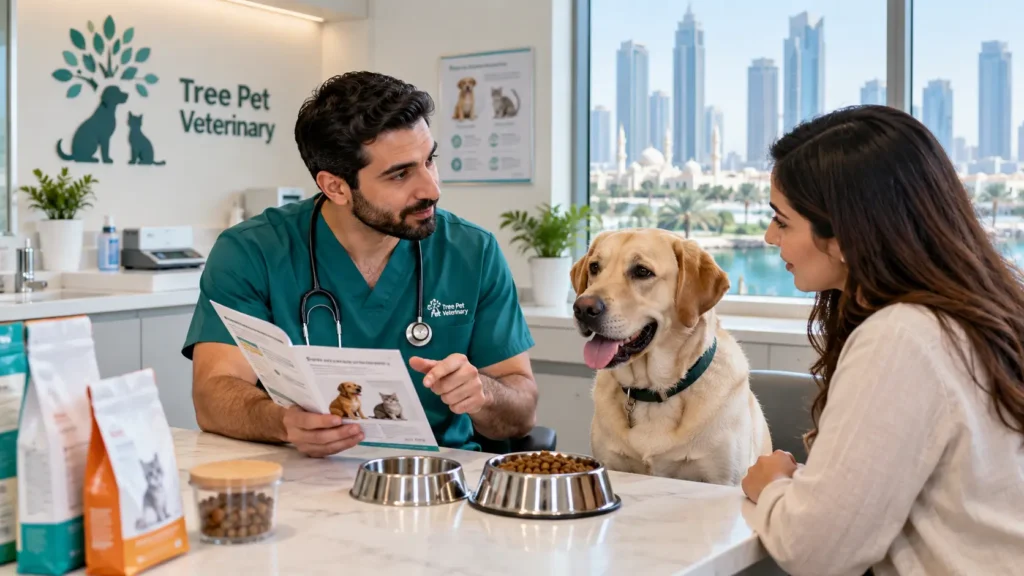
When a pet finishes every meal, it is easy to assume that everything is fine. But in practice, appetite is only one small part of understanding whether a diet is suitable. At our veterinary clinic in Sharjah, we look at the bigger picture, including a pet’s weight, body condition, digestion, activity and general behaviour. These everyday signs can tell us much more about how well a diet is supporting an individual animal.
The real question is not simply whether your pet enjoys its food, but whether that food continues to provide what your pet needs as they grow, age or become more or less active. A good pet diet should fit the individual animal, rather than being chosen only because it is popular or because another pet does well on it.
The Food Label Doesn’t Tell the Whole Story
Choosing pet food can be confusing. Shelves are filled with different brands, formulas, ingredients and claims, and it is easy to assume that the food with the most impressive label must automatically be the best choice. But the right food cannot be determined by packaging alone.
No two pets have exactly the same nutritional needs. Their age, size, daily activity, body condition and overall health can all affect what type of food and feeding routine suits them. A diet that works perfectly for one dog may not provide the same fit for another. Rather than simply choosing a food because it is marketed as “good,” the more important question is whether it matches your pet’s individual needs
Your Pet’s Body Condition Can Tell You a Lot
One of the clearest clues is your pet’s body condition. A gradual increase in body fat may indicate that your pet is receiving more energy than they currently need, while unexplained weight loss can have several possible causes, including inadequate nutrition or an underlying health problem.
Weight alone does not tell the complete story. During a veterinary examination, we also consider muscle condition and how fat is distributed over the body. If your pet’s shape has noticeably changed, their ribs are becoming difficult to feel, or they seem thinner than before, it may be time to reassess their diet and overall health.
Appetite Is Another Important Clue
A healthy appetite is reassuring, but it does not automatically prove that your pet is eating the right diet. Some pets will happily eat food that does not suit their current nutritional requirements, while others may experience appetite changes because of dental problems, digestive discomfort, illness or stress.
Pay attention to changes rather than simply asking whether your pet finishes the bowl. A sudden increase or decrease in appetite, repeated refusal of meals or unusual food-seeking behaviour deserves attention, particularly when it occurs alongside weight loss, weight gain or changes in normal behaviour.
What About Digestion and Stool Quality?
Your pet’s digestion can provide another useful indication of how well their current diet is being tolerated. Regular, well-formed stools are generally reassuring, while repeated diarrhoea, constipation, excessive gas or other persistent digestive changes may suggest that something needs closer attention.
However, digestive problems are not always caused by food. Parasites, infections, sudden dietary changes and medical conditions can produce similar signs. If digestive problems continue, repeatedly switching between different foods may not solve the underlying issue. A veterinary assessment can help determine whether the diet or another health concern needs to be considered.
Energy and Everyday Behaviour Matter Too
I also ask owners how their pets behave during an ordinary day. Is the dog still interested in walks? Does the cat continue to play? Is the pet alert, active and engaged with the family? These everyday observations can provide useful clues when assessing whether a diet is supporting the animal appropriately.
A change in your pet’s activity level can also mean that their nutritional needs have changed. As pets grow older or become less active, the amount of energy they require may decrease. For instance, an older dog that now spends more time resting may need a different feeding routine than the one that suited them when they were younger and more active.
A Diet That Worked Before May Not Always Work Forever
One of the most common assumptions I hear from owners is, “My pet has eaten this food for years, so it must still be right.” Sometimes that is true. But nutritional needs can change as a pet grows older, becomes more or less active, gains or loses weight, or develops a health condition.
This is why understanding your pet’s nutritional needs is an ongoing process rather than a decision that only needs to be made once. The goal is not to keep changing food unnecessarily, but to make sure the diet continues to make sense for the pet you have today.
What Should You Look at Before Changing Your Pet’s Food?
Before changing your pet’s food, look at the complete feeding routine. Consider what they eat as their main meals, how much they receive, how often they are fed and how many treats or additional foods they receive during the day. These details can make a significant difference to overall intake.
It is also important to consider your pet’s current body condition, activity level and general health. If everything appears stable and your pet is doing well, there may be no reason for a sudden change. If there has been unexplained weight change, persistent digestive upset or another health concern, it is better to understand the cause before making major dietary adjustments.
When Is It Time to Speak to a Veterinarian?
You do not need to wait until your pet becomes seriously unwell before discussing their diet. A veterinary consultation can be useful when your pet is gaining or losing weight unexpectedly, experiencing ongoing digestive problems, showing a significant change in appetite or becoming noticeably less active.
A veterinarian looks at your pet’s overall health and individual needs, rather than relying on the information printed on a food package alone. If there is a nutritional concern, the assessment can help determine what needs to change and whether further investigation is necessary.
The Right Diet Is the One That Fits Your Pet
There is no single diet that is perfect for every dog or cat. The right diet for pets depends on the individual animal and how their nutritional needs fit with their age, activity, body condition and overall health.
Bella’s situation was a good reminder of this. Her food had not suddenly become bad food; her circumstances had changed. Once we looked at the bigger picture, it became easier to understand why her feeding routine needed to be reconsidered. Your pet’s body, behaviour and health can provide the same kind of clues. Paying attention to those changes can help you recognize when a healthy pet diet is continuing to work and when it may be time to take a closer look.
Frequently Asked Questions
How do I know if my pet is eating the right diet?
Look at the bigger picture, including body condition, weight, appetite, digestion, energy and overall wellbeing. No single sign can determine whether a diet is suitable.
Can the same food work for every pet?
Not necessarily. Pets have different nutritional needs depending on factors such as age, activity, size, body condition and health. A food that suits one pet may not be appropriate for another.
Should I change my pet’s food if they are gaining weight?
Weight gain can have several causes, including excessive portions, treats, reduced activity or underlying health problems. It is better to assess the complete situation before making a major dietary change.
When should I ask a veterinarian about my pet’s diet?
Speak with a veterinarian if your pet has unexplained weight changes, persistent digestive problems, significant appetite changes, reduced energy or a health condition that may affect their nutritional needs.