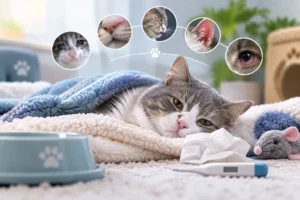
It began with one tiny sneeze. By evening, Milo, a ginger cat, had watery eyes and refused his dinner, so his owner took him to Tree Pet Veterinary. Concerned about his changing symptoms, she wanted advice from a trusted vet in Sharjah.
Dr. Khaled Ali Hamdy, the vet doctor, asked about Milo’s history before checking his eyes, nose, mouth, hydration, and breathing. Nothing pointed to an emergency, so he advised supportive care and explained the warning signs his owner should watch for.
Are these just cat cold symptoms, or could they indicate a serious respiratory infection? Recognizing the early cat flu symptoms can help you decide whether to monitor your cat at home or seek veterinary care. This guide provides helpful information but cannot replace a veterinary examination.
What Is Cat Flu?
“Cat flu” is a popular name for feline upper respiratory infections of the nose, throat and eyes. The Cornell Feline Health Center notes that viruses and bacteria cause them, especially where many cats live together.
What Are the Common Cat Flu Symptoms?
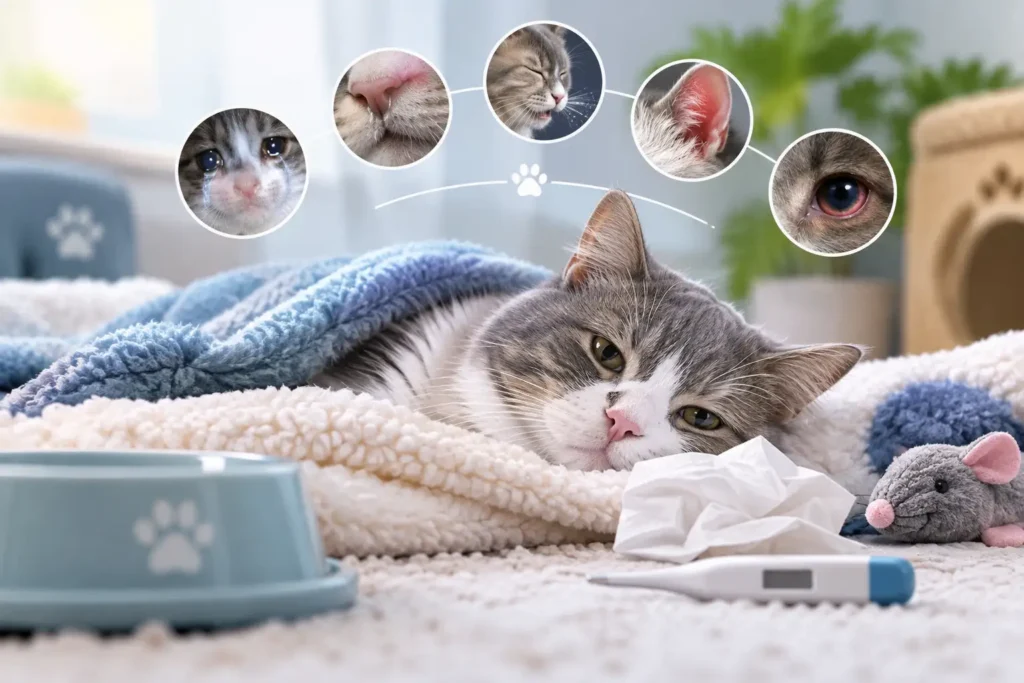
The signs of cat flu in cats often look like a human cold. Not every cat shows all of them.
Sneezing and Nasal Discharge
Frequent sneezing and a runny nose are typical. Discharge may be clear at first and later turn thicker or coloured.
Watery Eyes and Eye Discharge
Red, squinting or weepy eyes can signal conjunctivitis (inflammation of the eye lining). Eye problems can worsen quickly, so they deserve attention. Tree Pet Veterinary lists veterinary ear and eye care among its services.
Fever, Lethargy, and Loss of Appetite
Cats often eat less when they cannot smell their food. A tired, withdrawn cat that refuses meals needs closer monitoring.
Mouth Ulcers and Other Possible Symptoms
Cornell notes that mouth ulcers and coughing can also occur. Drooling or pawing at the mouth may be a clue.
What Are the Early Signs of Cat Flu in Cats?
Early changes are often subtle:
• Occasional sneezing or a “snuffly” sound
• Slightly reduced appetite
• Less grooming or a dull coat
• More sleeping, less play
• Mildly watery eyes
Noticing these early lets you act sooner, which matters most for kittens and older cats.
Cat Respiratory Infection Symptoms: Is It a Cold or Something More Serious?
Several illnesses cause similar signs, so symptoms alone cannot give a diagnosis. This table is a guide to urgency only.
| Symptom or sign | What it may indicate | Recommended action |
| Occasional sneezing, clear eye/nose discharge, normal eating | Possibly a mild upper respiratory problem | Monitor closely; call your vet if it lasts or worsens |
| Thick coloured discharge, not eating, marked lethargy | Possible infection needing assessment | Prompt vet visit |
| Squinting, cloudy or painful eye | Possible eye involvement | Prompt vet visit |
| Mouth ulcers, drooling | Possible viral infection | Prompt vet visit |
| Open-mouth breathing, struggling to breathe, collapse, blue or grey gums | Possible emergency | Immediate emergency care |
What Causes Cat Flu and Respiratory Infections?
The main culprits are feline herpesvirus type 1 and feline calicivirus. Cornell cites herpesvirus in as many as 80–90% of infectious cases, and infected cats may carry it for life.
The viruses spread through close contact and contaminated bowls, bedding or hands. Not every sneeze is cat flu, as allergies, dental disease and other infections can look similar.
Are Cat Flu Symptoms Different in Kittens and Older Cats?
Cat flu in kittens can be more serious because their immune systems are still developing and they dehydrate quickly. Senior and immunocompromised cats are also prone to complications, so call a vet promptly.
How Do Veterinarians Diagnose Cat Flu?
Your vet will take a history and examine the eyes, nose and mouth, then run tests only if needed. Clinics with in-house facilities, like Tree Pet Veterinary’s diagnostic testing laboratory, can do so when recommended.
In Milo’s story, Dr. Khaled Ali Hamdy followed exactly this order: history first, then a hands-on examination, and extra tests only if they were needed.
How Is Cat Flu Treated?
Treatment is mostly supportive:
• Keep your cat warm, comfortable and hydrated
• Offer strongly scented, tempting food
• Gently wipe eye and nose discharge with a clean, damp cloth
• Follow your vet’s plan for any medication
Antibiotics do not work against viruses and are used only if your vet finds a secondary bacterial infection. Never give human cold medicines, painkillers or leftover prescriptions, as many are toxic to cats.
When Should You Take Your Cat to a Vet?
Go to an emergency vet immediately if your cat breathes with an open mouth, struggles to breathe, collapses, or has blue or grey gums. Tree Pet Veterinary has an emergency vet in Sharjah page for urgent situations.
Book a prompt appointment if symptoms last more than a couple of days, or your cat stops eating, seems dehydrated, has eye problems or grows lethargic. A mobile vet service in Sharjah is also listed if travelling is stressful.
Can Cat Flu Be Prevented?
Prevention helps, though it offers no guarantees:
• Vaccination: It can reduce the risk or severity of some infections but does not prevent every episode. Ask about cat vaccination at your next visit.
• Keep sick cats separated from healthy ones
• Clean shared bowls, litter trays and bedding regularly
• Wash your hands after handling a sick cat
• Reduce stress, as it may trigger flare-ups in carrier cats
Final Thoughts on Cat Flu Symptoms
Milo’s owner did the most important thing: she noticed the change early and asked a professional instead of guessing.
Most mild cases do well with good care, but only a vet can tell a cold from a serious infection. Watch for early changes, never self-medicate, and contact Tree Pet Veterinary if you are worried.
Frequently Asked Questions
What are the first signs of cat flu?
Usually sneezing, watery eyes, a runny nose, reduced appetite and tiredness. These can be mild at first, so watch for changes in behaviour and eating.
How can you tell the difference between cat flu and a common cold in cats?
You cannot reliably tell at home, because “cat cold” and cat flu overlap. Severity, duration and extra signs like mouth ulcers or poor appetite suggest a vet check is needed.
How long does cat flu usually last in cats?
It varies with the cause, the cat’s age and overall health. Many mild cases improve within a couple of weeks, but some cats have prolonged or recurring signs. Your vet can advise your cat.
Is cat flu contagious to other cats?
Yes, the main viruses spread between cats through close contact and shared items. Separate a sick cat from others and clean shared bowls and bedding.
When should I take my cat to the vet for flu symptoms?
Immediately for breathing difficulty, collapse or blue/grey gums. Promptly if signs persist, your cat stops eating, seems dehydrated, or has eye problems. Kittens and seniors should be seen sooner.