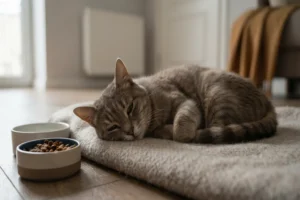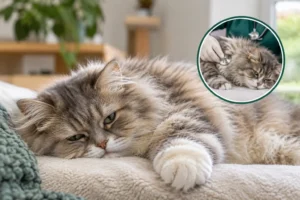
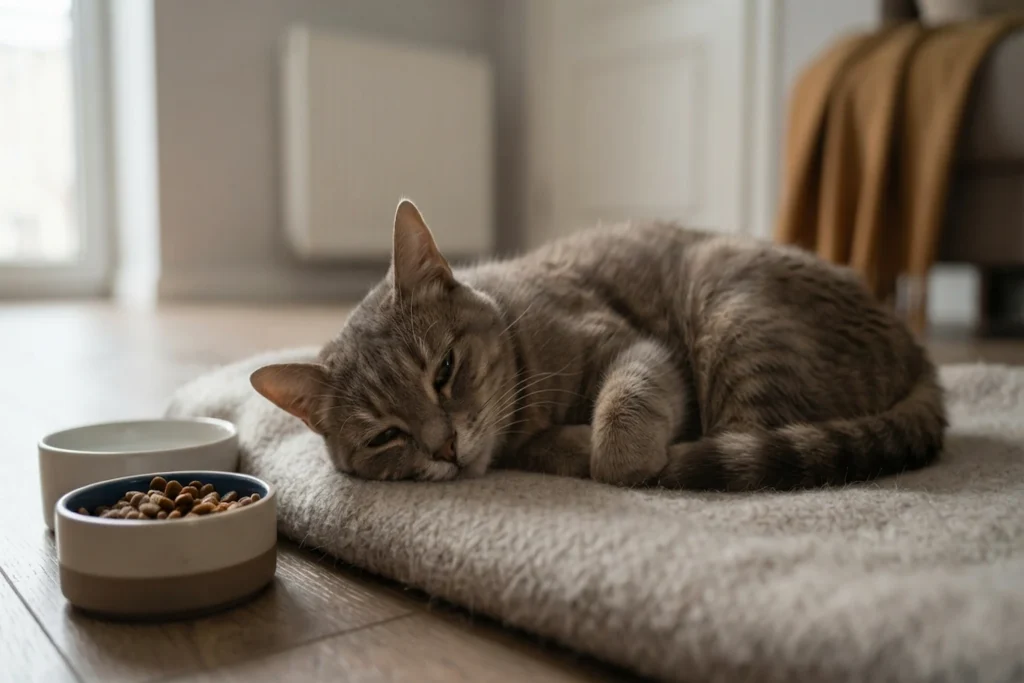
If your cat has stopped eating and seems unusually quiet, sleepy, or withdrawn, it’s natural to ask why is my cat lethargic and not eating, and whether it’s something to worry about. At Tree Pet Veterinary, a trusted vet in Sharjah, we hear this concern often, because appetite and energy are two of the clearest windows into how a cat is really feeling. An occasional quiet day is usually nothing to worry about, but when low energy and a lost appetite show up together, it’s worth paying closer attention. This guide walks through the common causes, what you can safely do while you arrange care, and when it’s time to call a vet.
What Does It Mean When a Cat Is Lethargic and Not Eating?
Lethargy describes a drop in energy and interest that goes beyond a normal nap. A cat that is simply resting will usually perk up for food, play, or attention; a lethargic cat stays withdrawn even when something would normally catch its interest. Loss of appetite, or inappetence, means your cat is eating noticeably less than usual, skipping meals, or showing no interest in food at all.
On their own, either symptom can have a simple, short-lived explanation. Together, though, they often mean your cat’s body is putting its energy into coping with something internally, whether that’s an infection, discomfort, or a change that’s harder to see from the outside.
Common Causes of Lethargy and Loss of Appetite in Cats
Because so many different conditions can produce this combination, it isn’t possible to know the exact cause without an examination. Understanding the common categories, though, can help you describe what you’re seeing more clearly to your vet.
Infections and Illness
Viral or bacterial infections are among the most frequent reasons a cat suddenly goes off its food and becomes unusually quiet. A fever, in particular, tends to suppress appetite while the body works to fight off whatever is causing it.
Pain, Including Dental Discomfort
Pain from an injury, arthritis, or dental disease can make a cat reluctant to move, groom, or eat. Dental pain is easy to overlook because cats rarely paw at their mouths, so a cat that suddenly prefers soft food, drops kibble, or chews on one side only may be telling you something through its appetite rather than its behavior.
Digestive Upset
Vomiting, diarrhea, or general stomach discomfort can understandably put a cat off food for a day or two. Mild, brief digestive symptoms often settle on their own, but anything that lasts more than a day, or keeps recurring, deserves a proper look.
Internal Organ or Hormonal Issues
Conditions affecting the kidneys, liver, thyroid, or pancreas can cause a slow decline in appetite and energy that’s easy to miss at first because it builds gradually rather than overnight. These internal changes rarely show visible signs until they’ve progressed, which is part of why blood and urine testing matters.
Stress and Environmental Changes
Cats are sensitive to change. A new pet, a house move, loud renovation noise, or even rearranged furniture can be enough to make a cat withdraw, sleep more, and eat less for a few days. Stress-related appetite loss should still improve once things settle, and it shouldn’t be assumed without ruling out a physical cause first.
Parasites
Intestinal parasites can quietly drain a cat’s energy and appetite over time, particularly in kittens or cats that spend time outdoors. Fecal testing is often one of the simplest ways to check for this.
Why Is My Cat Not Eating But Acting Normal?
Sometimes a cat seems to be behaving mostly as usual still greeting you, still using the litter box but is clearly eating less. This can happen when a health issue is still in its early stages, or when the change is mild enough that other behaviors haven’t been affected yet. It can also come down to the food itself, such as a recent change in brand, texture, or temperature. If the issue seems to be more about the food than your cat’s overall health, Pet’s Nutritional Consultation in Sharjah service can help rule that out. That said, a reduced appetite lasting more than a day or two is worth mentioning to your vet even if nothing else seems different, since subtle changes are often the earliest sign of something that needs attention.
Why Is My Cat Suddenly Lethargic and Not Eating? When It’s More Concerning
A gradual dip in energy over several weeks is different from a cat that goes from playful to listless within a day. Sudden lethargy combined with a complete loss of appetite tends to be more concerning, because it often points to something acute: an infection, a blockage, poisoning, or significant pain rather than a slow-developing condition. The faster the change, the sooner it’s worth having your cat examined. If you’re trying to work out whether what you’re seeing counts as true lethargy or just a quiet day, What Is Lethargy in Cats? explains the signs in more detail.
Other Symptoms to Watch Alongside Lethargy and Appetite Loss
Lethargy and not eating rarely occur in complete isolation. Watch for:
● Vomiting or diarrhea
● Increased or decreased thirst and urination
● Hiding more than usual
● Weight loss, even over a short period
● Pale or yellowish gums
● Labored or rapid breathing
● Reluctance to jump or move normally
Noting when each symptom started, and how it has changed, gives your vet valuable information before the examination even begins.
Safe Steps You Can Take While Arranging Veterinary Care
While you arrange a visit, there are a few things you can safely do:
● Offer fresh water and a small amount of your cat’s usual food, without forcing it
● Keep your cat in a quiet, warm, low-stress area
● Avoid handling or moving your cat more than necessary if it seems painful
● Write down what you’ve noticed, including when symptoms started and any recent changes at home
● If getting your cat to the clinic feels stressful for either of you, our Mobile Vet In Sharjah service can bring the examination to your cat instead.
What to Avoid Doing at Home
● Don’t give human medications, including pain relievers, without veterinary guidance many are toxic to cats
● Don’t force-feed your cat, which can cause stress or, in some cases, aspiration
● Don’t wait and see for more than a day or two if your cat has stopped eating completely
● Don’t rely on home remedies in place of a veterinary assessment
When to Contact a Vet and When It’s an Emergency
A vet visit is a good idea whenever reduced appetite and low energy last more than 24 hours, or if either symptom returns after seeming to improve. Some signs, though, call for our Emergency Vet in Sharjah service right away rather than a routine appointment:
● No food or water for more than 24 hours
● Repeated vomiting or diarrhea
● Difficulty breathing
● Pale, blue, or grey gums
● Collapse, seizures, or unresponsiveness
● Obvious pain or distress
If you notice any of these, don’t wait to see whether your cat improves on its own.
What a Veterinarian May Check
A vet will usually start with a physical examination, checking your cat’s weight, hydration, gum color, and abdomen, while asking about when the symptoms started and anything that’s changed recently at home. Depending on what that exam suggests, our Blood & Laboratory Testing in Sharjah service may be recommended to look more closely at organ function, check for infection, or rule out conditions that aren’t visible from the outside. In some cases, additional imaging or further tests may follow, depending on what the initial results show.
Prevention and Monitoring Tips for the Future
Not every cause of lethargy and appetite loss can be prevented, but a few habits make it easier to catch problems early:
● Keep up with routine wellness checks and vaccinations
● Monitor your cat’s eating and litter box habits so you notice changes quickly
● Keep fresh water available at all times
● Minimize sudden environmental changes where possible
● Reach out to your vet promptly rather than waiting to see if symptoms resolve on their own
Final Thoughts
A cat that is lethargic and not eating is telling you something, even if it isn’t always serious. Many cases turn out to have a straightforward explanation, but because the same combination of symptoms can also signal something more significant, it’s always worth taking seriously rather than waiting it out. If your cat’s energy or appetite hasn’t bounced back within a day, or if anything about their behavior feels off, a veterinary assessment can offer clarity and, when needed, timely treatment. The team at Tree Pet Veterinary is here to help you figure out what’s going on and what to do next.
Frequently Asked Questions
Why is my cat lethargic and not eating?
This combination can have many causes, ranging from mild stress or a minor stomach upset to infections, pain, or internal organ issues. Because the possible causes vary so widely, a veterinary examination is the most reliable way to understand what’s behind it, especially if it lasts more than a day.
How long can a cat go without eating before it becomes an emergency?
Cats that go without food for more than 24 hours, especially alongside lethargy, should be seen by a vet. Prolonged appetite loss can lead to complications such as hepatic lipidosis, a serious fatty liver condition, so it’s best not to wait it out at home.
Can stress cause a cat to be lethargic and not eat?
Yes, stress from changes like a new pet, a move, or loud noises can reduce appetite and energy for a few days. However, stress shouldn’t be assumed without first ruling out a physical cause, particularly if the symptoms are severe or don’t improve once things settle down.
Should I force-feed my cat if it won’t eat?
No. Forcing food on a cat that doesn’t want to eat can cause additional stress and, in some cases, aspiration. Instead, offer food calmly, keep it appealing, and contact your vet if your cat continues to refuse meals for more than a day.
When should I take my lethargic, not-eating cat to the vet immediately?
Seek urgent care if your cat hasn’t eaten or had water in over 24 hours, is vomiting repeatedly, has pale or blue gums, is struggling to breathe, or collapses. These signs suggest the underlying problem needs prompt attention rather than a routine appointment