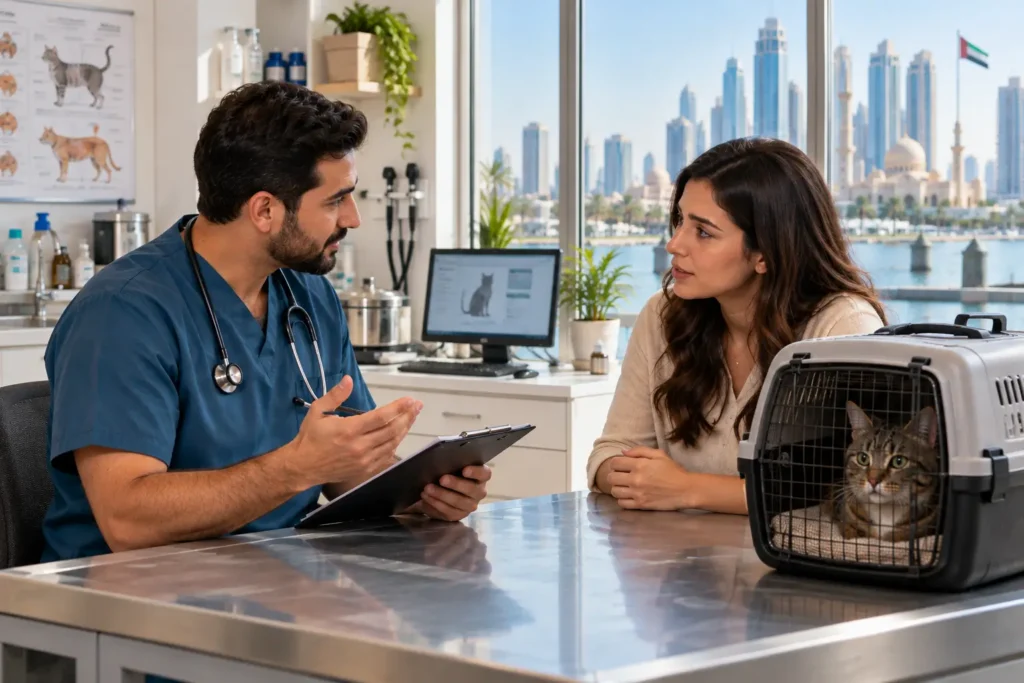
A veterinary consultation often begins before I have even examined your pet. I remember one Thursday afternoon when Luna, a tabby cat, arrived at our veterinary clinic in Sharjah tucked inside her carrier, one paw pressed against the mesh. Her owner sat across from me, visibly worried, and said something I hear often: “She’s just not herself. I don’t know how to explain it.” Luna hadn’t stopped eating entirely; she wasn’t limping, and there was no obvious wound. Still, something had changed, and the person who knew her best had noticed it.
As a veterinarian, moments like this are where the investigation begins. Before I reach for my stethoscope or start the physical examination, I ask a simple question: “When did you first notice the change?” To a worried pet owner, those questions can sometimes feel like a delay. But they aren’t. The answers you give me begin creating context when the change started, how it developed, and what may have changed around your pet. Before my hands have even touched the patient, the search for the first clues has already begun.
Before I Examine Your Pet, I Need to Understand What Changed
Your pet cannot tell me where it hurts, when the problem began, or whether the change appeared suddenly or developed gradually. That part of the clinical picture comes from you. As a veterinarian, I bring medical knowledge to the consultation, while you bring an understanding of what is normal for your individual pet: their usual behaviour, appetite, energy, and routine. Both perspectives are important before the physical examination begins.
One of the first things I need to understand is when the change started and how it has developed. A problem that appeared suddenly can raise different clinical questions than one that has been developing gradually over days or weeks. I also need to understand whether the symptom is constant or intermittent, whether it is getting worse, and whether anything else changed around the same time. These details help create a timeline and give the consultation a clearer clinical starting point.
A single symptom rarely tells the complete story. “My pet isn’t eating,” for example, is an important observation, but the surrounding details matter just as much. How long has it been happening? Has anything else changed? Is your pet behaving differently? By putting timing, duration, behaviour, and other observations together, the information you provide begins to form a clearer picture. Before I have physically examined your pet, the first clues may already be taking shape and they are only the beginning of understanding how tests, diagnosis, and treatment come together during a veterinary visit.
Sometimes the Most Important Clues Are Happening at Home
I see your pet for the length of a consultation. You see them every day. You know whether they greeted you at the door that morning or stayed in their bed. You notice where they normally sleep, how they usually eat, and when something about their behaviour simply feels different. These everyday observations are valuable because they provide a picture of your pet’s normal life, something I cannot fully see during a single appointment.
One of the things pet owners often tell me is, “My pet just isn’t acting like themselves.” It may sound difficult to define, especially when there is no obvious injury or clear physical symptom. Perhaps your dog has become quieter than usual, or your cat has started hiding in unfamiliar places. Maybe they have lost interest in a favourite toy, a usual walk, or an activity they normally enjoy. These changes may seem small or too vague to mention, but they can become important when considered alongside the rest of your pet’s history.
Changes around your pet can also add useful context. A new food, different treats, changes in routine, travel, boarding, visitors, nearby construction, or contact with other animals may all be worth mentioning. None of these factors automatically explains the problem, and they should not be assumed to be the cause. However, they can help me understand the circumstances surrounding a change in your pet’s health or behaviour. The more complete the context, the clearer the starting point for the next stage of the consultation can become.
Why Do I Ask So Many Questions Before Examining Your Pet?
The questions I ask are not separate from your pet’s veterinary consultation they are part of how the consultation begins. Before the physical examination, I need to understand the story behind the symptom. When did it start? Did it appear suddenly or develop gradually? Has it changed over time? Has anything else changed at home?
Each answer adds context. A problem that appeared overnight may raise different clinical questions from one that has been developing gradually for several weeks. Previous health concerns, recent treatments, medications, and changes in your pet’s behaviour can also influence how I understand the information in front of me. The goal is not to reach a conclusion before examining your pet, but to build a clearer picture of what may be relevant.
That conversation helps establish a timeline and gives the physical examination a more informed starting point. It helps me understand which changes deserve closer attention and what additional information may be important as the consultation continues. Asking the right questions does not slow the process down it helps ensure that the next steps are guided by more than a single symptom.
Looking Back Can Be Just as Important as Looking at Today
A current concern does not always exist in isolation. Sometimes, understanding what has happened before can provide important context for what is happening now.
Previous illnesses, injuries, known sensitivities, ongoing medications, or recent treatments may all be relevant to a veterinary consultation. This does not mean that every past health issue is connected to a new problem. Often, it is not. However, a veterinarian needs to understand the wider health history before deciding whether an earlier event may be relevant.
If your pet has previous veterinary records, an existing diagnosis, or is currently receiving medication, sharing that information can be helpful. Even details that seem unrelated or happened some time ago may contribute to a more complete understanding of your pet’s health history.
What Can You Tell Your Vet Before the Examination Begins?
You do not need to arrive with a detailed medical report or remember every event perfectly. The most helpful thing you can do is share what you have noticed as clearly and honestly as possible. Even small observations can help provide context.
Useful information may include:
- When you first noticed the change
- Whether it appeared suddenly or developed gradually
- Changes in appetite, eating, or drinking
- Changes in energy, behaviour, or daily activity
- Changes in urination or bowel movements
- Recent changes in routine, diet, or environment
- Current medications or recent treatments
If a symptom happens intermittently and is not visible during the appointment—such as occasional limping, coughing, unusual movement, or changes in behaviour a short video recorded at home may also provide useful information. Seeing the behaviour as it occurs can sometimes offer context that is difficult to communicate through words alone.
Why Asking Questions Isn’t Delaying Your Pet’s Care
It is completely natural to feel impatient when your pet is unwell. You want answers, and more importantly, you want something to happen.
But the information you share at the beginning of the consultation is already helping shape what comes next. Understanding when the problem began, how it developed, and what changes you have noticed gives the veterinarian important context before the physical examination starts. That context can help make the next stage of the consultation more focused and identify which details may need closer attention.
Moving quickly does not always mean skipping ahead. Taking the time to understand the problem properly is part of providing informed veterinary care. The conversation creates the foundation for everything that follows.
By the Time the Examination Begins, We Already Have Our First Clues
Before the physical examination begins, the conversation may already have revealed important details. I may know when the change started, how it has developed, and how your pet’s current behaviour differs from what is normal for them. These early observations do not provide a diagnosis, but they help create the context needed to assess your pet more effectively.
That information does not replace the physical examination it helps inform it. As the consultation moves forward, what veterinarians look for when examining your pet becomes the next part of the process, turning the information you have shared into direct clinical observations.
Frequently Asked Questions
Why does the vet ask questions before examining my pet?
Because the answers provide clinical context that the examination alone cannot. Knowing when a symptom started, how it developed, and what has changed in your pet’s life helps build a clearer picture before the physical assessment begins. The questions are not a delay; they are the first stage of the investigation.
What information should I tell the vet about my pet?
Share when you first notice the change, whether it appears suddenly or gradually, any shifts in appetite, drinking, energy, behaviour, or bathroom habits, and anything different in their routine, environment, or diet. Current medications and previous health issues are also worth mentioning.
Why does it matter when my pet’s symptoms start?
Timing significantly influences how a symptom is interpreted clinically. A problem that appeared within hours suggests something different from one that has been developing over several weeks. The timeline helps identify what kind of issue may be present and how it should be approached.
What if I don’t remember exactly when the problem began?
An approximate answer is still useful. “About three or four days ago” gives me more to work with than no timeframe at all. Think back to the last time your pet seemed completely normal that can help establish a rough starting point even when the exact date is unclear.
Should I take a video of my pet’s symptoms?
If a symptom is intermittent and not happening during the appointment, a short video can be genuinely helpful, particularly for limping, unusual movements, or recurring behaviours that are difficult to describe. However, never delay seeking care in order to record footage first.
The Conversation Is Where the Investigation Begins
Luna’s visit was a reminder that answers do not always begin with the physical examination. The timeline her owner described, the subtle changes she had noticed at home, and the small details she nearly dismissed all helped create a clearer clinical picture before the examination even began. That is the purpose of those first questions: not to delay your pet’s care, but to begin understanding the concern properly. If you have noticed changes in your pet’s appetite, energy, behaviour, or simply feel that something is different, that observation is worth sharing. At Treepet Veterinary, we believe every detail can contribute to a better understanding of your pet’s health, from the first conversation through each stage of their care.