If you have ever wondered whether a vaccinated cat can still get sick, any Vet in Sharjah would tell you that you are asking the right question. At Tree Pet Veterinary Clinic, we believe the question “Can a Cat Flu Vaccine Prevent Infection Completely?” deserves a careful, honest answer. To explain it simply, this article follows an illustrative home visit by Loay Mohamed, Vet Doctor, and shows how a veterinarian examines a sneezing cat and explains what vaccination can and cannot do.
A Home Visit Story: “But My Cat Was Vaccinated”
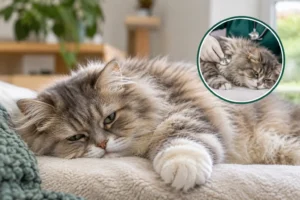
Imagine a cat owner named Sara. Her one-year-old cat, Mishmish, had his kitten vaccines and boosters on time. Last week he stayed at a boarding facility while the family travelled. Now he is sneezing, his eyes are watery, and he is leaving half his food.
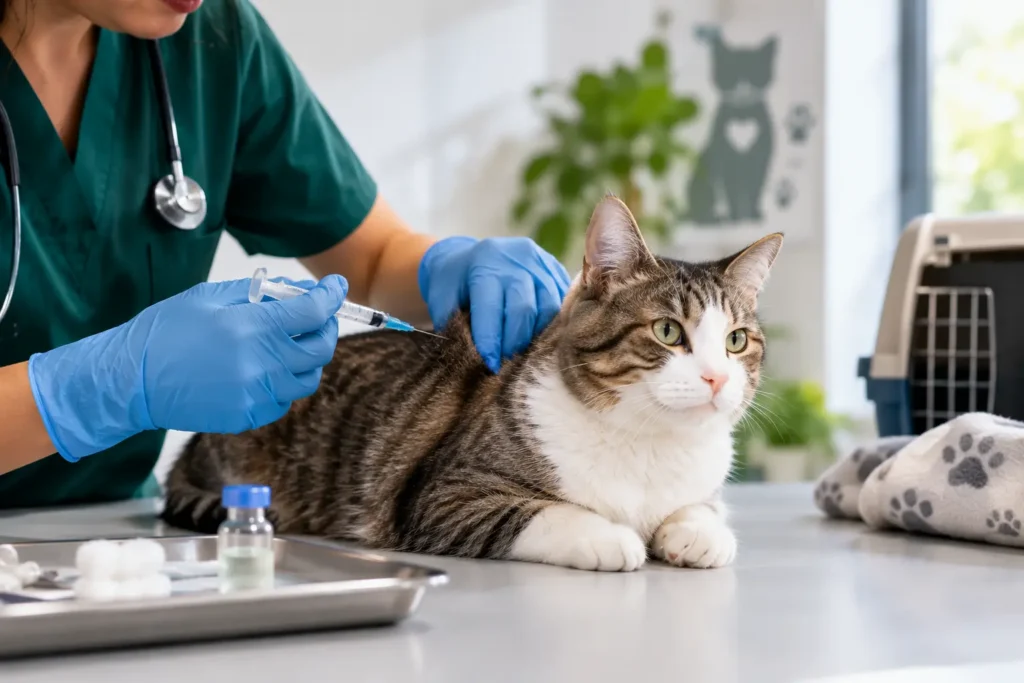
Worried, Sara books a home visit through the clinic’s mobile vet service. Dr. Loay Mohamed arrives and starts with questions before touching the cat. He asks about vaccination dates, contact with other cats, recent stress, appetite, and how long the symptoms have lasted.
Then comes the physical examination. In this illustration, the veterinarian carefully checks:
• Body temperature, to look for fever
• Eyes and nose, for discharge, redness, or swelling
• The mouth, for ulcers or drooling
• Breathing and chest sounds, to rule out deeper problems
• Hydration, weight, and overall alertness
The findings are mild: clear nasal discharge, watery eyes, and a slight rise in temperature. Breathing is normal, and there are no mouth ulcers. The assessment is a likely mild case of cat flu, probably triggered by the stress of boarding.
Sara asks what many owners ask: did the vaccine fail? The veterinarian explains that it probably did its job, because vaccines often reduce how severe cat flu becomes, but they do not always stop infection.
The practical advice follows. Keep Mishmish away from other cats, gently wipe any discharge with a clean damp cloth, and encourage him to eat. Return for a recheck if he refuses food or his breathing changes. Any medication is decided only after examination, and human medicines must never be used.
What Is Cat Flu and How Does It Spread?
Cat flu is the common name for feline upper respiratory disease. It is usually caused by feline herpesvirus (FHV-1) and feline calicivirus (FCV). Bacteria such as Chlamydia felis and Bordetella bronchiseptica can also play a role.
The infection spreads through close contact, sneezing, shared food bowls, and contaminated surfaces. It can also travel on hands and clothing, which is why even indoor cats are not completely out of reach.
What Does the Cat Flu Vaccine Protect Against?
The routine combination vaccine for cats, often called FVRCP, is designed to protect against herpesvirus, calicivirus, and feline panleukopenia. Some cats may also be offered additional vaccines depending on lifestyle and risk.
The exact products and schedule depend on your cat’s age, health, and environment. That is why a veterinarian should guide the plan rather than a general rule.
Can Vaccination Prevent Infection Completely?
In most cases, no. A vaccine trains the immune system to recognise a germ and respond faster. This often means milder illness, a shorter recovery, and a lower risk of serious complications. For guidance on pet vaccination in Sharjah, pet owners can learn more about the role of vaccination in preventive care.
What it does not always do is block every infection. Veterinary guidance consistently makes this distinction between reducing the severity of disease and preventing every single infection. Vaccinated cats are generally far better protected than unvaccinated cats, but “better protected” is not the same as “invincible.”
Why Vaccinated Cats May Still Develop Symptoms
Several factors can explain why a vaccinated cat still sneezes:
• Many strains exist. Calicivirus in particular has multiple strains, and a vaccine may not match every one.
• Herpesvirus can stay dormant. After infection, FHV-1 can remain in the body and flare up during stress, such as moving house or boarding.
• Immunity takes time. Kittens and newly vaccinated cats may not be fully protected until the vaccine course is complete.
• Other germs are involved. Some respiratory bacteria are not covered by the routine vaccine.
• Health matters. Illness, stress, or a weakened immune system can reduce the response to vaccination.
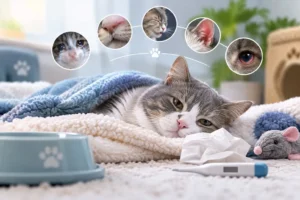
Common Cat Flu Symptoms and Warning Signs
Early signs are easy to miss, so watch for changes in your cat’s normal behaviour:
• Frequent sneezing and nasal discharge
• Watery, red, or crusty eyes
• Coughing, drooling, or mouth ulcers
• Fever, low energy, and hiding
• Reduced appetite or refusing food
Smell is important to cats when eating, so a blocked nose can quickly lead to a cat that will not eat. That is a signal to take seriously.
How to Reduce Infection Risks at Home
Vaccination works best alongside sensible daily habits:
• Keep vaccinations and boosters up to date, as advised by your vet.
• Isolate any cat with symptoms from other cats in the home.
• Wash hands and clean food bowls, bedding, and litter trays regularly.
• Reduce stress with a calm routine, hiding spots, and clean resting areas.
• Check the health of a new cat before introducing it to your household.
• Choose boarding with proof-of-vaccination rules, such as cat boarding in Sharjah services, to limit exposure.
Please never give your cat human cold or flu medicines. Many are toxic to cats.
When Professional Veterinary Care Is Necessary
Mild sneezing can sometimes settle on its own, but cats can deteriorate quickly. Contact a veterinarian if your cat is not eating, has laboured breathing, thick coloured discharge, eye damage, or seems unusually weak.
Kittens, senior cats, and cats with other health conditions are more vulnerable and should be seen early. If symptoms appear suddenly or worsen, an emergency vet in Sharjah can assess your cat without delay. In some cases, a diagnostic testing laboratory in Sharjah can help identify what is causing the illness.
How Tree Pet Veterinary Clinic Supports Preventive Care
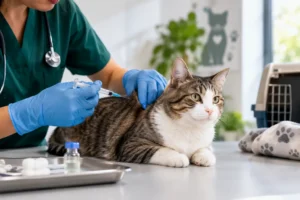
Preventive care is about planning ahead. Tree Pet Veterinary Clinic offers pet vaccination in Sharjah for cats and kittens, including a quick health check before vaccines are given and booster vaccinations.
Regular wellness check up visits help spot early problems. For cats that become stressed in the carrier or car, the mobile vet in Sharjah service brings vaccination to your home. Digital health records and appointment reminders also help owners keep boosters on track.
Final Thoughts
So, can a cat flu vaccine prevent infection completely? Not always, but it can significantly lower the risk and severity of illness. In our illustration, Mishmish’s mild illness after boarding is a reminder that vaccination, a careful veterinary examination, and good home care work as a team.
If you are unsure about your cat’s vaccination status or symptoms, speak to a trusted veterinary clinic in Sharjah. You can book an appointment with Tree Pet Veterinary Clinic and get a plan tailored to your cat.
Frequently Asked Questions
Can a vaccinated cat still get cat flu?
Yes, it is possible. Vaccination usually makes illness milder and recovery easier, but it may not stop every infection.
How effective is the cat flu vaccine?
Effectiveness varies by pathogen, strain, and the individual cat. Your vet can explain what protection to expect for your cat.
How often does a cat need vaccination?
Kittens need a series of vaccines, followed by boosters. Adult schedules depend on age, lifestyle, and risk, so they should be set with your veterinarian.
Can indoor cats catch cat flu?
Yes. Germs can arrive on hands, clothing, or from a new pet, and dormant herpesvirus can reactivate during stress.
What are the early symptoms of cat flu?
Sneezing, watery eyes, nasal discharge, lethargy, and reduced appetite are common early signs.