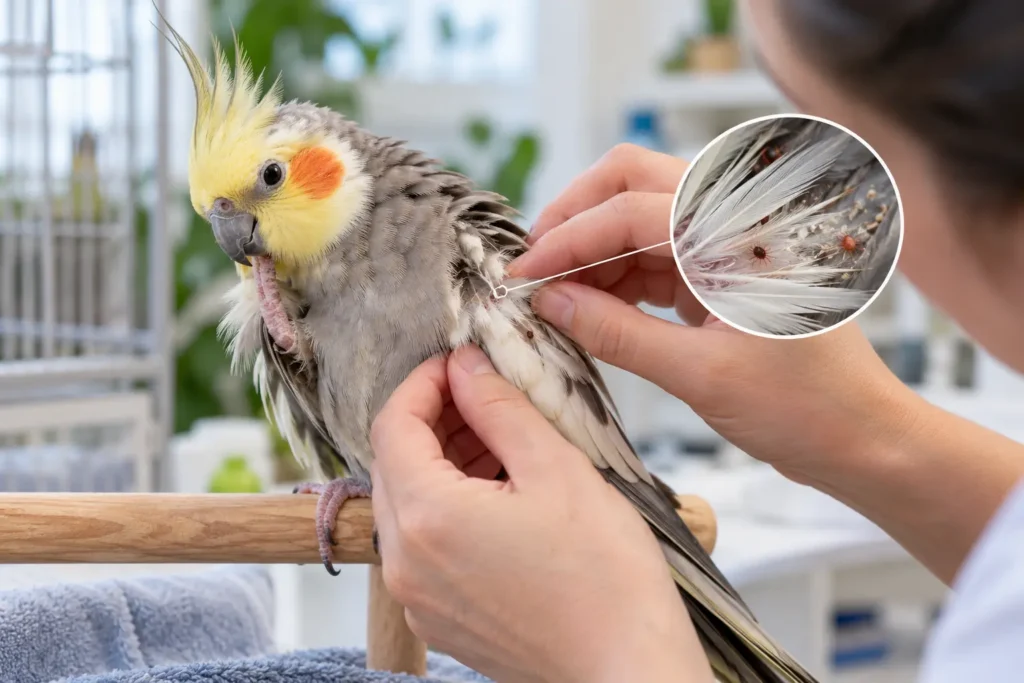
Birds are good at hiding discomfort, so external parasites often go unnoticed until the problem is well established. At Tree Pet Veterinary Clinic, our Avian Vet in Sharjah service sees how easily the early signs of bird mites and lice are mistaken for normal preening or a bad mood.
Bird Mites vs. Bird Lice: What’s the Difference?
Both are external parasites in birds, but they behave differently:
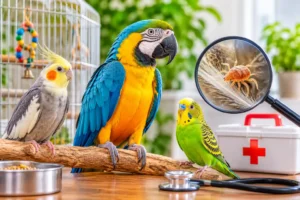
• Bird lice are small, wingless insects that generally spend their whole life on the bird, feeding on feathers or skin debris. They are often found along feather shafts.
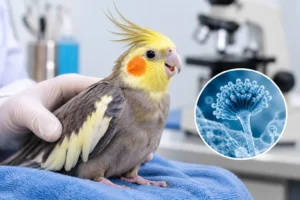
• Bird mites are tiny arachnids. Some species live on or in the skin, while others hide in cages, nests, or crevices and feed on the bird only at intervals, often at night.
Signs vary with the parasite species and the bird’s own health, and almost every sign below can have a non-parasitic cause. Only an examination can confirm what is happening.
Nine Subtle Warning Signs to Watch For
1. Scratching that looks like ordinary preening
Look for scratching that is more frequent, more sudden, or focused on one spot. Parasites can cause skin irritation, but dry air, diet imbalance, and dermatitis can look similar. Book an examination if it continues beyond a couple of days.
2. Restlessness, especially at night
Mites that feed after dark can leave a bird fidgety, reluctant to settle, or easily startled awake. Noise, light, and night frights do the same, so check the sleeping setup first.
3. Ragged or chewed-looking feathers
Frayed edges, tiny holes, or dull, uneven feather vanes may reflect lice feeding on feather material. Poor nutrition, stress, and infection can also damage feathers, so don’t assume the cause.
4. Over-preening or plucking
A bird that preens obsessively or pulls at its feathers may be responding to itch or pain. Boredom, hormones, and illness are equally common triggers, so plucking deserves a veterinary check.
5. Neglected grooming
A bird that stops preening, or whose plumage looks dirty, greasy, or unkempt, may be too uncomfortable or unwell to groom. This is a general illness signal rather than a parasite-specific one, so act promptly.
6. Crusty or scaly patches
Check the beak, cere, eyelids and legs. Rough, crumbly or scaly growth can be associated with scaly leg and beak mites, but fungal infections, injuries and nutritional problems may look alike. Never pick at or scrub these areas.
7. Red, flaky or scabby skin under the feathers
Gently parting the feathers during calm handling may reveal reddened, flaking or scabbed skin. Dry skin, allergies, and bacterial infection can cause this too. Skin changes need examination, not home treatment.
8. Tiny specks on the bird, cage or covers
Watch for moving dots, clustered eggs on feather shafts, or reddish and grey specks around perches and cage corners, especially on a light cloth cover or paper liner. Dust and dander can mimic parasites, so take a clear photo for your vet.
9. Changes in mood, appetite or energy
Heavy infestations can leave birds irritable, tired, or eating less, but these are also signs of many other illnesses. Fluffed feathers, tail bobbing, or breathing changes need prompt veterinary attention, whatever the cause.
Why Correct Identification Matters Before Treatment
Mites, lice, and their look-alikes call for different approaches, and birds are small and sensitive. Products made for dogs, cats, or poultry can be toxic or stressful for pet birds, so never treat on a guess.
During an examination, your vet can inspect the feathers and skin and, where appropriate, recommend tests. Tree Pet Veterinary’s Pet Diagnostic Testing supports skin-related investigations such as skin cytology and skin scrapings, and your vet will decide what suits your bird.
When to See a Veterinarian
Book a veterinary examination for birds if you notice:
• Scratching or feather damage lasting more than a day or two
• Visible parasites or eggs
• Sores, bleeding, or crusting on the skin
• Plucking, or more than one bird affected
• Fluffed feathers, lethargy, reduced appetite, or breathing difficulty (seek urgent care)
An experienced avian veterinarian can examine your bird, identify the cause, and advise safe, species-appropriate treatment.
Practical Prevention and Bird Hygiene
• Quarantine new birds and have them examined before they join others.
• Clean cages, perches, and toys routinely with bird-safe products, and wash or replace liners and cloth covers.
• Keep wild birds, nests, and droppings away from cages and balconies.
• Support healthy plumage with a balanced, species-appropriate diet.
• Schedule routine checks, such as a Pet Wellness Checkup, so problems are caught early.
Frequently Asked Questions
Can bird mites affect people?
Some bird mites can bite people temporarily and cause itching. See your doctor about any skin concerns.
Can I use dog or cat flea treatments on my bird?
No. Some are toxic to birds. Ask your veterinarian for a bird-safe plan.
Can a bird have parasites I can’t see?
Yes. Many are tiny or hide in the cage, so a veterinary examination is the only reliable way to confirm.
Can mites and lice spread between birds?
Yes. They can pass through direct contact or shared cages, perches, and toys, which is why new birds should be quarantined and examined.
How often should my bird have a check-up?
Your vet can suggest a schedule based on your bird’s species, age, and living environment. Routine checks help catch problems early.