A budgie digs through its bowl, picks out the sunflower seeds, and ignores everything else. Many owners read that as a clear favourite and simply refill the bowl. But bird food isn’t always balanced. This guide from Tree Pet Veterinary Clinic explains what birds need, helping owners understand the importance of a balanced diet and when to consult an avian vet in Sharjah for professional guidance.
Why a Healthy Bird Diet Differs by Species
In the wild, birds spend hours foraging across many foods. A bird with a full bowl has none of that variety, so the owner has to provide it. Parrots, budgies, cockatiels, and lovebirds are often grouped together, but their needs aren’t identical, and some birds, such as lories, eat mostly nectar.
That is why a veterinarian like Dr. Loay Mohamed at Tree Pet Veterinary Clinic will want to know a bird’s species, age, weight, and health before recommending changes. Diet questions are best answered alongside a full exam, as part of a broader Vet Clinic in Sharjah. A single feeding percentage or portion size cannot suit every bird.
Choosing Bird Food: Seeds, Pellets, and Fresh Foods
A common misunderstanding is that birds instinctively choose what is good for them. Offered a seed mix, many pick out the fatty favourites and leave the rest. University of Liverpool veterinary guidance describes seed mixes as usually unbalanced and nutritionally deficient, and unbalanced diets are linked with obesity and low calcium, particularly in African grey parrots.
Each food group plays a different role:
• Pellets: complete formulated foods that form the main part of the diet for most parrot species, although some birds need specialised formulas.
• Seeds: still useful for some species, and cockatiels are better adapted to seed-based diets than many parrots, but a seed-only diet is nutritionally inadequate for many companion parrots.
• Fresh vegetables and fruit: add variety, vitamins, and interest to the day.
A routine wellness check-up is a good time to review weight and body condition, which show whether a diet is working.
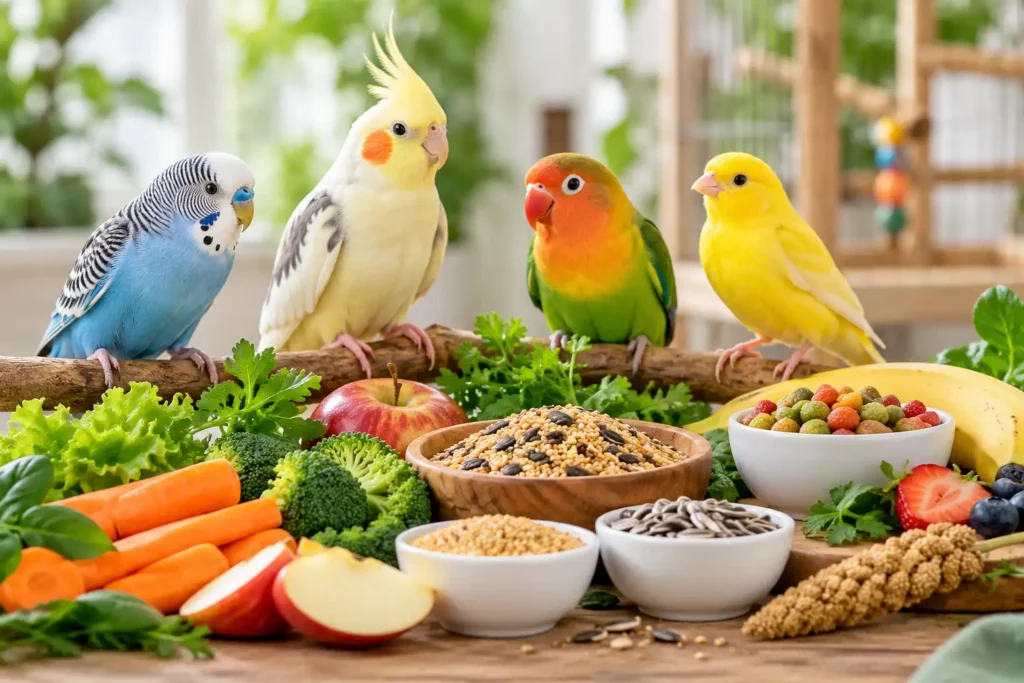
Safe Food Examples for Birds
Suitability varies by species, so treat these as examples to confirm with your vet.
• Vegetables: dark leafy greens, carrot, and broccoli, washed well.
• Fruit: mango, papaya, melon, figs, and berries in modest amounts, with all pits and seeds removed.
• Formulated food: pellets matched to your bird’s species.
• Water: fresh and clean, changed every day.
Foods to Avoid
Some human foods are dangerous even in small amounts. The Merck Veterinary Manual notes that every part of the avocado can poison animals, and that budgerigars, canaries, and cockatiels are susceptible. Affected birds can become lethargic, struggle to breathe, stop eating, and die. These are also best avoided:
• Chocolate, which contains theobromine and caffeine that can disturb heart rhythm and the nervous system.
• Onion and garlic.
• Sugar-free sweets containing xylitol.
• Seeds and pits from apples, cherries, plums, and peaches.
• Salty, sugary, fatty, and heavily processed foods.
If your bird may have eaten any of these, contact an emergency vet straight away instead of waiting for symptoms.
Feeding Mistakes Owners Often Make
Most feeding problems come from habit, not neglect:
• Refilling a mixed-seed bowl before the less popular items are eaten.
• Offering so many treats that a bird has little appetite for balanced food.
• Switching foods abruptly after reading about a new product.
• Guessing portions and never checking body weight.
How to Introduce Dietary Changes Safely
Birds can be wary of unfamiliar foods. VCA Animal Hospitals notes that a seed-eating bird may not even recognise pellets as food at first, and that moving to a formulated diet can be stressful. A gradual plan with veterinary guidance works best:
1. Keep familiar food available while offering the new food in small amounts.
2. Increase the new food gradually, at the pace your vet advises, instead of removing the old food suddenly.
3. Monitor appetite, droppings, and body weight throughout the change.
4. Call your vet if your bird eats noticeably less or seems unwell.
Storing Bird Food in Sharjah’s Heat
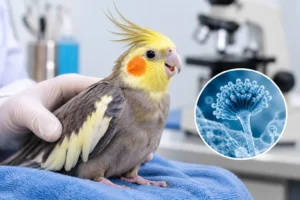
Heat and humidity can spoil food quickly. Keep seeds and pellets in airtight containers in a cool, dry place, and discard anything that smells musty, clumps together, or shows mould. Remove uneaten fresh food promptly, especially in summer.
When Veterinary Advice Is Necessary
Birds often hide illness until it becomes serious, so changes that seem minor deserve attention. Contact a veterinarian if you notice a sudden change in appetite, weight loss, abnormal droppings, weakness, fluffed feathers, or breathing difficulty. Poor nutrition can contribute, but so can infection, which is why an individual assessment matters.
Blood tests through a diagnostic testing laboratory, plus X-rays, help a vet separate diet-related problems from other causes.
Final Thoughts
A healthy bird diet is varied, species-appropriate, and for most companion parrots built mainly on formulated foods rather than seed alone, with fresh vegetables and carefully chosen fruit alongside. Avoid toxic foods, change the diet gradually, and watch appetite, droppings, and weight. If something changes suddenly, ask a vet.
FAQs
How often should birds receive fresh vegetables?
Vets generally recommend fresh vegetables as a regular part of the diet. The right amount depends on species, size, and what else the bird eats, so ask your vet for a plan.
Do birds need grit?
Parrots, including budgies and cockatiels, usually do not. They dehusk seeds with their beaks, and too much grit can cause intestinal blockage and constipation. Other species may differ, so check with your vet first.
Do birds need vitamin supplements?
Generally not when a bird eats a nutritionally complete diet. VCA Animal Hospitals advises that supplements should ideally be given only for specific health conditions under veterinary guidance, or while a bird is still on an all-seed diet.
Can I share my own food with my bird?
A very small amount of plain, wholesome food can be fine for many birds, according to VCA Animal Hospitals. It should not be on the toxic list above, and it should not be salty, sugary, or fatty. Ask your vet which foods suit your species.
Can birds eat peanuts?
University of Liverpool guidance advises caution, because peanuts can carry fungal spores or toxins. Ask your vet before offering them, and discard any nuts that look mouldy or smell off.