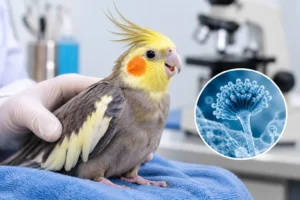
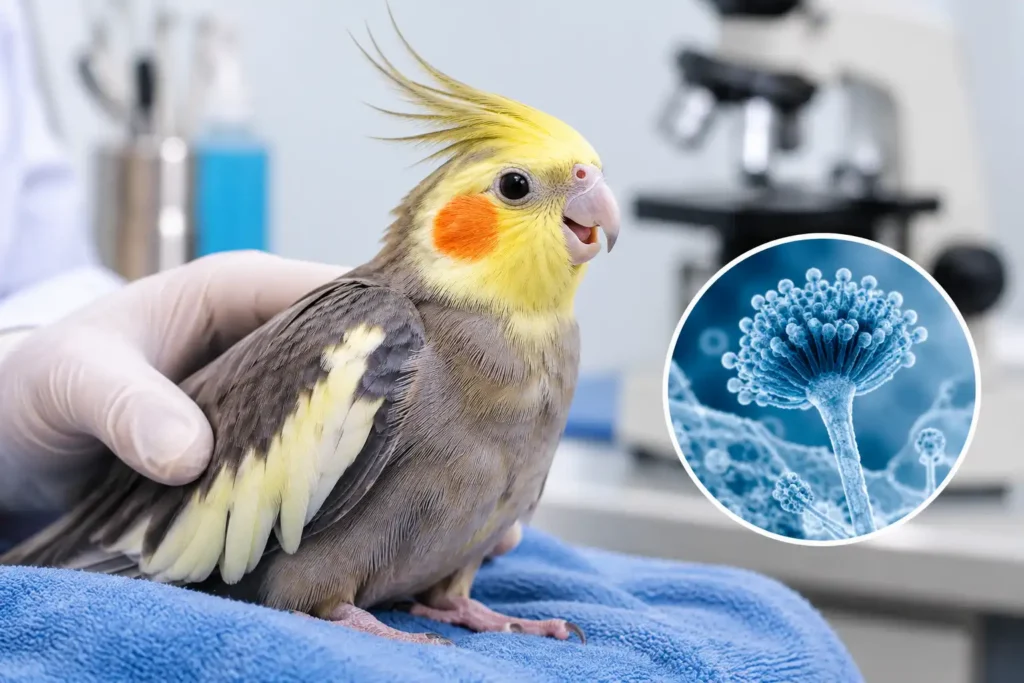
Aspergillosis in birds is one of the most common and most serious fungal diseases seen in pet and captive birds. It is caused by Aspergillus molds, mainly Aspergillus fumigatus, and it mostly attacks the respiratory system. Because birds instinctively hide illness, many owners only notice a problem once the infection is well established.
At Tree Pet Veterinary, our vet clinic in Sharjah, we regularly examine parrots, budgies, cockatiels, canaries, and other birds with breathing changes. Here we will explain why birds are so vulnerable, which signs to watch for, how the disease is diagnosed, and what treatment and recovery look like.
What Is Aspergillosis in Birds?
Aspergillus spores are everywhere: in soil, damp bedding, spoiled seed, decaying food, and dusty corners of the home. Most birds inhale them daily without trouble. The disease develops when spores overwhelm the bird’s defences and the fungus begins to grow in the airways, forming plaques or fungal granulomas.
Birds are unusually exposed because of how their lungs work. They have no diaphragm and breathe through a system of air sacs, which have a poor blood supply and weak natural clearing mechanisms. Once spores settle in these sacs, the immune system struggles to remove them.
The disease usually appears in two forms:
- Acute: Sudden and severe, often seen in young, stressed or heavily exposed birds. It can progress within days.
- Chronic: Slower and more common in adult birds, with signs that creep in over weeks or months.
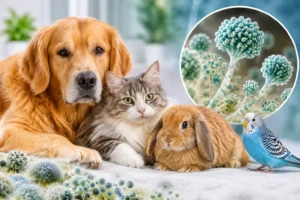
Birds aren’t the only pets exposed to indoor mold. Aspergillus penicillioides in pets is another problem owners often overlook, though it is only rarely linked to disease. Most avian cases are caused by A. fumigatus.
Symptoms to Watch For
Early signs are subtle and easy to put down to a bad day. Watch for:
- Tail bobbing, with each breath visibly moving the tail
- Open-beak breathing, wheezing, clicking, or a noisy chest
- A change or loss of voice, often caused by granulomas near the syrinx (the bird’s voice box)
- Fluffed feathers and sitting low on the perch
- Reduced appetite, weight loss, and a prominent keel bone
- Lethargy, less singing or talking, and reduced exercise tolerance
- Excess thirst or changes in droppings
- In some cases, nasal discharge, eye swelling, or neurological signs such as a head tilt
Not every bird shows every sign. A bird that stops vocalising, or tires quickly when it used to be active, deserves attention.
When Is It an Emergency?
| What you see | What it may mean | What to do |
| Slightly quieter, eating normally | Mild illness or stress | Monitor for a day and book a visit if it continues |
| Voice change, tail bobbing at rest, reduced appetite | Possible respiratory disease | See an avian vet within a day or two |
| Open-beak breathing, sitting on the cage floor, collapse | Respiratory distress | Seek emergency pet care immediately |
The health of a bird struggling to breathe can deteriorate within hours. Keep the bird warm and calm, avoid handling it more than needed, and head straight to the clinic.
What Puts Birds at Risk?
Healthy birds with good husbandry rarely develop the disease. Risk rises with:
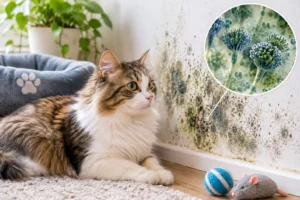
- Poor air quality: damp rooms, little ventilation, dust, or Penicillium Aspergillus mold in the house can all raise the spore load your bird breathes in every day.
- Moldy food or bedding: spoiled seed, nuts, corn, damp substrate, or wet cage liners
- Poor nutrition: all-seed diets low in vitamin A weaken the lining of the airways.
- Stress and weak immunity: overcrowding, sudden changes, illness, long antibiotic courses or steroids
- Species and age: African grey parrots, Amazons and young chicks are often described as more susceptible
Because the air in a home is shared, mold rarely affects just one pet. The household dog can be affected too, and aspergillosis in dogs typically shows up as a chronic nose infection rather than a breathing problem.
How Do Avian Vets Diagnose Aspergillosis?
There is no single test. Birds are small, fragile, and stressed by handling, so vets work carefully and often in stages.
- History and examination. Your vet asks about diet, housing, bedding, air quality, and how long signs have lasted, then listens to breathing and assesses body condition.
- Bloodwork. A raised white cell count and certain protein changes can point towards chronic infection, but they are not specific on their own.
- Imaging. An X-ray can show cloudy air sacs, lung changes, or masses. CT gives more detail where it is available.
- Endoscopy. A tiny camera passed into the airway lets the vet see fungal plaques directly and collect samples.
- Laboratory confirmation. Cytology, fungal culture, histopathology, and blood antigen or antibody tests help confirm the diagnosis. No single result is definitive, so vets combine them with the exam findings.
Access to an in-house veterinary laboratory shortens the wait for answers, which matters in a bird that is already breathing hard.
Treating Aspergillosis
Treatment is planned around the bird’s species, weight, and how advanced the disease is. Everything below is vet-directed, because dosing in birds is precise and some drugs are tolerated differently by different species.
- Antifungal medication. Drugs such as itraconazole, voriconazole or terbinafine are commonly used, often for several months. The vet monitors liver function and appetite throughout.
- Nebulisation. Antifungal or sanitising solutions are delivered as a fine mist to reach the airways directly, often alongside oral medication.
- Surgery or endoscopic removal. Granulomas that block the airway, especially near the syrinx, may need to be removed.
- Supportive care. Oxygen, warmth, fluids, and assisted feeding steady a struggling bird. Birds in distress may need pet hospitalisation so they can be monitored around the clock.
- Fixing the environment. Cleaning the cage, replacing food and bedding, improving ventilation, and removing mold sources are part of treatment. Without them, the infection can return.
Never use leftover human antifungals or give steroids at home. Steroids suppress immunity and can make fungal infection worse.
Recovery and Outlook
The honest answer is that recovery varies. Acute aspergillosis can be life-threatening and has a guarded outlook. Chronic cases caught earlier have a better chance, but treatment often runs for several months, with repeat examinations, blood tests and sometimes repeat imaging to check that the infection has cleared.
Improvement can start well before the fungus is gone, and stopping medication early is a common reason for relapse. Expect your bird to be quieter at first, to need a calm, warm environment, and to need close attention to appetite and weight. Your vet will give a timeline based on your bird’s species and condition.
Can Aspergillosis Be Prevented?
Prevention is mostly about reducing exposure and keeping the immune system strong:
- Keep the cage and surrounding room clean, dry, and well-ventilated
- Replace damp or soiled bedding promptly
- Store seed and pellets in airtight containers, in small quantities, and discard anything musty
- Offer a balanced diet with fresh vegetables and pellets rather than seed alone
- Control indoor humidity, and clean AC filters and drip trays, since they can harbour mold
- Avoid sudden stress, overcrowding, and unnecessary medication
- Schedule routine checkups with an avian vet so subtle changes are picked up early
Aspergillosis is rarely the only threat. Pet birds can also face hidden bird health risks like parasites and nutritional problems, which develop just as quietly and are easy to miss until a bird is visibly unwell. Which is why preventive measures and vet visits should be done when required.
Finding the Right Vet in Sharjah for Your Bird
Birds are not small dogs or cats. They need an examiner who understands avian anatomy, gentle handling, and species-specific treatment. A good veterinary clinic knows how to keep your stress to a minimum, explain which tests are worth doing, and be honest about the outlook.
At Tree Pet Veterinary, our avian vet in Sharjah looks after parrots, small cage birds, and exotic species, and urgent cases are seen as a priority. If you’re looking for a veterinary clinic you can trust with a bird that isn’t acting like itself, start with a conversation about what you’ve noticed.
Conclusion
Aspergillosis is serious, especially if affecting your pet bird, but early recognition makes a real difference. Quiet behavior, a changed voice, or tail bobbing can be the first signs, and acting within a day or two gives your bird the best chance. Keep the environment clean and dry, feed a balanced diet, and let an avian vet guide every step of testing and treatment.
If your bird is showing breathing changes or has stopped acting like itself, contact us. Our trusted veterinary clinic in Sharjah handles urgent cases during clinic hours (Sat to Thu 10 AM to 10 PM, Fri 2 PM to 10 PM).
Frequently Asked Questions
Is aspergillosis in birds contagious?
Not in the way a cold is. Birds usually catch it from spores in the environment, though birds sharing a damp or moldy space can all be exposed.
Can birds recover from aspergillosis?
Some do, particularly when the disease is caught early and treated for the full course. Advanced or acute cases carry a more guarded outlook.
How long does treatment take?
Often several months, with regular rechecks and repeat testing to confirm the infection has cleared.
Can humans catch aspergillosis from a bird?
Healthy people rarely do. People with weak immunity are at higher risk from mold exposure in general, so good hygiene and ventilation matter for everyone in the home.
Can I treat my bird at home?
No. Home remedies can’t clear a fungal infection, and the wrong medication or dose can be dangerous for a small bird.