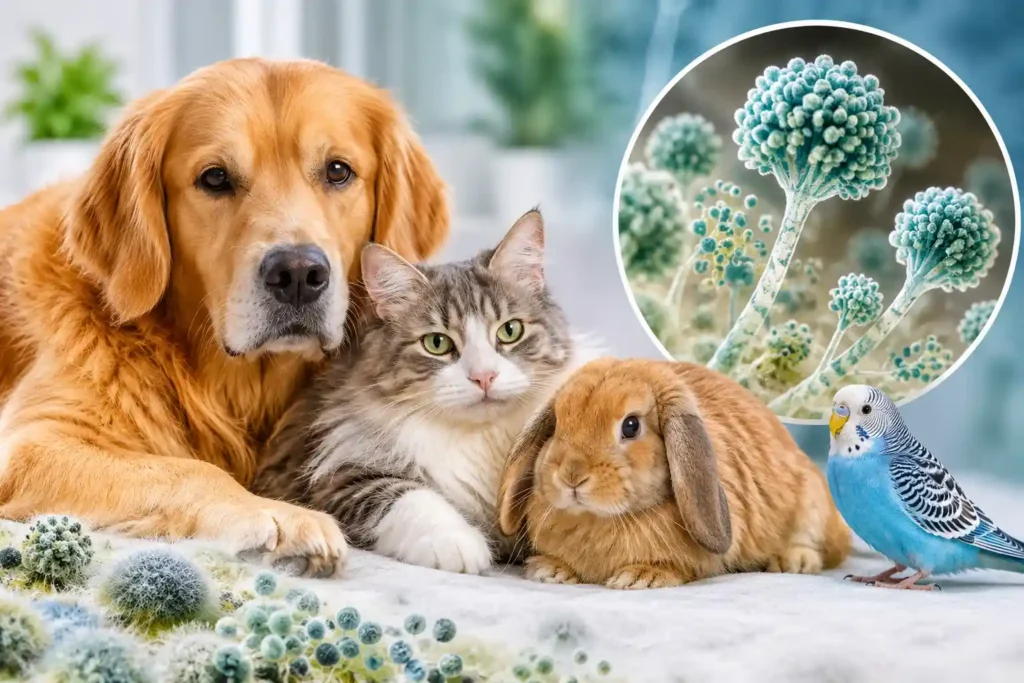
Aspergillus in pets is more common than most owners realise. One species, Aspergillus penicillioides, is among the most common moulds found in homes, yet most pet owners have never heard of it. It thrives in dry, dusty, and air-conditioned spaces, which makes it especially relevant in the UAE.
Its airborne spores are easy for pets to inhale, and for most healthy animals, they cause no harm. In others, they can contribute to allergies, airway irritation, or, rarely, infection.
At Tree Pet Veterinary, a trusted vet clinic in Sharjah, we hear versions of this story often from pet owners across town. Here is a calm, factual look at Aspergillus in pets: what this fungus is, what it can and can’t do to your pet, and when to call a vet.
If you’ve landed here after a similar search, here is a calm, factual guide to what this fungus is, what it can and can’t do to your pet, and when to call a vet.
What Is Aspergillus penicillioides?
Aspergillus penicillioides is a common mold, and a slightly unusual one. It is xerophilic, meaning it grows in dry conditions where most molds can’t. That is why it turns up in house dust, on old books, fabrics, leather, and in air-conditioned rooms that look perfectly clean.
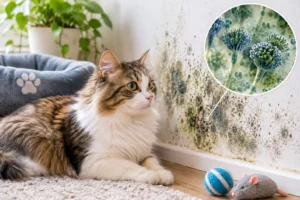
Research on indoor air has repeatedly found it among the most common fungi in house dust worldwide. Its spores are tiny and easily inhaled, so a pet living with heavy mold spores in the home may develop a persistent cough, chronic sneezing, or noisy breathing that never quite clears. Infections can cause similar signs, as covered in our guide to cat flu symptoms.
In animals that are already vulnerable, this can progress to a fungal respiratory infection. Those same airborne particles can also leave pets with itchy skin and watery eyes, which is why this mold matters to anyone sharing a home with animals.
The Honest Truth: What We Know (and Don’t) About Pets
Most articles skip this part. A. penicillioides is far better documented as an indoor allergen and a rare opportunistic fungal infection in people than as a cause of disease in pets. Confirmed veterinary cases are scarce.
The mold-related diseases vets actually diagnose are usually caused by other Aspergillus species, mainly A. fumigatus, and occasionally A. flavus, A. terreus, and A. niger. These tend to show up as chronic sneezing and nasal discharge, a lingering cough, or a fungal ear infection that keeps coming back.
So the realistic picture is this:
- Exposure to A. penicillioides is very common, and household mold exposure is usually harmless to healthy pets.
- Problems are most likely in pets with a weakened immune system, or when exposure to indoor mold in pets’ living spaces is heavy and prolonged.
- Symptoms rarely point to one species. Your vet identifies the organism through a fungal culture test and other veterinary diagnostic testing, not guesswork.
How Can Mold Affect a Pet’s Health?
Mold exposure can harm pets in three main ways:
- Allergic reaction: The immune system overreacts to inhaled or contacted spores, causing itching, sneezing, and skin or ear problems.
- Irritation: Spores and mold byproducts inflame the airways and eyes, causing nasal infections in dogs with Aspergillosis as well.
- Infection: The fungus actually colonises tissue. This is uncommon and typically needs a weakened defence, a damaged nasal lining, or heavy exposure.
Aspergillus Penicillioides Symptoms
Signs depend on which body system is affected.
Nose and sinuses (common in dogs):
- Persistent sneezing, one-sided nasal discharge, sometimes blood-tinged
- Pain or swelling around the nose
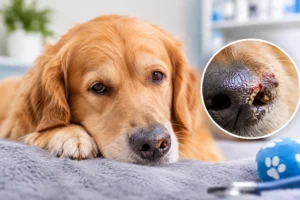
- Loss of pigment or sores on the nostrils
Lungs and airways:
- Chronic coughing, noisy or laboured breathing
- Reduced stamina, weight loss
Ears and skin:
- Head shaking, discharge or odour from the ears
- Itchy, red or flaky skin
Whole body:
- Lethargy, poor appetite, fever
- In rare disseminated cases: lameness, back pain, or changes in urination
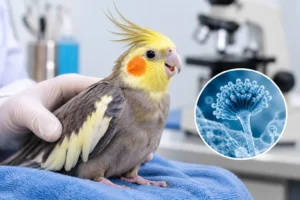
Birds hide illness until it is advanced. Tail bobbing, voice change, fluffed feathers and reduced appetite deserve a prompt visit to an avian vet.
When Emergency Action is Needed?
| What you see | What it may mean | What to do |
| Occasional sneeze, normal eating and energy | Dust or mild irritation | Monitor; mention it at the next checkup |
| Nasal discharge or cough lasting over a week | Possible allergy or infection | Book a vet visit this week |
| Bloody discharge, facial swelling, weight loss | Possible deep nasal or sinus disease | Book promptly |
| Open-mouth breathing, blue or grey gums, collapse | Respiratory emergency | Go to an emergency vet immediately |
Who Is Most at Risk?
- Dogs with long, narrow noses (Collies, Retrievers, German Shepherds), which are more prone to nasal fungal disease
- German Shepherds in particular, which are overrepresented in rare disseminated aspergillosis
- Pets on long-term steroids or other immune-suppressing treatment, or with chronic illness
- Birds housed in damp cages, or with spoiled food or soiled bedding
- Pets in poorly ventilated homes with water damage, leaks or visible mold
- Young kittens, puppies and senior animals with less robust immunity
How Do Vets Diagnose It?
There’s no single test, because symptoms overlap with allergies, bacterial infections, dental disease and tumours. A thorough work-up usually includes:
- History and exam. Your vet asks about the home environment, bedding, diet, and how long signs have lasted.
- Bloodwork to assess general health and immune status.
- Imaging. X-rays help assess the chest. For nasal disease, CT is considered the most informative.
- Rhinoscopy. A small camera lets the vet see fungal plaques and take samples.
- Cytology, fungal culture, and histopathology are used to identify the organism. Culture is how a specific species is named.
- Blood antigen or antibody tests, which are supportive but not definitive on their own.
A well-equipped diagnostic testing laboratory in Sharjah shortens the wait between suspicion and answers, which matters for fungal disease.
Treatment: What Vet Care Looks Like
Treatment depends on the organ involved, the species, and how advanced the disease is. It should always be vet-directed, since the same medicines can be toxic if guessed.
- Antifungal medication. Drugs such as itraconazole or voriconazole are commonly used, usually for weeks to months. Your vet monitors liver function and blood work throughout.
- Topical nasal therapy. For canine nasal aspergillosis, an antifungal solution is infused into the sinuses under anaesthesia. Published studies report high success rates, though some dogs need a repeat session.
- Surgical removal of fungal masses (granulomas), more often needed in birds.
- Supportive care. Fluids, nutrition, oxygen, or nebulisation for breathing difficulty. Treating the root cause. Allergic cases are managed by reducing exposure, along with the medication your vet prescribes.
Never give leftover or human antifungals, steroids, or painkillers. Steroids can make a fungal infection worse.
Recovery: What to Expect
Allergy and mild irritation often settle within days to a few weeks once exposure is reduced and treatment starts. Fungal infections are slower. Many pets need several weeks to months of treatment, with recheck visits and repeat blood tests, and symptoms can improve well before the infection has cleared. Stopping early is the most common reason for relapse.
Outlook is generally good for localised nasal disease treated early. Disseminated disease is serious and carries a guarded prognosis, which is why early assessment matters. Your vet will give a timeline specific to your pet.
How to Protect Your Pet From Mold
- Fix the source. Repair leaks, dry damp areas quickly, and keep indoor humidity moderate.
- Ventilate and service AC units. Clean filters and drip trays regularly, since they can harbour fungal growth.
- Clean smart. Wash pet bedding often, damp-dust rather than dry-sweep, and vacuum with a HEPA filter.
- Store food properly. Keep kibble and bird seed in airtight containers, in small quantities, and discard anything musty.
- Keep cages dry and clean. Change bird substrate often and avoid damp corncob or old straw bedding.
- Don’t scrub heavy mold alone. Disturbing large patches releases spores. Keep pets away while it’s cleaned.
- Choose boarding carefully. If you travel, ask how a facility handles ventilation, hygiene, and humidity.
- Book regular checkups. A yearly wellness checkup helps catch chronic cough, ear trouble, or weight changes early.
If you notice any mold in your house, it needs a professional look ASAP. If you have a cat, read our guide to mold in house cats for the signs to watch for.
Choosing the Right Vet Clinic in Sharjah
Mold-related illness is easy to dismiss and easy to misdiagnose. A good vet clinic in Sharjah will ask about your home as well as your pet, explain which tests are worth doing, and be honest about what is and isn’t confirmed. At Tree Pet Veterinary, our team sees your pets and offers mobile vet visits for those who struggle with travel.
If you fear that there might be signs for aspergillosis in your bird, our avian vets can examine your pet birds as well. If you’re searching for a vet in Sharjah you can trust, start with a conversation about what you’ve noticed.
Conclusion
A pet with a lingering cough, sneeze, or itch is easy to dismiss, and mold is easy to overlook. The owners who do best are the ones who act early, ask questions about their home as well as their pet, and let a vet run the right tests before drawing any conclusions.
That’s the lesson here. Aspergillus penicillioides is everywhere and rarely proven to cause disease in pets, but it is worth taking seriously when symptoms persist. Watch for changes, fix damp at home, and never self-medicate.
If your pet has a lingering cough, nasal discharge, or ear trouble, contact Tree Pet Veterinary Clinic. We’re a trusted veterinary clinic in Sharjah. For urgent cases, call us during clinic hours (Sat to Thu 10 AM to 10 PM, Fri 2 PM to 10 PM).
Frequently Asked Questions
Is Aspergillus penicillioides dangerous to dogs and cats?
Usually not for healthy pets. It is a very common indoor mold, and confirmed pet infections are rare. It can trigger allergies or irritation, and weakened pets are at higher risk.
Can mold in my house make my pet sick?
Yes, particularly through allergy and airway irritation. Persistent coughing, sneezing or itching alongside visible mold is worth a vet visit.
Is it contagious to people or other pets?
Aspergillosis does not spread from pet to pet like a cold. Pets and people are exposed to the same environmental spores, so mold at home affects everyone, especially people with weak immunity.
How long does treatment take?
Allergic cases can ease in days to weeks. Fungal infections often need weeks to months of medication plus follow-up testing.
Can I clean the mold myself?
Small surface patches, yes, with pets out of the room. Large or recurring growth needs professional remediation and a fix for the moisture source.