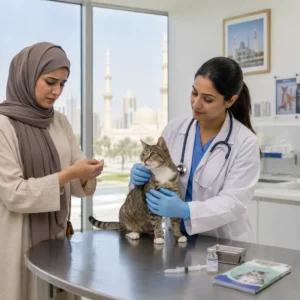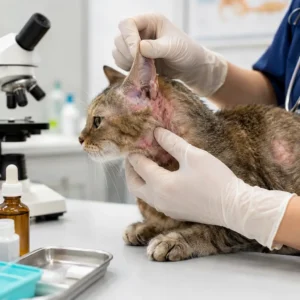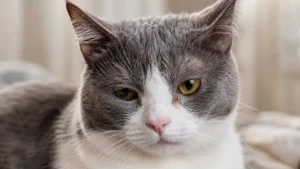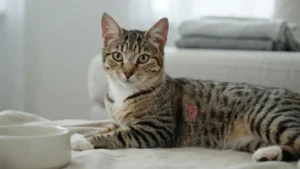
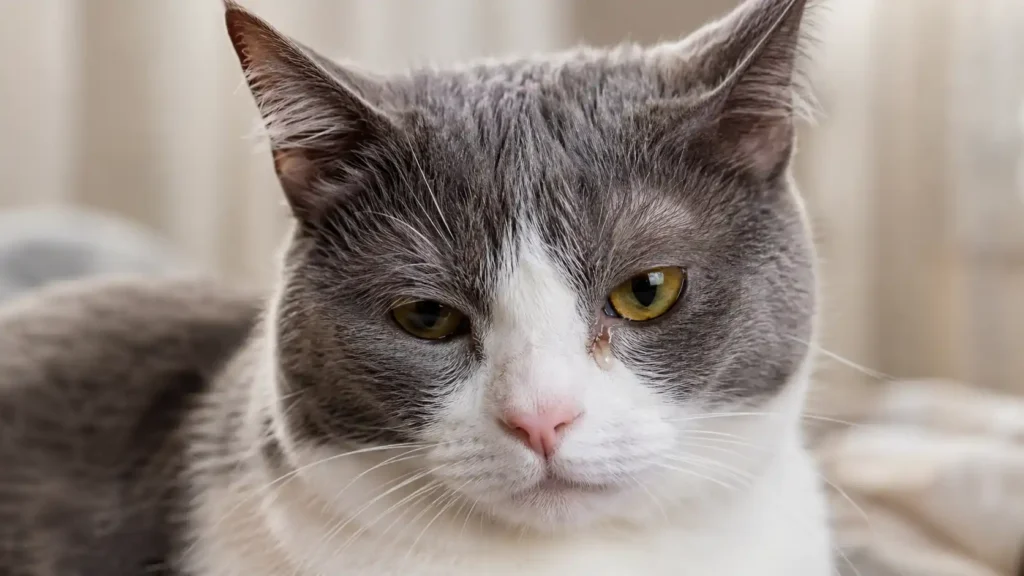
In the years our team has spent caring for cats here in Sharjah, few things bring owners through our doors as often as a watering eye. It usually begins quietly. One evening a client noticed nothing more than a glassy shine at the corner of her tabby’s eye and a faint damp streak in the fur beneath it. She almost didn’t book, certain it was nothing. When she finally brought him into our veterinary clinic in Sharjah, we found an early scratch on the surface of the eye, the kind that heals beautifully when caught in time and turns into something far more serious when it isn’t. She was half right and half wrong, and that is exactly why a watering eye deserves a closer look.
Across hundreds of these cases, we have learned that a cat’s watering eye sits on a wide spectrum. Some clear on their own within a day. Others are the first faint signal of an infection, an injury, or a blocked tear duct that can quietly threaten a cat’s sight. What follows is what we have learned to look for, told through the cats who taught us.
First, What a Watering Eye Actually Is
Before we reach for a diagnosis, we always picture the plumbing. Your cat’s eye is bathed in a thin tear film that lubricates the surface and washes away dust. With every blink, the excess drains through a tiny channel in the inner corner, the nasolacrimal duct, which empties into the nose. The medical word for an overflowing eye is epiphora, and in our experience almost every case comes down to one of two things: the eye is making too many tears because something is irritating it, or the tears cannot drain because the channel is blocked. Working out which of those is happening is the whole job, and it is why we rarely guess from a photo alone.
The Causes We See Most Often, and What We Do About Them
The sneezing kitten: herpesvirus and cat flu
A young rescue kitten once arrived with a weepy eye and a small, tired sneeze between purrs. This is a picture we see almost every week. Feline herpesvirus (FHV-1) and calicivirus cause what owners call “cat flu,” and herpesvirus in particular is the most common cause of conjunctivitis we treat in cats. It flares when a cat is stressed, and clear tears can thicken into yellow or green discharge once a secondary bacterial infection joins in. In cases like the kitten’s, we treat the flare directly, sometimes support the eye with an L-lysine supplement, and, just as importantly, reduce the stress that triggered it.
The red, weepy eye that spread: conjunctivitis
We remember a home with three cats where one developed a red, persistently weeping eye, and within days a second cat had it too. That is the signature of infectious conjunctivitis, often caused by organisms such as Chlamydia felis or Mycoplasma, especially in kittens and multi-cat households. A simple swab told us exactly what we were dealing with, and targeted treatment cleared it while protecting the rest of the household.
The constantly damp face: a blocked tear duct
Some cats come to us with a face that never seems to dry, tear-stained fur running down from the inner corner, yet an eye that is calm and comfortable, not red or sore. This is the classic look of a blocked or narrowed tear duct, where normal tears simply have nowhere to drain and spill over the lid instead. A painless dye test confirms it in minutes, and in many cases we can gently flush the duct to reopen the drainage.
The flat-faced cat whose real problem wasn’t the eye
One of the cases we mention most often was a Persian brought in purely for a “runny eye.” Flat-faced breeds like Persians and Himalayans are built with shallow eye sockets and compressed tear ducts, so mild chronic tearing is common and often lifelong for them, and the honest goal is to keep the face clean rather than to “cure” it. But this particular cat’s real trouble was hiding lower down: dental disease was affecting his tear drainage, and the eye was only the visible clue. We explore that surprising link in our guide on how often you should brush your cat’s teeth. It is a reminder that in cats, the eye is sometimes the messenger, not the message.
The dusty-day tears: irritants and allergies
Living and working in the UAE, we see a great deal of dust-related tearing. Cats react to the same things we do, fine airborne dust, sand, pollen, smoke, scented candles, and harsh cleaning sprays. When both eyes water together with clear tears and no redness, an environmental irritant is often to blame, and the tearing usually settles once the source is found and removed.
The squinting emergency: scratches and ulcers
The cases that make us ask owners to come in immediately are the squinters, the cats holding one eye tightly shut and pawing at the face. A scratch from another cat, a stray grass seed, or a self-inflicted rub can injure the cornea, and a corneal ulcer is genuinely painful and time-sensitive. It is also the reason we plead with owners never to reach for home remedies here: the wrong drop on an ulcer can turn a treatable eye into a lost one. These cats need a vet the same day, not the same week.
When We Tell Owners to Come In Straight Away
A single, brief, clear tear that clears within a day is rarely a crisis. But from experience, these are the signs we never want you to sit on:
- Squinting, blinking hard, or holding the eye shut
- Pawing or rubbing at the eye
- Redness, swelling, or a cloudy or blue-tinged look to the eye
- Thick yellow or green discharge instead of clear tears
- Tearing that lasts more than a day or two, or keeps returning
- Sneezing, a runny nose, poor appetite, or low energy alongside the eye
The eye is one part of the body where a day’s delay genuinely changes the outcome. If you are unsure which camp your cat is in, a wellness check-up lets us examine the eye properly and rule out the serious causes before they progress.
How We Find the Real Cause
Pinpointing why an eye is watering is rarely guesswork for us. In the consulting room we often use a fluorescein stain, a harmless dye that glows under blue light and reveals even a microscopic scratch, along with a dye-drainage test to check whether the tear duct is open. A tear-production test separates a genuinely dry eye from true overflow, since, confusingly, a dry eye can water as the body tries to compensate. Where infection is likely, a swab identifies herpesvirus, Chlamydia felis, or bacteria, and a quick pressure check rules out glaucoma. Each test answers a specific question, which is why an exam beats a best guess every time.
What Treatment Looks Like, and What You Can Safely Do at Home
Because a watering eye is a symptom rather than a single disease, we always treat the cause underneath it. Infections may need topical antibiotics or antivirals; herpesvirus flare-ups are sometimes supported with L-lysine; blocked ducts can be flushed; and eyelid problems that rub the surface are corrected with minor surgery. For flat-faced breeds, gentle daily face-cleaning is often the whole plan.
There is one rule we ask every owner to hold onto: never put human eye drops, such as Visine, or leftover pet medication into your cat’s eye. Human drops can seriously harm a cat’s eye, and the wrong medication on a viral ulcer can cause the eye to rupture. What you can safely do at home is wipe away discharge with a clean, damp cotton pad, using a fresh side for each eye, and keep the face clean and dry while you arrange to be seen.
And if the thought of coaxing an anxious cat into a carrier is the very thing stopping you, our mobile vet service in Sharjah can examine the eye in the calm of your own home, which is often far kinder on a nervous patient.
Frequently Asked Questions
Is a watery eye in cats an emergency?
Not always. A brief, clear, one-off tear with no other signs is usually minor. But squinting, a held-shut eye, cloudiness, thick coloured discharge, or pawing at the eye should be treated as urgent, because these often mean a painful corneal injury or infection that needs same-day care.
Why is only one of my cat’s eyes watering?
In our experience, one watering eye usually points to a localised problem in that eye, such as a scratch, a foreign body, a blocked tear duct, or early infection. Both eyes watering together more often suggests dust, an allergen, or a spreading virus. An exam is the reliable way to tell them apart.
Can I treat my cat’s watery eye at home?
You can gently clean away discharge with a damp cotton pad and reduce dust and irritants at home. What you should never do is use medicated or human eye drops without veterinary advice, as the wrong product can worsen the problem or seriously damage the eye.
Why does my Persian cat always have watery eyes?
Flat-faced breeds like Persians and Himalayans have shallow eye sockets and compressed tear ducts, so mild chronic tearing is often normal for them. The aim is to keep the face clean and rule out infection or, as we sometimes find, an underlying dental issue, rather than to stop the tearing entirely.
When should I see a vet about my cat’s watery eye?
Come in if the tearing lasts more than a day or two, keeps returning, or arrives with redness, swelling, squinting, coloured discharge, sneezing, or low energy. Seeing us early protects both your cat’s comfort and its eyesight.
Worried about your cat’s eye?
Our team at Tree Pet Veterinary in Sharjah is here to give you a clear answer and the right treatment. Book a wellness check-up or reach out today, sooner is always better where eyes are concerned.