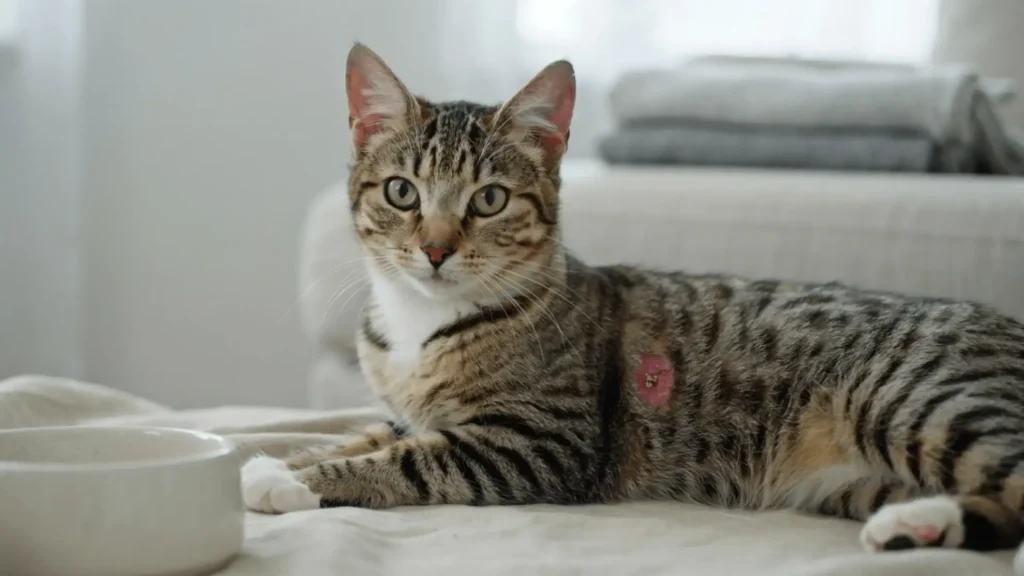
It usually starts with a hand. You’re stroking your cat one evening and your fingertips catch on something small and crusty near the base of the tail — a scab you’re certain wasn’t there last week. You part the fur and find a few more. Your cat seems fine, still eating, still purring. So the question lands quietly but insistently: is this something, or nothing?
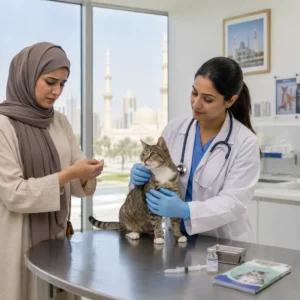
That exact moment brings a lot of cats into our clinic, and it’s a good instinct to check. A cat’s skin has only a limited number of ways to “complain,” so wildly different problems can look almost identical on the surface — this article will help you tell the ordinary from the urgent and know what to do next. And if you’re in the UAE and unsure where to start, a general exam at a trusted vet clinic in Sharjah is the simplest first step; a vet can tell in minutes whether what you’re feeling needs watching or acting on.
What cat skin lesions usually look like
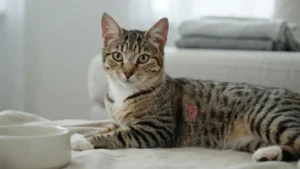
“Lesion” simply means any area of abnormal skin. In cats, the most common presentations fall into a few recognisable patterns.
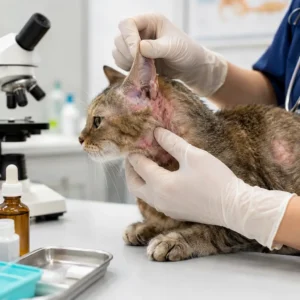
Miliary dermatitis (“scabby cat disease”). This is the classic scenario from the opening — tiny, crusty bumps that feel like scattered millet seeds and are often felt before they’re seen. They cluster around the lower back, tail base, neck, and face. Despite the alarming texture, miliary dermatitis is not a diagnosis in itself; it’s a reaction pattern, and the culprit underneath is almost always an allergy — most commonly flea-bite hypersensitivity, followed by food and environmental allergies.
Eosinophilic granuloma complex. These show up as raised pink or red plaques, or as a distinctive swollen “fat lip” (an indolent ulcer) on the upper lip. They’re linked to the same allergic pathways and can look dramatic without necessarily being dangerous.
Ringworm. Despite the name, this is a fungal infection, not a worm. It typically causes circular patches of hair loss with flaky skin, often on the head, ears, or paws — and it’s contagious to other pets and to people, which is one reason a proper diagnosis matters.
Self-trauma from itching. Many “lesions” are actually wounds the cat created. Overgrooming and scratching from any allergy can break the skin, and those broken areas then get infected, adding scabs and redness on top of the original problem.
The catch: the skin is only the messenger
Here’s the point most owners miss. A scab is rarely the real problem — it’s the smoke, not the fire. Two cats can present with identical crusts, yet one has fleas and the other a food allergy. This is why home remedies so often fail: they target the symptom while the true cause keeps burning underneath.
Cats also hide their discomfort masterfully, and their grooming is so discreet that owners frequently don’t realise how much licking or scratching is happening. That’s what makes skin cases genuinely worth a professional eye. When lesions are stubborn, recurring, or spreading, a pet dermatologist in Sharjah can run the specific tests — skin scrapes, cytology, flea combing, or a diet trial — that separate one look-alike from another and get to the actual driver.
Red flags: when a lesion is a real warning sign
While most skin problems are manageable, a few patterns deserve genuine urgency. Take your cat in without delay if you notice:
- A sore that won’t heal after one to two weeks, especially if it keeps returning to the same spot.
- Lesions on sun-exposed white skin — the tips of the ears, the eyelids, or the top of the nose. In the UAE’s intense year-round sunshine, ultraviolet damage is a real risk, and white or light-coloured cats can develop squamous cell carcinoma, a skin cancer that starts as a small crusty scab in exactly these areas. Caught early it’s very treatable; ignored, it grows and invades.
- Rapid growth, ulceration, or bleeding, or a lump that changes shape or size.
- Lesions plus whole-body signs — weight loss, poor appetite, lethargy, or drinking more than usual.
Acting on these isn’t only good medicine; it’s also part of responsible ownership. Under the animal-welfare framework overseen by the UAE Ministry of Climate Change and Environment, providing appropriate and timely veterinary care is a recognised duty of every pet owner — and for a cat in discomfort, that early visit is exactly what welfare looks like in practice.
If you’d like a deeper reference on the specific conditions behind these signs, our team’s complete guide to cat skin diseases and their treatment breaks down causes, symptoms, and care options in detail.
What to do at home (and what not to do)
While you arrange a visit, a few sensible steps help:
Do note when the lesions appeared, whether they’re itchy, and if anything changed recently — a new food, a move, a lapsed flea treatment. Do keep flea prevention current, since flea allergy is the single most common trigger and even one bite can set a sensitive cat off. Do fit an e-collar or gently distract your cat if constant licking is worsening a wound.
Don’t apply human creams, antiseptics, or steroid ointments. Cats groom everything off and swallow it, and several human topical ingredients are toxic to them. Don’t bathe repeatedly with random shampoos hoping to “dry it out” — this often irritates the skin further. And don’t simply wait out a non-healing or growing sore; time is the one thing that turns a small, treatable problem into a bigger one.
The bottom line
Most cat skin lesions are the visible tip of a treatable cause — usually an allergy — and they resolve well once the right trigger is found. The lesions worth true worry follow a pattern: non-healing, growing, bleeding, or sitting on sun-exposed white skin. When in doubt, don’t guess. A short exam settles the question quickly, spares your cat unnecessary discomfort, and occasionally catches something important while it’s still easy to treat.
Frequently Asked Questions
Are cat skin lesions usually serious?
Most are not emergencies and stem from allergies, but non-healing, growing, or bleeding sores — or lesions on white ears, eyelids, or the nose — should be checked promptly.
Why does my cat have scabs but no fleas that I can see?
Flea-allergic cats can react to a single bite and often groom the fleas away before you spot them. Consistent flea prevention plus a vet exam is the reliable path.
Can I put antiseptic or cream on my cat’s sore?
No. Cats lick topical products off and can swallow toxic ingredients. Always ask your vet before applying anything.
When should a cat skin lesion see a vet urgently?
If a sore hasn’t healed in one to two weeks, is spreading, bleeding, ulcerated, on sun-exposed skin, or paired with weight loss or poor appetite, book a visit right away.
Is ringworm on my cat contagious to me?
Yes. Ringworm is a fungal infection that can spread to people and other pets, so prompt diagnosis and treatment are important.