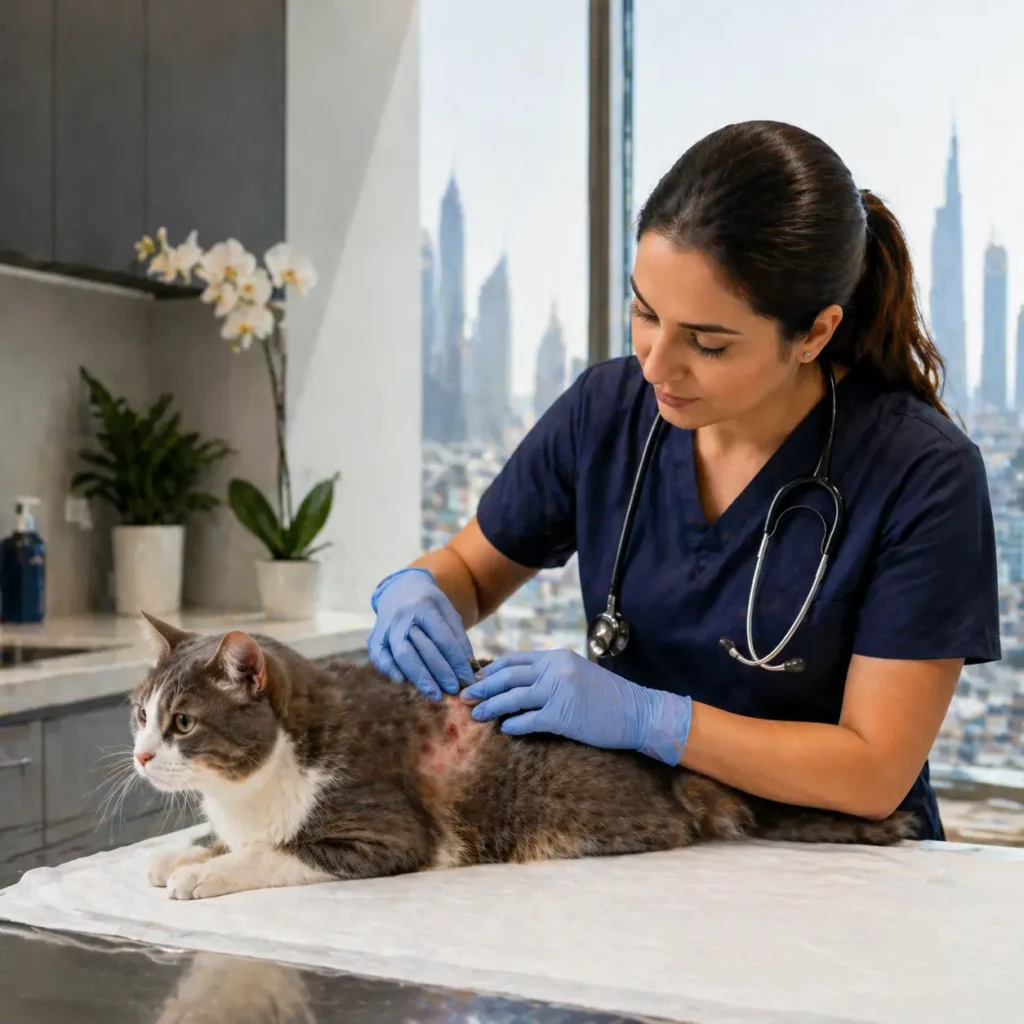
Cat skin problems are among the most common health concerns faced by pet owners. Understanding cat skin disease treatment is essential for ensuring your cat’s comfort, health, and long-term well-being. Early recognition and proper treatment at a reliable veterinary clinic in Sharjah make a significant difference in recovery.
Common Symptoms of Cat Skin Diseases
Recognizing symptoms early is key to effective treatment of cat skin diseases.
- Excessive scratching or licking
- Hair loss or bald patches
- Redness, rashes, or inflamed skin
- Scabs, crusts, or open sores
- Dandruff or flaky skin
Causes of Cat Skin Problems
Understanding the root cause helps in selecting the right treatment for cat skin diseases. Skin issues in cats can be triggered by multiple factors.
- Parasites: Fleas, ticks, and mites are the most frequent culprits
- Allergies: Food allergies or environmental triggers like pollen and dust
- Fungal infections: Ringworm is a well-known contagious infection
- Bacterial infections: Often develop from untreated wounds or scratches
- Poor grooming or hygiene: Leads to matting and skin irritation
- Stress-related overgrooming: Behavioral issues can also damage skin health
Cat Skin Diseases Treatment Options
Effective treatment of cat skin diseases depends on identifying the issue, and consulting a pet dermatologist in Sharjah is strongly recommended for accurate diagnosis.
1. Medicated Shampoos and Topicals
Used for mild infections, parasites, and fungal issues. These help soothe itching and clean affected areas.
2. Oral Medications
Antibiotics or antifungals may be prescribed depending on the condition.
3. Parasite Control
Regular flea and tick prevention treatments are essential for long-term protection.
4. Dietary Management
In cases of food allergies, switching to hypoallergenic diets can significantly improve skin health.
5. Environmental Adjustments
Reducing allergens like dust and keeping bedding clean helps prevent recurrence.
A veterinarian at a pet wellness clinic in Sharjah may combine multiple methods for better results, especially in chronic cases.
Prevention of Cat Skin Diseases
Preventive care reduces the need for intensive treatment of cat skin diseases and keeps your cat healthy.
- Maintain regular grooming routines
- Use vet-approved flea and tick prevention
- Provide a balanced and nutritious diet
- Keep living areas clean and dust-free
- Schedule routine veterinary checkups
- Monitor any changes in skin or behavior
When to Visit a Veterinarian
Not all skin issues can be treated at home. Knowing when to seek professional help is critical for your cat’s health.
- Persistent itching lasting more than a few days
- Rapid hair loss or spreading bald patches
- Bleeding, swelling, or pus-filled sores
- Signs of pain or extreme discomfort
- No improvement after basic care
Conclusion
Cat skin problems can be uncomfortable and sometimes serious if ignored. However, with proper awareness, timely diagnosis, and effective treatment of cat skin diseases, most conditions can be managed successfully. Regular grooming, preventive care, and veterinary support, together with awareness of when a pet needs a dental cleaning, are key to maintaining pets’ health.
Cat Skin Disease Care at Tree Pet Veterinary Clinic in Sharjah
When dealing with severe skin conditions in cats, professional veterinary support becomes essential for accurate diagnosis and effective treatment of cat skin diseases. At Tree Pet Veterinary Clinic in Sharjah, cats are examined by experienced veterinary professionals who focus on identifying the root cause of skin problems rather than only treating visible symptoms.
Frequently Asked Questions
1. Can cat skin diseases heal without treatment?
Some mild cases may improve, but most require proper treatment of cat skin diseases to prevent harmful issues.
2. How do I know if my cat has a skin infection?
Signs include itching, hair loss, redness, scabs, and constant grooming or scratching.
3. Is ringworm in cats dangerous for humans?
Yes, it is dangerous and can spread to humans, so early treatment is important.