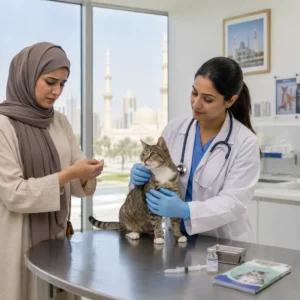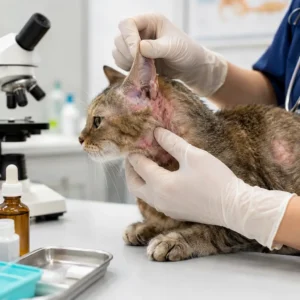
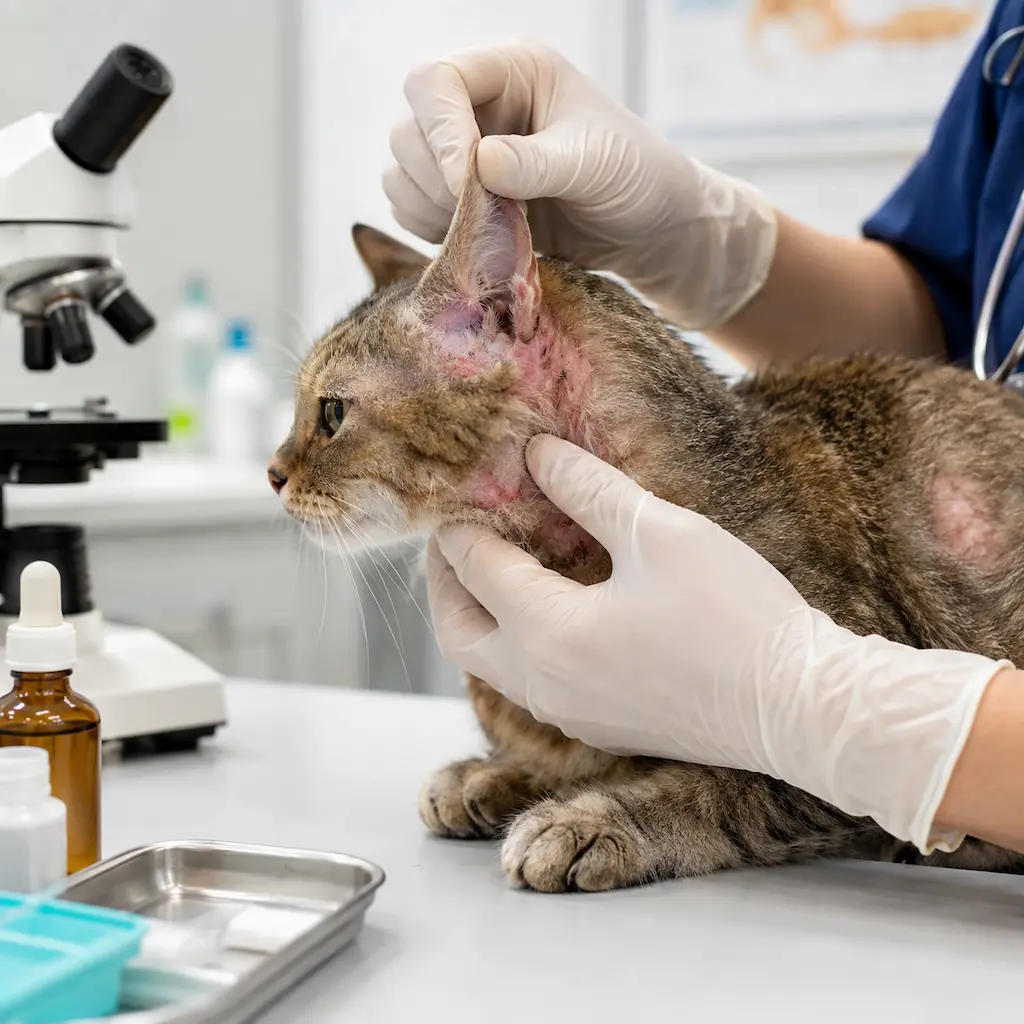
A regular at our clinic in Hay Al Badee once brought in her Persian, Coco, convinced he had simply developed “dry skin” from the Sharjah heat. Coco had been scratching his ears and shaking his head for almost two weeks, and small crusty patches had started forming near the base of his ears. Under the microscope, it took our vet less than five minutes to find the culprit: a colony of Otodectes cynotis ear mites quietly multiplying and spreading with every headshake.
Coco’s story is one we see on repeat at our veterinary clinic in Sharjah, especially in multi-cat households across Al Nahda, Al Majaz, and Muwaileh. Skin mites are microscopic, but the damage isn’t. Left untreated, they can turn a mildly itchy cat into one with raw, infected skin and significant hair loss. This guide covers what these mites are, how to spot them early, and what real treatment looks like.
What Are Skin Mites in Cats?
Skin mites are microscopic parasites that live on or burrow into a cat’s skin, ears, or hair follicles. Some are opportunistic living harmlessly on most cats until stress or a weak immune system lets their numbers explode. Others are highly contagious from first contact, spreading fast in shelters, catteries, and multi-pet homes.
Quick Answer: Skin mites are tiny, often invisible parasites that cause itching, hair loss, and crusty skin in cats. The most common types are ear mites, sarcoptic mange, notoedric mange, demodectic mange, and Cheyletiella (“walking dandruff”). Diagnosis needs a vet skin scrape or ear swab; treatment usually means prescription anti-parasitic medication plus environmental cleaning.
Types of Skin Mites in Cats
| Mite Type | Where It Lives | Contagious? | Key Signs |
|---|---|---|---|
| Ear mites (Otodectes cynotis) | Ear canal | Highly contagious | Head shaking, dark crumbly ear discharge, scratching at ears |
| Sarcoptic mange (Sarcoptes scabiei) | Burrows into skin | Highly contagious, can affect humans | Intense itching, crusty sores, hair loss |
| Notoedric mange (Notoedres cati) | Burrows into skin, usually face/ears first | Highly contagious | Thick crusty skin, severe itching, spreads to body |
| Demodectic mange (Demodex cati / gatoi) | Hair follicles | Usually not contagious | Localized bald patches, or widespread hair loss if generalized |
| Cheyletiella (“walking dandruff”) | Skin surface | Contagious to other pets, mild human risk | Flaky, moving-looking dandruff along the back |
Common Symptoms to Watch For
- Frequent scratching, especially around the ears, face, or base of the tail
- Head shaking or ears held flat against the head
- Dark, coffee-ground-like debris inside the ear canal
- Crusty, scabbed, or thickened patches of skin
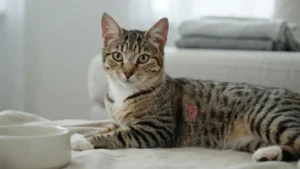
- Patchy or widespread hair loss
- Flaking or dandruff that appears to move
- Skin that looks red, raw, or irritated from constant scratching
Callout: If your cat is scratching hard enough to break the skin, don’t wait it out secondary infections set in fast. Our post on cat skin lesions and when they need urgent care covers the danger signs.
What Causes Skin Mites in Cats?
- Direct contact with an infested cat, dog, or shared bedding, carriers, or grooming tools
- Outdoor access, exposing cats to strays and wildlife carrying mites
- Weakened immunity from stress, illness, or age, letting normally harmless mites like Demodex multiply
- Kitten-to-mother transmission, common with demodectic mange during nursing
- Multi-cat or shelter environments, where mites move quickly between animals
Sharjah’s warm, humid climate doesn’t cause mites directly, but it does help external parasites thrive and spread faster between pets similar to what we’ve seen with tick-borne parasites in dogs and cats across the UAE.
How Vets Diagnose Skin Mites
- Physical examination of the skin, coat, and ears
- Skin scraping, examined under a microscope to identify the species
- Ear swab cytology, if ear mites are suspected
- Ruling out look-alikes, like flea allergy dermatitis or ringworm
- Checking for concurrent parasites, since mites often overlap with worms or fleas part of why routine pet deworming matters year-round
A proper visit to a pet dermatologist in Sharjah is what turns guessing into knowing. Our clinic’s pet dermatology service uses in-house microscopy, so you get an answer the same visit rather than waiting days for lab results.
Treatment Options for Cat Skin Mites
- Prescription topical or oral anti-parasitic medication, chosen based on the exact mite identified
- Medicated ear cleaning for ear mite cases
- Treating all pets in the household, not just the symptomatic one
- Washing bedding, carriers, and grooming tools to clear the environment
- A short course of antibiotics or anti-inflammatories if the skin has become infected
- A recheck skin scrape a few weeks later to confirm the mites are gone
Home remedies like coconut oil, apple cider vinegar, or essential oils don’t kill mites reliably and some, like essential oils, are actually toxic to cats. Skip the trial-and-error and get a confirmed diagnosis first.
For busy households or cats stressed by car rides, our mobile vet service in Sharjah can bring the skin scrape and treatment plan to your home.
Can Skin Mites Spread to Humans or Other Pets?
Some can. Sarcoptic mange mites are zoonotic, they can burrow into human skin temporarily and cause itchy bumps, though they can’t complete their life cycle on a person. Cheyletiella carries a similar, milder risk, which is why every pet in the home should be treated together.
Preventing Skin Mites in Cats
- Keep up with routine parasite prevention at your cat’s wellness check-up
- Limit unsupervised contact with stray or unknown animals
- Clean bedding, carriers, and grooming tools regularly in multi-pet homes
- Isolate new or foster cats until checked by a vet worth doing before any stay at a cat boarding facility in Sharjah
- Book a check-up at the first sign of scratching rather than waiting it out
Frequently Asked Question
Can I see skin mites without a microscope?
No. Most cat mites are microscopic or nearly invisible to the naked eye. What you can see are the effects scratching, crusty skin, hair loss, or dark ear debris not the mites themselves.
Are skin mites the same as fleas?
No. Fleas are visible, jumping insects; mites are microscopic and either burrow into skin or live in the ear canal. Both cause itching, but treatment differs, so an accurate diagnosis matters.
How long does mite treatment take to work?
Most cats show noticeable improvement within one to two weeks of starting prescribed treatment, though full resolution and a clean recheck scrape can take three to six weeks depending on the mite species.
Can indoor-only cats get skin mites?
Yes. Mites can hitch a ride in on clothing, other pets, or shared items like carriers and bedding, so indoor cats aren’t immune, especially in multi-pet households.
Conclusion
Skin mites are common, treatable, and rarely something a home remedy can fully resolve. The earlier they’re diagnosed, the easier they are to clear before secondary infections or household-wide spread set in. If Coco’s story sounds familiar, don’t wait for the crusty patches to spread. Book an appointment with Tree Pet Veterinary Clinic in Sharjah and get a same-visit diagnosis instead of guessing from symptoms alone.