
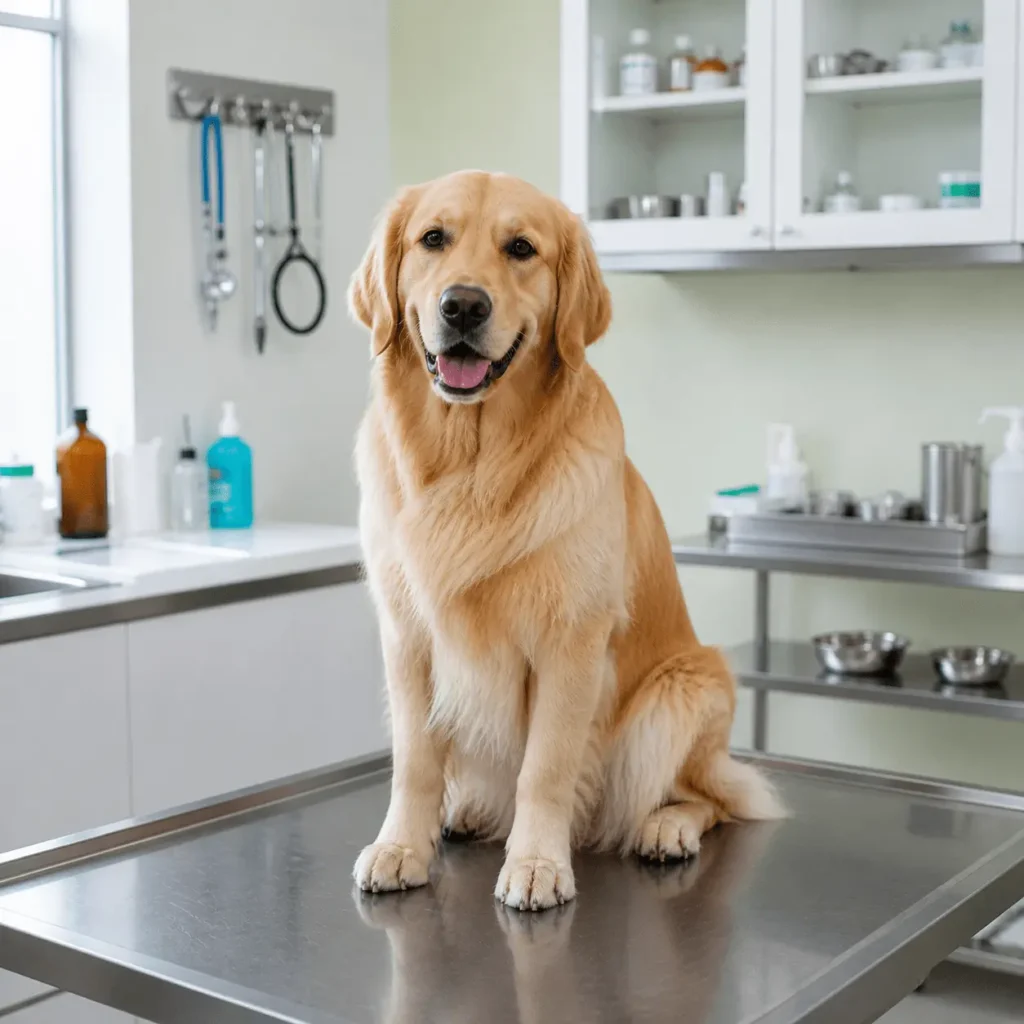
Quick Answer: Most healthy adult dogs should be dewormed every 3 months (quarterly), year-round. Puppies need it far more often every 2 weeks from 2 to 8 weeks of age, then monthly until 6 months. Dogs with higher exposure (raw diets, hunting, boarding, dog parks) may need deworming every 6–8 weeks. Your dog’s exact schedule depends on their age, lifestyle, health status, and the parasites most active in your climate — which, in the UAE, means year-round risk.
If you’ve ever searched “how often should I deworm my dog” and found five different answers, you’re not alone. The truth is, there’s no single universal answer because your dog’s deworming schedule should be based on their age, lifestyle, health status, and the types of parasites most common in your region.
In this guide, our team of experienced vets in Sharjah at Tree Pet breaks down everything you need to know: which parasites are most dangerous, the exact deworming timeline from puppyhood through adulthood, how lifestyle changes the equation, and red flags that mean you should not wait for the next scheduled dose. Everything below reflects the protocols we actually use in our Sharjah clinic and the international guidance we follow from the AAVP, the Companion Animal Parasite Council (CAPC), ESCCAP, and the CDC.
Why the UAE Climate Changes the Rules (Read This First)
Most deworming articles online are written for temperate countries that get a cold winter a season when mosquito and parasite activity naturally drops, and many owners take a “break” from prevention. That logic does not apply here.
In Sharjah and across the UAE, our hot, humid coastal climate keeps mosquitoes and parasites active for far more of the year. This matters because heartworm larvae require sustained temperatures above roughly 14°C to mature inside a mosquito, a threshold our region clears for most of the calendar. Add year-round indoor air-conditioning (which lets fleas survive and breed indoors regardless of the season), shared community parks, and the popularity of raw-feeding in the local pet community, and you get an environment where a true “off-season” for parasites essentially doesn’t exist.
Our clinical takeaway for UAE dog owners: treat quarterly intestinal deworming and monthly heartworm prevention as 12-month commitments, not seasonal ones. This is the single biggest difference between generic online advice and what your dog actually needs in this climate.
Why Deworming Is Not Optional
Internal parasites, roundworms, hookworms, whipworms, tapeworms, and heartworms — are far more common in dogs than most pet owners realize. Many puppies are actually born already carrying roundworms, passed on from their mother before birth or through nursing. Left untreated, a worm burden causes:
- Chronic weight loss or poor weight gain despite a healthy appetite
- Vomiting and persistent diarrhea, sometimes bloody
- Anemia, especially from hookworms which feed directly on blood
- Dull coat, low energy, and overall poor condition
- A bloated or “pot-bellied” appearance in puppies
- Serious, long-term intestinal damage
- Zoonotic transmission, certain dog worms can infect humans, especially children
This is not just a pet health issue. The American Association of Veterinary Parasitologists (AAVP) and the CDC both recommend strategic, age-appropriate deworming as a core part of responsible pet ownership.
Our team at Tree Pet performs fecal examinations and parasite screenings during every wellness visit. If your dog hasn’t been checked recently, book a Wellness Check Up in Sharjah today.
The Most Common Worms in Dogs; Know Your Enemy
Understanding which parasites are most likely to affect your dog helps you and your vet choose the right dewormer and know when to increase vigilance.
Roundworms (Toxocara canis): The most widespread intestinal parasite in dogs worldwide. Puppies can be infected in the womb or through their mother’s milk. Adult dogs pick them up from contaminated soil or feces.
Hookworms (Ancylostoma caninum): These latch onto the intestinal wall and consume blood. In severe cases they cause life-threatening anemia, especially in young puppies. Local note: hookworm larvae thrive in warm, sandy, moist ground exactly the conditions found around shaded community lawns and irrigated parks in the UAE.
Tapeworms (Dipylidium caninum): Dogs get tapeworms primarily by swallowing an infected flea during grooming, or by eating raw or undercooked meat. You’ll often notice flat, white, rice-grain-like segments near the tail or in stool. With raw-feeding increasingly popular among UAE pet owners, tapeworm risk is one we flag often in our clinic.
Whipworms (Trichuris vulpis): These live in the large intestine and are notoriously hard to eliminate. They cause chronic, watery diarrhea and weight loss. Whipworm eggs can survive in soil for years.
Heartworms (Dirofilaria immitis): Transmitted by mosquitoes, not ingested. This is a separate and life-threatening concern requiring its own dedicated monthly prevention. Because heartworm has been documented across the Middle East and thrives wherever mosquitoes stay active, it is not a parasite UAE owners can dismiss — speak with your vet about the right year-round approach for your dog’s lifestyle.
Giardia: Technically a protozoan, not a worm, but routinely grouped with dog parasites. Spread through contaminated water or feces. Standard dewormers do not work against Giardia, it requires specific prescription medications like fenbendazole or metronidazole. Our internal medicine vets in Sharjah handle complex parasite-related gut conditions when symptoms persist beyond routine treatment.
Dog Deworming Schedule by Age
Newborn Puppies 2 to 8 Weeks Old
This is the most critical window. Because transmission from mother to puppy both through the placenta and through milk is so common, veterinarians recommend starting deworming as early as 2 weeks of age, even before any visible symptoms appear.
| Age | Action |
|---|---|
| 2 weeks | First deworming dose |
| 4 weeks | Second dose |
| 6 weeks | Third dose |
| 8 weeks | Fourth dose — typically timed with the first vet visit |
Why so frequently at this stage? Dewormers kill adult worms but have no effect on eggs or larvae. By the time those larvae mature into adults (roughly 2 weeks), the next dose is perfectly timed to eliminate them before they reproduce.
Best choice at this age: Pyrantel pamoate is the preferred dewormer for very young puppies. It is gentle on the stomach, available in liquid form, and dosed by body weight.
Also consider deworming the mother dog during late pregnancy and early lactation. Fenbendazole (Panacur) is considered safe at this stage and significantly reduces how much is transmitted to the litter.
Young Puppies 3 to 6 Months Old
Once puppies are past 8 weeks and exploring the world nose-first, their exposure risk rises sharply. The standard protocol:
- Deworm monthly from 3 to 6 months of age
- Begin flea, tick, and heartworm prevention at 8–12 weeks
This is also the age when puppies receive their core vaccines. Visit our puppy vaccinations in Sharjah page to understand the full schedule so you can coordinate your puppy’s appointments efficiently and never miss a critical window.
Puppies 6 to 12 Months Old
By this stage, most puppies are approaching adult size and developing stronger immunity. Deworming can generally shift to every 3 months (quarterly), though a puppy attending daycare or visiting dog parks warrants more frequent treatment than one with limited outdoor exposure.
Adult Dogs 1 Year and Older
The standard vet-recommended protocol for healthy adult dogs with average exposure risk is deworming every 3 months, year-round. Some vets using monthly heartworm prevention tablets may use an all-in-one product covering intestinal worms simultaneously discuss this with your vet rather than doubling up on treatments.
A practical quarterly calendar:
- January: Winter dose
- April: Spring dose (as parasite activity rises)
- July: Summer dose (peak risk season in the region)
- October: Autumn dose
Annual fecal exams during your dog’s routine check-up remain essential even on a quarterly schedule many infestations produce no obvious symptoms until the burden becomes heavy. Book your dog’s routine exam through our Wellness Check Up service.
Senior Dogs 7 Years and Older
Older dogs have weaker immune systems and struggle more against even moderate parasite loads. Continue the quarterly schedule and consider twice-yearly fecal screenings. If your senior dog develops persistent gastrointestinal symptoms, our Soft Tissues & Internal Medicine team can provide in-depth evaluation and targeted treatment beyond standard deworming.
How Lifestyle Changes the Deworming Frequency
Age is only half of the equation. Where your dog goes and what they do determines their real-world exposure risk and it should directly influence how often you deworm them.
High-Risk Dogs; Consider Deworming Every 6 to 8 Weeks
- Dogs that hunt or roam rural, wooded, or farm areas
- Dogs on raw meat diets (significantly elevated tapeworm risk)
- Dogs with a history of frequent flea infestations
- Dogs that attend kennels, dog parks, or group training classes regularly
- Dogs that drink from outdoor water sources or puddles (high Giardia risk)
- Working dogs with access to livestock areas
If your dog regularly stays at a boarding facility, our Dog Boarding Sharjah team screens all guests for parasites as part of their intake health check.
Moderate-Risk Dogs; Quarterly Is Usually Sufficient
- Dogs that go on regular outdoor walks and socialize with other dogs
- Dogs in multi-pet households
- Dogs with access to a shared garden or courtyard
Lower-Risk Dogs; Minimum Quarterly, Confirm With Your Vet
- Primarily indoor dogs with limited outdoor exposure
- Single-pet households with no known contact with infected animals
Important: Even a dog that never leaves your apartment can be exposed to parasites via contaminated soil tracked in on shoes, through insects, or from raw food. No dog’s exposure risk is ever truly zero.
A Practical Tip Most Owners Get Wrong: Weigh Before You Dose
The most common deworming mistake we correct in our Sharjah clinic isn’t frequency, it’s dose accuracy. Dewormers are dosed strictly by body weight, and an under-dose simply doesn’t kill the worms (while leaving you to assume the job is done).
If you don’t have a pet scale, use this vet trick at home: step on a bathroom scale holding your dog, note the number, then weigh yourself alone and subtract. Re-check growing puppies before every single dose — they can outgrow a dose band in just a few weeks. When in doubt, our team will weigh and dose your dog correctly in one visit.
Choosing the Right Dewormer: What Vets Actually Use
This is where pet owners most often go wrong — buying a product that only covers two or three of the five parasites their dog may actually be carrying.
| Parasite | Common Treatment Options |
|---|---|
| Roundworms + Hookworms | Pyrantel pamoate, Fenbendazole |
| Whipworms | Fenbendazole (Panacur), Milbemycin |
| Tapeworms | Praziquantel (Droncit, Drontal Plus) |
| Broad-spectrum (all of the above) | Drontal Plus, Quad Dewormer |
| Giardia | Fenbendazole, Metronidazole (prescription required) |
| Heartworm prevention | Ivermectin-based monthly product (separate protocol) |
Dosing is always weight-based. An incorrect dose is either ineffective or potentially harmful. Always weigh your dog before administering any dewormer.
Our Pet Deworming Sharjah service provides professional diagnosis and the correct prescription-grade treatment — no guesswork, no wasted money on the wrong product.
Warning Signs Your Dog Has Worms Right Now
Do not wait for the next scheduled dose if you notice any of the following. Contact your vet immediately:
- Visible worms or worm segments in stool, or around the tail and anus
- Scooting or persistent licking around the rear
- Bloated or pot-bellied appearance, particularly in puppies
- Sudden weight loss despite a good appetite
- Persistent vomiting or diarrhea lasting more than 24 hours
- Pale gums a sign of anemia associated with hookworm blood loss
- A chronic, unresolved cough (possible heartworm or lungworm involvement)
- Skin irritation, flaking, or hair loss alongside digestive symptoms our pet dermatologist in Sharjah can assess whether a parasite-related skin condition is involved
What to Expect After Deworming
After a deworming treatment, the following are completely normal:
- Dead or dying worms passed in stool within 2 to 14 hours, sometimes up to a week in heavy infestations this confirms the medicine is working
- Mild, temporary digestive upset loose stools or mild vomiting resolving within 24 to 48 hours
- No immediate visible change for a day or two if the worm burden was significant
If symptoms persist beyond 48 hours or your dog seems severely unwell, contact your vet. If coming to the clinic isn’t convenient, our Mobile Vet Sharjah service brings full veterinary care directly to your home.
Stopping Reinfection: Hygiene Is Half the Battle
Deworming alone is not enough if your dog’s environment remains contaminated. After each treatment round:
- Pick up feces immediately worm eggs survive in soil for months to years
- Wash and disinfect food and water bowls regularly
- Wash your dog’s bedding at high temperature after every treatment
- Maintain consistent, year-round flea control fleas are the primary route of tapeworm infection
- Do not allow your dog to drink from puddles or stagnant water
- Wash your hands after handling your dog’s waste, particularly if children are in the household
In multi-pet households, all pets must be treated simultaneously. One untreated animal will reinfect every other pet in the home.
Frequently Asked Questions
How often should I deworm my dog?
Healthy adult dogs should be dewormed every 3 months (quarterly), year-round. Puppies need it more frequently: every 2 weeks from 2–8 weeks of age, then monthly from 3–6 months. High-exposure dogs — raw-fed, hunting, boarding, or frequent dog-park visitors — may need treatment every 6–8 weeks. In the UAE’s warm climate, this should be a year-round routine with no seasonal break.
Can I deworm my dog without seeing a vet?
For routine preventive deworming of a healthy adult dog, some broad-spectrum over-the-counter options exist. However, if your dog is showing symptoms, is a puppy, is pregnant, senior, or if Giardia is suspected, professional diagnosis is essential. The wrong product or dose can cause harm and leave certain parasites entirely untreated.
Can my dog catch worms at the dog park?
Yes. Fecal contamination in communal spaces is one of the most common transmission routes for roundworms, hookworms, and whipworms. Dogs that visit parks or communal outdoor areas frequently should be on a more rigorous schedule than standard quarterly.
Is it safe to deworm a pregnant dog?
Fenbendazole (Panacur) is widely considered safe in pregnant and nursing dogs. Never administer any dewormer during pregnancy without explicit veterinary guidance.
Do I need a prescription for dewormers in the UAE?
Some broad-spectrum treatments are available over the counter. Medications for Giardia and certain advanced-spectrum treatments require a vet’s prescription. Our team of vets in Sharjah at Tree Pet Veterinary Clinic can diagnose, prescribe, and administer the correct treatment in one visit.
Can indoor dogs get worms?
Yes. Parasites can enter your home on shoes, through insects, or via raw food. Even dogs with no direct outdoor access should follow a minimum quarterly deworming schedule.