Quick Answer: A cat vomiting food after eating is most often caused by eating too quickly, dry food expanding in the stomach, food sensitivities, or hairballs. However, frequent vomiting, blood, lethargy, or loss of appetite can point to serious issues such as infections, parasites, kidney disease, or intestinal blockages that need urgent veterinary attention.
If your cat throws up almost every time it finishes a meal, you are not overreacting, this is one of the most common concerns we hear from pet parents at our clinic. While an occasional bout of vomiting can be normal for cats, a steady pattern is your cat’s way of signaling that something inside the digestive system is not working the way it should. Drawing on years of hands-on feline medicine in the UAE, this guide walks you through the real causes, the safe steps you can try at home, the best diet choices for cats with delicate stomachs, and the exact moment it becomes time to call the Veterinary clinic in Sharjah Tree Pet Veterinary.
Why Is My Cat Vomiting Food After Eating?
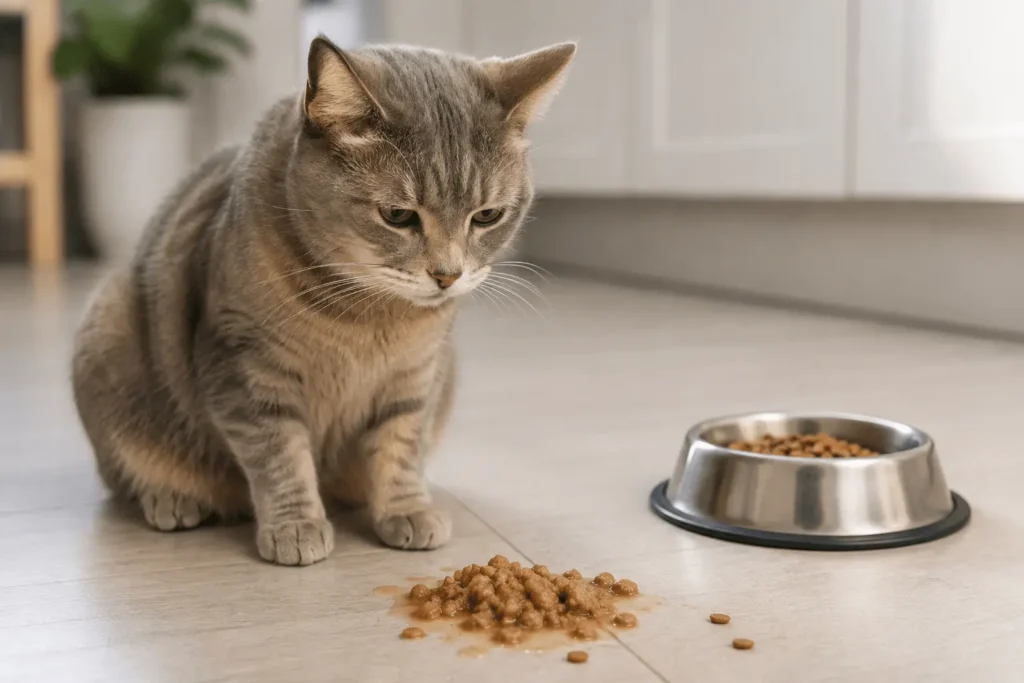
Most of the time, when a cat vomits after eating, the reason falls into one of several well-documented categories. Eating too fast is the single biggest culprit. Hungry or competitive eaters gulp down kibble without chewing and swallow large amounts of air alongside it. The stomach stretches, mistakes that volume for overeating, and pushes the food back up within minutes.
Food intolerance and protein allergies are another frequent trigger. Cats can develop sensitivities to specific proteins such as chicken, beef, or fish, or react to additives and preservatives commonly found in commercial diets. Hairballs, sudden diet changes, internal parasites, infections, and underlying conditions such as inflammatory bowel disease, pancreatitis, kidney disease, and hyperthyroidism can also present as post-meal vomiting. In rarer but more urgent cases, intestinal blockages from swallowed string, plastic, or small toys cause repeated vomiting and require emergency intervention.
Vomiting vs Regurgitation: My Cat Vomits After Eating; But Which One Is It?
Many owners describe the problem as “my cat vomits after eating” when the cat is actually regurgitating, and the difference matters because the diagnostic path is completely different. Vomiting is an active process, your cat heaves, retches, and contracts its abdomen before bringing up partially digested food, often tinged with bile. Regurgitation is passive: food simply rolls back out within minutes of eating, looks almost untouched, and there is no retching. A short phone video of an episode is one of the most useful things you can bring to your appointment, because it lets the vet identify the process accurately within seconds.
Cat Vomiting Undigested Food: What It Really Means
A cat vomiting undigested food is almost always doing so within 10 to 30 minutes of the meal. That narrow window tells us the food never reached the stomach acid for proper digestion. The most common reasons are speed eating, dry kibble sitting in the esophagus, swallowed air, or a digestive tract that is irritated and rejecting food before it has a chance to break down. If your cat brings up undigested kibble more than once or twice a week, the issue is no longer occasional and deserves a clinical check to rule out motility disorders, esophageal problems, or chronic gastritis.
Why Your Cat Vomits Dry Food: Kibble-Specific Triggers
There is a clear physiological reason a cat vomits dry food more often than wet. Kibble absorbs moisture and expands once it hits the stomach, which can rapidly overwhelm a cat that ate too quickly. Older cats with weaker esophageal motility are especially prone to this. The fix is rarely dramatic. Slowing the eating pace, adding a little warm water to the kibble before serving, or switching part of the diet to a high-moisture wet food can resolve the problem within days. When switching to a new food, always transition over 7 to 10 days abrupt changes are a common but overlooked cause of vomiting in their own right.
Is Your Cat Vomiting Frequently? Knowing When It Becomes a Red Flag
An occasional hairball is normal. A cat vomiting frequently defined as more than once a week, or several times in a single day — is not. Chronic vomiting can lead to dehydration, weight loss, and nutrient deficiencies, and it is often the first visible sign of conditions such as chronic kidney disease, hyperthyroidism, inflammatory bowel disease, or intestinal lymphoma. Keep a simple log: the date, time, what the vomit looked like, and how long after eating it happened. That single document gives your vet more diagnostic value than almost any other piece of information you can bring in.
What Should I Do If My Cat Vomits? A Practical Action Plan
When pet parents ask us “what should I do if my cat vomits?”, the safe at-home approach follows clear steps. First, withhold food for two to three hours to let the stomach settle, but always keep fresh water available. Once your cat seems calm, offer a small portion of a bland, easily digestible meal such as plain boiled chicken or a vet-recommended gastrointestinal diet. Slow the feeding pace with a slow-feeder bowl or a flat plate, and divide the daily portion into three or four smaller meals instead of one or two large ones. Monitor energy levels, appetite, and litter box habits for the next 24 hours. Persistent vomiting, blood in the vomit, lethargy, or refusal to drink water means it is time for an in-person exam, our team also offers a mobile vet service across Sharjah for cats too stressed to travel.
Best Cat Food for Sensitive Stomach Vomiting
Choosing the best cat food for sensitive stomach vomiting depends on the underlying cause, but a few principles apply broadly. Look for diets with a single, novel protein source, duck, rabbit, or hydrolyzed protein — that minimizes the chance of an allergic response. Highly digestible carbohydrates, added prebiotics, and omega-3 fatty acids actively support gut healing. Veterinary therapeutic diets such as Hill’s i/d, Royal Canin Sensitivity Control, and Purina Pro Plan EN are reliable starting points, but they should ideally be introduced under a vet’s guidance after ruling out parasites and disease through a proper internal medicine consultation. Avoid frequent food switches during recovery consistency is what allows an irritated digestive tract to fully settle.
When to See a Vet: Warning Signs You Should Not Ignore
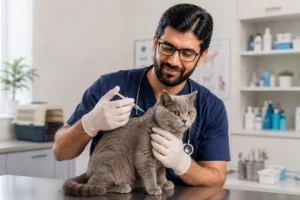
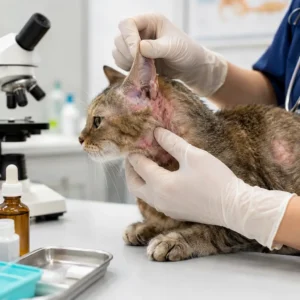
Some symptoms turn a kitchen-floor mess into a real medical emergency. Book an urgent appointment if your cat vomits more than three times in 24 hours, brings up blood or coffee-ground material, repeatedly produces yellow or green bile, refuses food or water for over 12 hours, looks weak or hides for long periods, develops a swollen abdomen, or loses weight visibly over days or weeks. Kittens and senior cats dehydrate quickly and should be seen even sooner. A thorough wellness exam, combined with bloodwork and sometimes imaging, helps us pinpoint the cause and begin treatment before the condition worsens. If your cat is vomiting shortly after meals, our guide to cat vomiting after eating explains some common causes and when it may require veterinary attention. Parasites are another silent driver of chronic vomiting in cats with outdoor access, and a routine deworming check is often the simple step that can help rule out one possible cause.
Final Thoughts
A cat vomiting food after eating is rarely “just a hairball” when it keeps happening. Most cases resolve with simple feeding adjustments, but the cases that do not are exactly the ones where early diagnosis makes the biggest difference for your cat’s long-term health. If you are unsure where your cat falls on that spectrum, our experienced team is here to help. Book an appointment with Tree Pet Veterinary and let us give your cat the comfort and care they deserve.
About Tree Pet Veterinary
This article was prepared by the clinical team at Tree Pet Veterinary, a trusted veterinary clinic in Sharjah, UAE, offering wellness check-ups, vaccinations, internal medicine, dental care, mobile vet services, and 24/7 emergency support. Our veterinarians treat thousands of cats every year and are committed to giving every pet compassionate, evidence-based care. Location: Shop 4, Hay Hoshi, Hay Al Badee, Sharjah, UAE. Call: +971 50 899 7922.
Frequently Asked Questions
Why does my cat vomit food right after eating?
Most often it is eating too fast, dry food expanding in the stomach, food sensitivity, or hairballs. Slow-feeders, smaller portions, and a 7–10 day food transition usually solve mild cases.
Is it normal for cats to throw up undigested food?
Occasionally yes, but repeatedly throwing up undigested food within 30 minutes of eating is not normal and should be checked by a vet to rule out esophageal or motility issues.
How many times a week is too much vomiting for a cat?
More than once a week is considered frequent vomiting and warrants a veterinary exam, especially in senior cats or kittens.
What is the best food for a cat with a sensitive stomach?
Vet-prescribed gastrointestinal diets, novel-protein formulas (duck, rabbit, hydrolyzed protein), and wet food with added prebiotics are the most reliable options — but always confirm the choice with your vet first.
When should I rush my cat to the vet for vomiting?
Immediately if there is blood in the vomit, more than three episodes in 24 hours, refusal to drink, lethargy, a swollen abdomen, or rapid weight loss.